Central Pacific · Puntarenas · Costa Rica
What Is Life in Jacó, Costa Rica Like?
Jacó is the most accessible and developed beach town on Costa Rica's Central Pacific coast — a working town with a tourist economy, a year-round local population, and a layered character that doesn't fit the surf-town stereotype.
What Jacó Actually Is
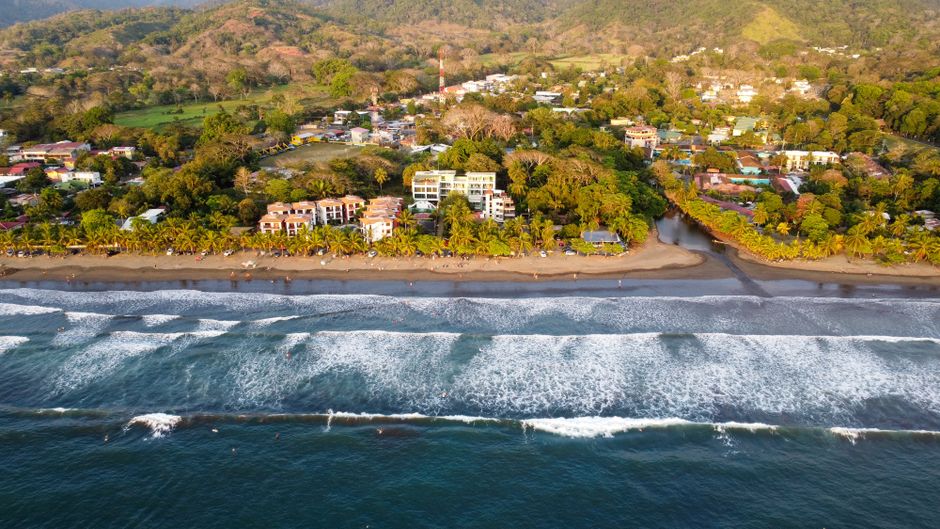
Jacó is a coastal town on the Central Pacific coast, about ninety minutes from San José on a paved highway that has improved significantly over the past two decades. It is one of the most accessible beach towns in Costa Rica, and that accessibility shapes everything about it.
What Jacó is not: a sleepy fishing village, an undiscovered gem, or a quiet retirement coast. People who arrive expecting that leave disappointed. Jacó is the closest thing Costa Rica has to a small coastal city — built up, commercial, fully serviced, and in motion most days of the year.
What Jacó is: a working town with a tourist economy layered over a long-standing local population. Year-round residents include Costa Rican families who have lived here for generations, a substantial expat community of Americans, Canadians, and Europeans, a transient digital nomad population, surfers from across the world, and weekend visitors from the Central Valley who keep the local economy running on Saturdays and Sundays.
The town has a reputation that precedes it — surf, nightlife, and a rougher edge than most Costa Rican beach towns. That reputation is partly earned, partly outdated, and partly geographic confusion (some of what people associate with Jacó is actually Herradura, Hermosa, or the strip between them). The real Jacó has neighborhoods that are quiet and family-oriented, neighborhoods that are loud and party-driven, and a main strip that mixes both.
- Population fluctuates between roughly twelve thousand year-round and significantly more during high season and weekends
- Located in Garabito canton, Puntarenas province
- Roughly one-and-a-half hours from San José by car; under three hours from Liberia
- Mixed Costa Rican and international population, with Spanish as the working language and English widely spoken in tourist zones
- The town center is walkable; outlying residential neighborhoods generally are not
What Daily Life Looks Like
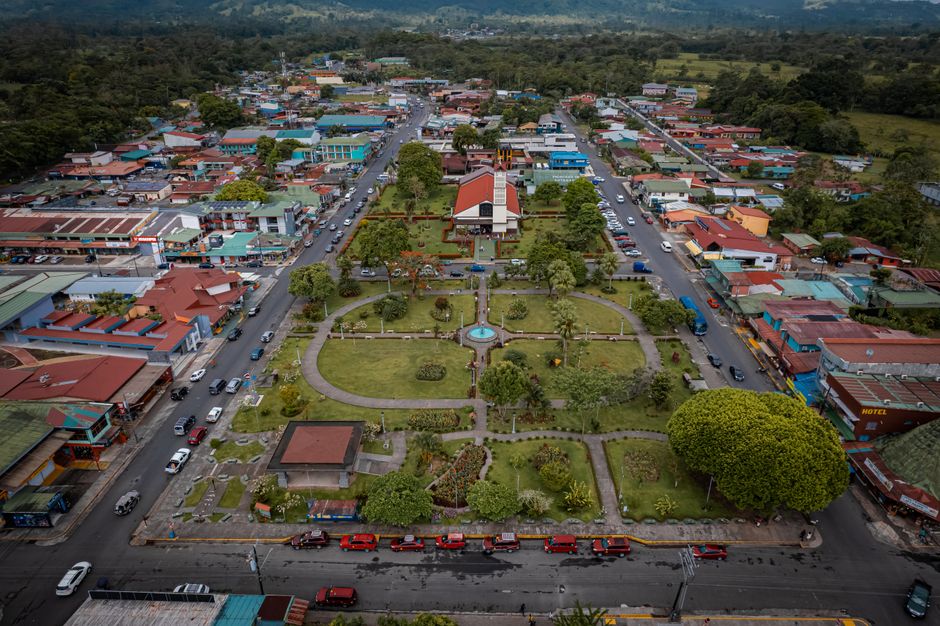
Daily life in Jacó depends entirely on which Jacó you live in. The main strip — Avenida Pastor Díaz and the streets that feed it — is busy from morning to late night, with traffic, pedestrians, surf shops, restaurants, and a constant turnover of tourists. A few blocks back from the main road, the town becomes residential and noticeably calmer. Hillside neighborhoods above town are quieter still, and the gated developments toward Herradura and Los Sueños operate almost entirely on their own rhythm.
Most residents do their grocery shopping at one of several supermarkets in town. There is a Más X Menos and an Auto Mercado for full-service shopping, smaller Pali and Maxi Pali locations for budget basics, and a number of local pulperías for daily essentials. The weekly farmers market brings produce, fish, and prepared food from surrounding agricultural areas.
Routine errands are straightforward. There are multiple banks with branches in town, ATMs are widely available, and most banking can be done in either Spanish or English at the larger institutions. Pharmacies are easy to find. Hardware stores, auto parts, vet clinics, and the kind of practical services a household needs are all present.
Sundays are quieter than Saturdays. Many smaller businesses close, the beach fills with families, and the rhythm of the town slows for a day before tourism picks up again on Monday. This pattern matters more for residents than visitors realize — if you need something on a Sunday afternoon, you plan for it Saturday.
- Multiple full-service supermarkets in town, plus weekly farmers market
- Banking, pharmacies, and routine services all available locally
- Spanish is the primary working language; English is widely spoken in commercial zones
- Sundays operate on a slower schedule — many businesses closed or reduced hours
- The further you live from the main strip, the quieter your daily life
Climate and Environment
Jacó has two seasons and they shape life here more than any other single factor. The dry season, locally called verano, runs roughly from December through April. Days are hot, nights are warm, the air is dry, and the sky is usually clear. This is high tourist season, the most expensive time of year for accommodation, and the period when Jacó is at its busiest and most crowded.
The green season, locally called invierno, runs from May through November. Mornings are typically clear, but most afternoons bring rain — sometimes a brief shower, sometimes hours of heavy tropical downpour. October is historically the wettest month and the slowest tourist month, when many businesses reduce hours or close briefly. The landscape is lush, the prices are lower, and the town feels different — quieter, slower, more local.
Heat and humidity are constant year-round. Jacó sits at sea level, on the Pacific coast, in the tropics. Temperatures regularly reach the low 90s Fahrenheit during the day and rarely drop below the mid-70s at night. Air conditioning is not optional for most people; it is part of how housing functions here.
The natural environment around Jacó is more present than people expect. Howler monkeys live in the trees behind many residential neighborhoods. Iguanas are common. Scarlet macaws fly over the area in pairs. Crocodiles live in the Tárcoles River just north of town and at several river mouths along the coast. Snakes exist and a few species are dangerous, though encounters with humans are uncommon. Insects are part of life — mosquitoes during the green season, scorpions occasionally indoors, and a constant background of geckos, beetles, and other tropical residents.
The Pacific is warm year-round and almost always swimmable, but the surf is real. Riptides cause drownings in this area every year, particularly among visitors who underestimate the conditions. Locals know which beaches are safer and when.
- Two seasons: dry (December–April, hot and crowded) and green (May–November, wet and slower)
- Heat and humidity are year-round at sea level on the Pacific coast
- Air conditioning is standard in most housing and meaningfully affects electricity costs
- Wildlife is abundant and visible — monkeys, iguanas, macaws, snakes, crocodiles in nearby rivers
- Pacific surf is genuine; riptides are a serious local hazard
Cost of Living Reality
Jacó is not cheap. This surprises people who arrive expecting Latin American prices and find that a tourist town on a fully developed coast costs more than they planned for. It is also not expensive by the standards of comparable beach towns in California, Florida, or southern Europe. Where Jacó actually sits depends on what you are comparing it to and how you live.
Imported goods cost more than they would in their country of origin. Electronics, certain foods, vehicles, and anything requiring shipping carry meaningful import duties. Local produce, locally caught fish, basic services, and labor are generally more affordable than equivalent expenses abroad. Restaurants range from inexpensive sodas serving casado lunches to oceanfront restaurants priced for international tourists. Both exist within walking distance of each other.
Housing varies dramatically with location, season, and quality. A modest apartment a few blocks from the beach costs significantly less than an oceanfront condo with a view. Long-term rentals are generally more affordable per month than short-term tourist rates, but availability fluctuates with the seasons. Owning a home means paying property taxes, HOA fees in most condo developments, and the ongoing costs of maintaining a property in a humid coastal environment that is hard on construction.
Utilities can be a meaningful expense. Electricity is among the most expensive in Latin America, and air conditioning runs constantly in this climate, which means electric bills are real. Water is generally affordable. Internet through fiber providers is widely available and reasonably priced for most plans. Mobile phone service is competitive and inexpensive by most standards.
Vehicle ownership is more expensive than people expect. Annual marchamo fees scale with vehicle value, fuel is taxed heavily, and the road conditions accelerate wear. Used vehicles hold their value better than in most countries, which cuts both ways.
The honest answer on cost of living: a modest, local-style life in Jacó is affordable. A North American or European lifestyle in Jacó is not.
- Tourist-economy pricing on the main strip; more local pricing further from the beach
- Imported goods and electronics carry meaningful import duties
- Electricity is expensive and AC runs constantly in this climate
- Internet and mobile service are reasonably priced
- Vehicle ownership costs more than most newcomers anticipate
- Living locally is affordable; importing a foreign lifestyle is not
Healthcare Access
Costa Rica's healthcare system has two parallel tracks: the public system (CAJA) and a network of private hospitals and clinics. Both operate in and around Jacó, and most residents end up using both at different points.
For routine care, there are multiple private clinics in Jacó staffed by general practitioners and a rotating set of specialists who visit on scheduled days. Pharmacies in Jacó will fill many medications without a prescription that would require one elsewhere, which is convenient for managing common conditions but worth understanding before relying on it.
For emergencies and serious medical issues, most residents travel to either Puntarenas, San José, or Quepos depending on the issue and the specific facility. The drive to Puntarenas is roughly forty-five minutes; to San José, about an hour and a half on the highway. Several internationally accredited private hospitals in the San José metro area are widely used by expats and Costa Ricans alike for serious procedures — Hospital CIMA in Escazú and Hospital Clínica Bíblica in San José are the two most commonly named.
The public CAJA system requires registration and monthly contributions, but provides full coverage including hospitalization and prescription drugs at no point-of-service cost. It is universally available to residents and citizens. Wait times for non-urgent specialist care can be long, which is why many people who can afford it use private care for routine needs and reserve CAJA for catastrophic coverage.
Dental care is generally affordable and accessible. Many residents schedule routine dental work in San José or use the local dentists in Jacó.
Health insurance is a separate decision. Some expats carry international health insurance, some pay out of pocket for private care, and some rely on CAJA after qualifying. None of these is wrong; each suits different situations.
- Two-track system: public CAJA and private hospitals/clinics, both used in practice
- Routine private care available locally; serious cases typically go to Puntarenas or San José
- Internationally accredited private hospitals in San José metro (Hospital CIMA, Clínica Bíblica)
- CAJA provides full coverage with monthly contributions; longer waits for non-urgent specialists
- Pharmacies fill many medications without a prescription
- Dental care is affordable and widely available

Getting Around and Getting Out
Inside Jacó, most daily movement happens on foot, by bicycle, or by short drives. The main strip and the streets immediately adjacent are walkable, and a lot of residents simply do not need a vehicle for daily errands if they live in town. Hillside and outlying neighborhoods are different — those generally require a car, and some require four-wheel drive during the green season when steep gravel roads turn slick.
For getting out of Jacó, the two airports that matter are Juan Santamaría International (SJO) in Alajuela and Daniel Oduber International (LIR) in Liberia. SJO is the closer of the two by a wide margin — roughly an hour and a half by car. LIR is closer to three hours but is the relevant airport for some flight connections, particularly to the United States and parts of Europe. Most residents fly through SJO unless a specific route makes LIR worth the drive.
The Costanera Sur, the coastal highway, runs north and south from Jacó and connects the entire Pacific coast. Driving south reaches Manuel Antonio in about an hour, Dominical in two, and the Osa Peninsula in three to four. Driving north reaches Puntarenas, the Nicoya ferry, and the route into Guanacaste. The road quality has improved meaningfully over the past decade.
Public bus service connects Jacó to San José, Puntarenas, Quepos, and other towns at affordable rates. The buses are reliable, generally clean, and used by a mix of locals, students, and travelers. Schedules are posted but worth confirming locally.
Uber operates in Jacó, sometimes with limited driver availability. Local taxis are widely available and most residents end up with a few drivers they call directly. Within town, walking is often faster than waiting for a ride.
Owning a vehicle in Jacó is common but not required. Many residents go without one and use a combination of buses, taxis, and rentals when they need to leave town.
- Town center is walkable; outlying neighborhoods generally need a vehicle
- SJO airport is roughly one and a half hours; LIR is roughly three
- Costanera Sur connects the entire Pacific coast and has improved over the years
- Public buses are reliable and connect to San José, Puntarenas, Quepos, and beyond
- Uber is present but limited; local taxis and direct-call drivers fill the gap
- A car is useful but not strictly necessary if you live in town

Community and Social Life
Jacó is more socially active than its size suggests, and the social scene has more layers than newcomers initially see. Tourists experience the surface — bars, restaurants, beach gatherings — while residents move within overlapping communities that are easy to find once you know they exist.
The Costa Rican community is the foundation. Many families have lived in Jacó or nearby for generations. Soccer is the central social activity for many Tico men, with regular matches and league play at fields around town. The Catholic church anchors community life for a significant portion of the population, with mass schedules, holy week observances, and town festivals organized around the church calendar. School events, family gatherings, and local quinceañeras shape the social calendar in ways that visitors rarely see.
The expat community is sizable but not unified — it is several communities. There are long-term residents who have been here twenty or thirty years and are deeply integrated, often speaking fluent Spanish and married into local families. There are recent arrivals still finding their footing. There is a digital nomad population that turns over rapidly. There are seasonal residents who spend part of the year in Jacó and part elsewhere. Each of these groups has its own watering holes and rhythms.
Common gathering points include the beach itself, particularly at sunset; certain cafes and restaurants that have become unofficial meeting spots; the gym and yoga studios that draw the same regulars; and surf breaks where the same crews meet most mornings. Newcomers who put themselves in these spaces consistently tend to find their people within a few months.
Religious community extends beyond the Catholic majority. There are evangelical churches, a few non-denominational Christian fellowships, and small communities of other faiths. For people coming from highly religiously diverse cities, the relative homogeneity can take adjustment.
Making friends in Jacó as an adult is generally easier than in many North American or European cities, partly because the town is small enough that you see the same people repeatedly, and partly because the lifestyle creates more low-stakes social encounters than office-and-commute culture allows. The friendships that form here are genuine, but the transient population means that even among expats, people you become close to may move on within a few years.
- Multiple overlapping communities: long-standing Costa Rican families, long-term expats, recent arrivals, digital nomads, seasonal residents
- Soccer, church, and school events anchor much of local Costa Rican social life
- Common expat gathering points: specific cafes, the gym, yoga studios, surf breaks, the beach at sunset
- Spanish proficiency meaningfully expands social access; English-only limits it
- Transience is real — close friends sometimes leave within a few years

Schools and Family Life
Families do raise children in Jacó, and they have for generations. Whether it is the right place for your family depends on what you want their education and childhood to look like.
For Costa Rican families, the public school system is the default and works as it does throughout the country. There are public primary and secondary schools serving Jacó and the surrounding communities. Quality varies by school and by year. Many Costa Rican parents who can afford private education send their children to private schools in Jacó, San José, or somewhere in between.
For expat families, private and bilingual schools are usually the path. Several private schools operate in and around Jacó, and a wider range of options is available within a manageable drive — including international schools in the Central Valley that some families commit to despite the distance. School quality, language of instruction, and curriculum vary considerably; this is one of the decisions where touring schools in person before committing to a location is essential.
Costa Rica is generally considered safe and welcoming for children. Kids walk to nearby destinations more freely than they would in most North American cities. Birthday parties, beach days, and after-school activities form a recognizable rhythm. Pediatric healthcare is available locally for routine matters and in San José for specialists.
Activities for children are abundant if you look for them: surf lessons, soccer, gymnastics, dance, music, swim teams, and a number of structured after-school programs run by both schools and independent operators. The natural environment is part of childhood here in a way it usually is not elsewhere — kids learn to swim in the ocean, recognize wildlife, and navigate outdoor settings as a normal part of growing up.
The honest considerations for families: bilingual or full-immersion Spanish education is the practical default, and parents who want to maintain their children's first-language fluency in something other than Spanish need to plan for that actively. Specialized educational support — for learning differences, advanced academics, specific extracurriculars — may require travel to San José or creative solutions. Healthcare for serious pediatric issues will likely involve trips to the city.
For families willing to embrace those tradeoffs, Jacó offers a childhood with more outdoor time, more language exposure, and a different relationship with the natural world than most places can provide.
- Public schools available; private and bilingual schools are the common path for expat families
- A wider range of school options exists within driving distance, including in the Central Valley
- Children generally have more outdoor freedom and natural-world exposure than in most North American cities
- Activities like surf, soccer, music, and dance are well represented locally
- Specialized educational or healthcare support may require travel to San José
- Touring schools in person before committing to a location is strongly recommended
Working and Income
How you earn a living determines whether Jacó works for you, and not all income strategies are realistic here.
For people working remotely for foreign employers or running location-independent businesses, Jacó is genuinely viable. Internet through the major fiber providers is reliable enough for video calls, large file transfers, and the standard tools of remote knowledge work. Coworking spaces have opened over the past several years and provide reliable work environments with backup power and faster connections than some homes have. The time zone aligns reasonably with North America, which matters for anyone working with US- or Canada-based teams. A meaningful portion of the recent expat arrivals fall into this category.
For people seeking employment in the local economy, the options are limited and the pay is modest by foreign standards. Tourism, hospitality, real estate, and service businesses are where most local jobs exist. Foreigners working in these jobs need appropriate residency status and work authorization, which is its own process and cannot be informal. Pay scales reflect the Costa Rican economy, not the cost of living for someone trying to maintain a foreign lifestyle.
For entrepreneurs starting a business in Jacó, the opportunities are real but the work is hard. Restaurants, tour operations, accommodations, and service businesses turn over frequently — many fail, some succeed substantially. Local knowledge, Spanish language proficiency, and patience with bureaucratic processes are not optional. Several long-running expat-owned businesses in Jacó have found their niche; the same number have come and gone over the years.
For Costa Ricans, employment in Jacó tends to follow tourism cycles. High season brings work; low season tightens it. Wages have improved over time but remain substantially below what foreign visitors assume. Many local families patch together income from multiple sources — formal jobs, informal work, family-run businesses, and rental income from properties they own.
Vacation rental income is a category of its own and worth its own honest framing: yes, properties in Jacó can generate rental income; no, the math is not as easy as marketing materials suggest. Occupancy rates fluctuate seasonally. Management costs, taxes, maintenance in this climate, and competition from a saturated short-term rental market all affect actual returns. Some owners do well, others underperform, and the spread between the two is wide.
- Remote work for foreign employers is the most common viable income path for new expats
- Fiber internet is reliable; multiple coworking spaces exist
- Local employment options are limited and pay scales reflect the Costa Rican economy
- Entrepreneurship is possible but demanding; failure rates are real
- Vacation rental income exists but is not the easy yield it is sometimes presented as
- Time zone aligns reasonably with North American work schedules
Safety and Honest Concerns
Jacó is generally safe for residents who use ordinary judgment, and Jacó has real safety issues that ordinary judgment helps you navigate. Both of these things are true and the conversation tends to swing too far in one direction or the other.
Petty crime is the most common issue. Theft from unlocked vehicles, opportunistic break-ins of unsecured properties, and pickpocketing in busy areas all happen. Locking doors, not leaving valuables visible, and using basic situational awareness reduce these risks substantially. Most residents experience little or no direct crime over years of living here.
Violent crime exists but is not what most visitors imagine. Costa Rica has higher homicide rates than its tourism marketing suggests, and Jacó has its own incidents. Most violent crime is between people who know each other or is connected to drug trafficking and the related underground economy. Random violence against residents and tourists is uncommon but not unheard of. The risk is real enough to take seriously and not so high that it should drive someone away who otherwise wants to live here.
The drug economy is part of Jacó's reality. Drugs move through this coast, and parts of the local economy intersect with that movement. Most residents never encounter it directly. Some neighborhoods and certain late-night venues are closer to it than others. Locals know which places to avoid; newcomers learn over time.
Sex tourism and adjacent industries have a presence in Jacó that the town's reputation has historically reflected. Some establishments cater to it openly; the rest of the town does not. For families and people uncomfortable with that presence, choosing where to live within Jacó matters. Some neighborhoods feel completely removed from it; others do not.
Beach safety is its own category and worth repeating: Pacific surf produces real riptides. People drown in this region every year, including experienced swimmers. Knowing which beaches are safer at which tides, watching for warning flags, and not swimming alone after drinking are all serious local practices.
Earthquakes are a feature of life in Costa Rica. Most are small. Larger ones happen periodically. Construction standards have improved over the years, but inspecting any property for structural quality matters here.
Weather hazards include flash flooding during heavy rain, occasional landslides on hillside roads, and the rare tropical storm impact. The area is not in the path of major Caribbean hurricanes, but the green season produces weather that affects daily life.
The honest takeaway: Jacó is safer than its reputation in some ways and less safe than its tourism marketing in others. Understanding where the real risks are and adjusting daily behavior accordingly is what residents do.
- Petty theft is the most common issue; basic precautions reduce it substantially
- Violent crime exists, mostly within the underground economy; random street violence is uncommon but not absent
- The drug economy is present in some areas of town and not others
- Sex tourism has a visible presence in specific zones; choosing a neighborhood matters
- Riptides cause drownings every year — beach safety is a real local practice
- Earthquakes are part of life; construction quality on any property worth verifying
The Hard Truths
This section is where the marketing language stops and the honest assessment starts. Skip this section and you will arrive in Jacó unprepared for what daily life is actually like.
Jacó is hot and humid all year, and acclimating to that takes most people longer than they expect. Some never fully acclimate. If you cannot function in heat, this is not the place for you, and no amount of beach proximity will change that.
The pace of life is slower than what visitors from highly efficient cultures are used to, and that pace applies to government bureaucracy, contractor scheduling, package delivery, internet repair, and most other things you depend on. People who require things to happen on the timeline they were promised will find this constantly frustrating. People who can adapt to Tico time find it stops mattering after a year or two.
Language is real. The expats who do not learn Spanish stay in a smaller version of Jacó than the ones who do. They have fewer real friends, miss conversations happening around them, get worse prices, and remain dependent on translators for medical, legal, and bureaucratic matters. English will get you through tourism transactions; it will not get you through life.
Bureaucracy is a parallel reality that visitors rarely see and residents cannot escape. Establishing residency, registering a vehicle, opening a bank account, renewing visas, paying property taxes, hiring labor legally, and dozens of other ordinary activities involve processes that feel slow, opaque, and inconsistent. Lawyers and gestores who handle these processes for a fee are not optional for most expats; they are part of the cost of being here.
Construction and home maintenance in this climate is constant. Salt air corrodes metal. Humidity grows mold. Heat and UV degrade exterior surfaces. Insects find their way in. A property that looks beautiful at purchase requires ongoing investment to stay that way. Newcomers consistently underestimate this.
The party-town reputation is real for the parts of town where it is real. People who buy property within earshot of the main strip and then complain about noise, drunken behavior, and late-night activity are missing something fundamental about where they bought. Pick a neighborhood that matches the life you actually want.
Returns on investment are not what every realtor implies. Properties have appreciated in some periods and not in others. Vacation rental income depends on factors most newcomers do not initially understand. Anyone making a financial decision about Jacó based on optimistic projections from someone earning a commission is making the decision badly.
Costa Rica is not a developing country and not a fully developed one — it sits in a specific middle space that produces specific frictions. Power outages happen. Internet goes down. Roads flood. Government services are functional but not always efficient. Patience with imperfection is a daily requirement.
Loneliness is a real risk for people who relocate without a clear plan for community. The first six to twelve months are hard for many people. Those who push through and build a real life here often find it deeply rewarding. Those who do not return home or move elsewhere within a year or two — and that is a significant share of arrivals.
- Heat and humidity are constant; some people never fully acclimate
- Tico time applies to almost everything, including things you need to happen on schedule
- Spanish proficiency dramatically affects quality of life; English alone limits you significantly
- Bureaucracy is slow and complex; gestores and lawyers are part of normal expense structure
- Coastal climate is hard on construction; ongoing maintenance is constant
- Party-zone neighborhoods are loud — choose accordingly
- Real estate returns are not as automatic as marketing implies
- Loneliness in the first year is common; building community takes effort
Frequently Asked Questions About Living in Jacó
Is Jacó safe for foreigners to live in?
Jacó is generally safe for residents who use ordinary judgment, and Jacó has real safety issues that ordinary judgment helps you navigate.
How much does it cost to live in Jacó?
Jacó is not cheap.
Do I need to speak Spanish to live in Jacó?
Jacó is more socially active than its size suggests, and the social scene has more layers than newcomers initially see.
What is the best time of year to visit Jacó?
Jacó has two seasons and they shape life here more than any other single factor.
Quick Reference: Jacó At a Glance
| Overview | Jacó is one of the most accessible beach towns in Costa Rica and the closest thing the country has to a small coastal city. |
| Climate | Jacó has two seasons and they shape life here more than any other single factor. |
| Real estate | Jacó offers the widest range of property types of any Costa Rican beach town — beachfront condos, hillside homes, gated communities, and modest residential houses inland. |
| Time zone | CST (UTC−6) — no daylight saving time |
| Nearest airport | SJO — Juan Santamaría International Airport |
| Foreign ownership | Yes — foreigners own fee-simple title with the same rights as Costa Rican nationals |
Pros and Cons
Advantages
- ✓ Most accessible beach town in Costa Rica — 90 minutes from San José
- ✓ Full-service infrastructure: supermarkets, hospitals, banks, fiber internet
- ✓ Established expat community with multiple social layers
- ✓ Walkable town center for residents in town
Considerations
- ! Hot and humid year-round — acclimation takes time
- ! Tourist-economy pricing on the main strip
- ! Party-zone reputation is real in specific areas
- ! Coastal climate is hard on construction
Practical Notes
Jacó borders Hermosa Beach to the south and Herradura/Los Sueños to the north — choosing the right neighborhood within the broader Jacó area matters more than the town selection itself.
Ready to Compare Properties in Jacó?
Browse verified broker listings from Jacó and the surrounding area.