Gold Coast · Guanacaste · Costa Rica
What Is Life in Las Catalinas, Costa Rica Like?
Las Catalinas is a master-planned car-free pedestrian beach town on the Gold Coast — a deliberate experiment in walkable urbanism applied to a Costa Rican beach destination, with Mediterranean-inspired architecture, integrated commercial and residential development, and a particular community character that has no equivalent anywhere else in Costa Rica.

What Las Catalinas Actually Is
Las Catalinas is a master-planned car-free pedestrian beach town on Costa Rica's Gold Coast, in the Santa Cruz canton of Guanacaste province. The development sits on the Pacific coast immediately north of Playa Flamingo, occupying a stretch of coast and surrounding hills that have been deliberately designed as an integrated walkable community. The project began development in the 2000s and has continued building out over more than two decades.
What Las Catalinas is not: a traditional Costa Rican town, an organically grown community, or a typical beach development. The Mediterranean-inspired architecture, the pedestrian-only interior, the curated commercial offerings, and the integrated community programming are all deliberate design decisions made by the development team. Nothing about Las Catalinas happened accidentally or evolved over time the way most Costa Rican communities have.
What Las Catalinas is: a genuine experiment in applying walkable urbanism principles to a Costa Rican beach destination. The pedestrian-only interior produces social dynamics and daily-life patterns genuinely different from car-dependent sprawl development. Residents encounter neighbors regularly because of the movement patterns. Casual social interaction happens continuously. The plazas, cafes, and pedestrian streets function as genuine gathering places in a way that is architecturally impossible in typical gated community design.
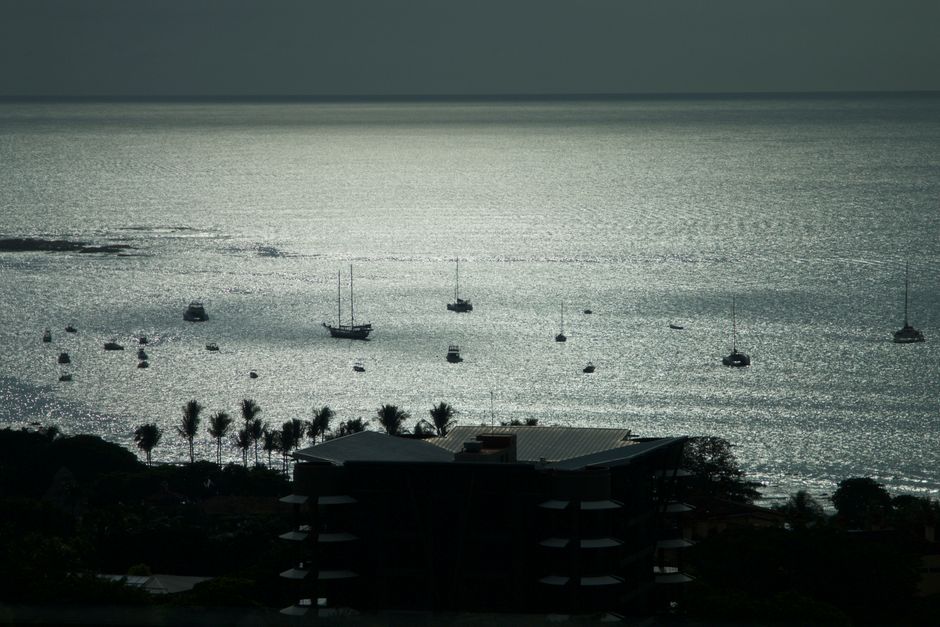
The development sits on two beaches — Playa Danta and Playa Dantita — with surrounding hills that provide hillside view properties and the forest reserve that the trail system runs through. The forest reserve is substantial, protecting dry tropical forest habitat and providing the trail network that supports mountain biking, hiking, and wildlife encounters that residents describe as one of Las Catalinas's distinctive ongoing features.
The comparison to typical Gold Coast destinations comes up constantly. Las Catalinas is more expensive, more curated, more walkable, and more community-programmed than Tamarindo, Flamingo, Potrero, or most other Gold Coast options. Whether these qualities justify the premium is a genuine individual decision that depends entirely on whether the specific experience Las Catalinas offers aligns with what a buyer actually wants.
- Master-planned car-free pedestrian beach town in Santa Cruz canton, Guanacaste
- Mediterranean-inspired architecture and integrated commercial-residential development
- Pedestrian-only interior; vehicles parked at perimeter
- Two beaches (Playa Danta and Playa Dantita) and extensive forest reserve trail system
- Development began in the 2000s and continues building out
- Playa Flamingo immediate neighbor south; Liberia airport ~1 hour east
What Daily Life Looks Like
Daily life in Las Catalinas is genuinely shaped by the pedestrian-only interior. Residents move through the town on foot, by bicycle, or in golf carts. The interaction patterns that result are different from typical sprawl-development beach communities — neighbors encounter each other regularly, casual social interactions happen continuously throughout the day, and the rhythm of daily activity has a community character that requires more deliberate engagement at car-dependent destinations.
For groceries, the community has a small market within the development that handles basics, but most residents make regular trips to Playa Flamingo (10 minutes south by car) for broader grocery shopping. Specialty items and broader commercial needs typically require Flamingo or the further drive to the larger commercial centers. The Saturday farmers market is a community ritual for many residents.
For daily services, Las Catalinas has integrated commercial offerings including multiple restaurants and cafes, a beach club, a surf shop, bicycle and outdoor sports equipment, yoga and fitness, a hotel spa, and real estate offices. For anything beyond these offerings — banking, pharmacy, hardware, medical — Playa Flamingo or more distant Gold Coast destinations are necessary.
The dining options within Las Catalinas are genuine quality. Several restaurants and cafes serve the community with a range from casual to mid-higher end. The food quality reflects the curated commercial offering and the expectations of the resident demographic. For price variety and broader culinary range, Flamingo and Tamarindo provide additional options.
The trail system is a defining part of daily life for residents who engage with it. Hundreds of kilometers of singletracks through the surrounding forest reserve support mountain biking, trail running, hiking, and wildlife encounters. Morning rides and hikes are part of many residents' daily routines. The forest reserve wildlife — howler monkeys, capuchins, iguanas, diverse birds — provides ongoing natural engagement.
- Pedestrian-only interior shapes daily movement and community interaction
- Small in-development market plus regular Playa Flamingo trips for broader groceries
- Integrated dining within walking distance — multiple restaurants and cafes
- Extensive trail system through forest reserve supports daily outdoor recreation
- Substantial community programming and resident events
- Two beaches (Playa Danta and Playa Dantita) accessible by walking from much of development
Climate and Environment
Las Catalinas shares the dry tropical Gold Coast climate — distinctly drier than the rest of Costa Rica, with a sharp dry season from December through April and a green season from May through November. Daytime temperatures regularly reach the low to mid 90s Fahrenheit during dry season. Nighttime temperatures typically stay in the upper 70s. Air conditioning is standard in housing, with the architectural design and orientation incorporating natural ventilation strategies that work alongside AC.
Dry-season winds are sustained and sometimes intense, particularly during the windier weeks of January and February. The exposure to Gold Coast wind patterns affects beach conditions and outdoor comfort during these periods.
Green season brings refreshed greenery and more pleasant temperatures, though some afternoon storms produce intense rainfall. Roads and infrastructure throughout the region are designed for seasonal patterns.
The natural environment is dry tropical forest transitioning to coastal scrub. Las Catalinas's surrounding forest reserve protects substantial habitat for the wildlife typical of Guanacaste's dry forest — howler monkeys (heard regularly from residential areas), white-faced capuchin monkeys, iguanas, abundant bird species including hummingbirds, parrots, and various raptors, and a diversity of insects and reptiles.
Playa Danta has gentler conditions than some Gold Coast beaches, making it more swimmable for casual visitors. Playa Dantita is smaller and more sheltered. Both beaches have safety considerations — currents, rocks, and the standard Pacific coast safety factors — but are generally more accessible than the more demanding surf beaches further south.
Water scarcity is a real regional concern. The Gold Coast's dry tropical climate combined with growing development demand means water infrastructure requires ongoing management. Las Catalinas has invested in water infrastructure, but regional water availability is a real issue that buyers should understand.
- Dry tropical Gold Coast climate — same regional pattern as Tamarindo and Flamingo
- Daytime low–mid 90s F dry season; cool nights upper 70s
- Sustained dry-season winds typical of Guanacaste
- Forest reserve protects dry tropical forest wildlife — howlers, capuchins, iguanas
- Playa Danta gentler than many Gold Coast beaches; Playa Dantita smaller and sheltered
- Water scarcity a regional concern; development has invested in water infrastructure

Cost of Living Reality
Las Catalinas is among the most expensive Gold Coast destinations. Property prices, HOA fees, dining, and most daily costs reflect the master-planned development quality, integrated amenities, and the particular value proposition that draws buyers willing to pay premiums.
Imported goods carry standard import duties. Local produce, fish, and basic services are affordable when sourced through standard Costa Rican channels. Restaurants within Las Catalinas are mostly mid-range to higher-end with prices reflecting the curated commercial offering. Restaurants outside Las Catalinas (in Playa Flamingo, Tamarindo, or other Gold Coast destinations) provide more varied price points.
Housing varies. Condos in mixed-use buildings range from mid-range to high-end. Townhomes and single-family homes range from substantial to among the priciest on the Gold Coast. Hillside view properties carry significant premiums. Long-term rentals exist but are limited compared to typical Gold Coast destinations — the strong vacation rental market keeps prime inventory expensive.
HOA fees are significant. The integrated infrastructure, the trail system maintenance, the community programming, the security, and the broader development services all contribute to HOA fees that are higher than at typical Gold Coast destinations. Buyers should research current HOA fee structures carefully and factor them into total ownership costs.
Vehicle ownership is normal but the walkable interior means residents use vehicles less than at typical Gold Coast destinations. Some residents use golf carts as primary daily transportation.
- Among the most expensive Gold Coast destinations
- Property prices reflect master-planned development quality and integrated amenities
- HOA fees significant — integrated infrastructure and community programming
- Restaurants within Las Catalinas mostly mid-to-higher-end pricing
- Long-term rentals limited; vacation rental market keeps prime inventory expensive
- Walkable interior reduces vehicle use compared to typical Gold Coast
Healthcare Access
Healthcare from Las Catalinas follows the broader Gold Coast pattern, with the practical advantage of Playa Flamingo's clinics nearby and Liberia as the regional medical hub roughly an hour east.
For routine care, residents typically use private clinics in Playa Flamingo (10 minutes south by car), which serve general medical needs and have visiting specialists. Pharmacies are accessible in Playa Flamingo. The CAJA system has presence in the broader area for residents enrolled in the public system.
For specialist care, residents drive to Liberia (about an hour east) where the regional public hospital (Hospital Enrique Baltodano Briceño) and multiple private hospitals — Hospital San Rafael Arcángel, CIMA Hospital Liberia — handle general and specialist care.
For advanced specialty care, residents drive to San José metro (about four to four and a half hours) where Hospital CIMA Escazú and Hospital Clínica Bíblica are widely used by the international expat community.
For emergencies, Playa Flamingo's clinics handle some urgent matters; Liberia's hospitals are the nearest serious medical facilities. Air ambulance services exist for very serious cases.
Dental care is widely available in Playa Flamingo, the broader Gold Coast, and Liberia.
Las Catalinas's healthcare access is comparable to the broader Gold Coast — better than the South Pacific or Nicoya peninsula, but not at the level of Central Valley access. People with significant medical needs often factor this into the location decision.
- Routine care in Playa Flamingo (10 minutes south)
- Liberia (~1 hour east) for specialist care and major hospitals
- Hospital CIMA Liberia and San Rafael Arcángel widely used
- San José metro hospitals 4–4.5 hours for advanced specialty care
- Healthcare access comparable to broader Gold Coast
- Air ambulance available for very serious emergencies

Getting Around and Getting Out
Within Las Catalinas, daily movement is by foot, bicycle, or golf cart. The pedestrian-only interior is the defining feature, and residents who specifically chose Las Catalinas for the walkable lifestyle use vehicles meaningfully less than at typical Gold Coast destinations.
For getting out, the relevant airport is Daniel Oduber International (LIR) in Liberia, about an hour east. Juan Santamaría (SJO) in San José metro is over four hours. LIR is the practical airport for most residents and for most international travel. The proximity to LIR is one of the meaningful daily-life advantages compared to other Costa Rican Pacific destinations.
Playa Flamingo is 10 minutes south by car — close enough for routine errands, marina amenities, additional dining, and broader services. The broader Gold Coast extends from Flamingo south through Brasilito, Conchal, Tamarindo, and beyond. Tamarindo is about 30-40 minutes south.
Vehicles park at the perimeter of Las Catalinas. Some residents use golf carts (electric or gas) as primary daily transportation, with vehicles reserved for trips beyond the development. Many residents have vehicles available for regional trips while using pedestrian movement and golf carts for daily life within Las Catalinas.
Public bus service connects the broader area to Liberia, San José, and other destinations. Uber operates with limited driver availability in this area; drivers are more accessible from Flamingo or other nearby communities.
- Pedestrian-only interior; movement by foot, bicycle, or golf cart
- LIR airport ~1 hour east — meaningful daily-life advantage
- Playa Flamingo 10 minutes south for marina, services, additional dining
- Tamarindo 30–40 minutes south for broader Gold Coast variety
- Vehicles parked at development perimeter
- Reduced vehicle dependence is one of Las Catalinas's distinctive features

Community and Social Life
Las Catalinas's social fabric is shaped substantially by the walkable urbanism, the master-planned community programming, and the particular self-selection of buyers who chose this development.
The pedestrian-only interior produces social interaction patterns different from typical Gold Coast communities. Neighbors encounter each other regularly because of the daily pedestrian movement. Casual social interactions happen continuously. The plazas, cafes, and public spaces serve as natural gathering points. The community has the social density that walkable urbanism produces — something that is impossible to replicate in car-dependent sprawl development.
The expat community has grown alongside the development. People who choose Las Catalinas typically self-select for specific reasons — preference for walkable urbanism, families seeking integrated amenities for children, retirees prioritizing pedestrian lifestyle, residents drawn to architectural and design quality, and buyers willing to pay premiums for the planned-community experience. The combination produces a community that has specific shared values and lifestyle preferences different from buyers at typical Gold Coast destinations.
Gathering points include the plazas and pedestrian streets, multiple restaurants and cafes within the development, the beaches, the trail system, and the various community programming events. The development organizes events, classes, sports activities, children's programs, and broader social offerings that draw resident participation. Some residents specifically appreciate this concentrated programming; others find it more curated than they prefer.
The Costa Rican community within and around Las Catalinas includes the staff who work in the development's operations, hospitality, and services, plus residents from surrounding communities (Potrero, Flamingo) who interact with the development through work or commerce. The English-speaking infrastructure makes daily life accessible without Spanish proficiency, though Spanish remains valuable for engaging more broadly with the surrounding community.
- Walkable urbanism produces continuous casual social interaction
- Self-selected community shares lifestyle preferences and values
- Substantial community programming creates structured gathering opportunities
- Costa Rican local presence more service-oriented than residential
- English-speaking infrastructure makes daily life accessible without Spanish
- Community continues to grow and evolve as development builds out

Schools and Family Life
Las Catalinas has invested in family-oriented infrastructure that distinguishes it from typical Gold Coast destinations.
For school-age children, the relevant private and bilingual school options serve the broader Gold Coast and are accessed by daily commute or school transportation. Las Catalinas has specifically supported educational options through the development's broader programming and partnerships. Some families specifically chose Las Catalinas because of the integrated children's programming and the safe walkable environment for kids.
For expat families, school options on the broader Gold Coast (in Tamarindo, Flamingo, and surrounding areas) provide bilingual and partially-international curricula. International schools in San José metro provide additional choices for families willing to commit to boarding situations.
The walkable interior of Las Catalinas is an unusual feature for child rearing — children can walk or bike to community programs, friends' homes, the beaches, and recreational opportunities in ways that simply aren't possible in car-dependent communities. The trail system supports outdoor childhood activity. The integrated commercial and recreational amenities mean children have access to swimming pools, sports facilities, dining, and broader programming within walking distance.
Pediatric healthcare is accessible through Playa Flamingo clinics for routine matters and Liberia for more advanced needs.
Activities for children include the integrated community programming (sports, arts, classes), beach activities, trail-based outdoor recreation, surf lessons at Playa Danta, and the broader Gold Coast children's activity options.
- Walkable interior is unusual feature for child-rearing — kids walk to programs, friends, beaches
- Integrated community programming for children — sports, arts, classes
- Concentrated peer community of expat children with similar lifestyle preferences
- School options on broader Gold Coast accessed by daily commute or transportation
- Top-tier international schools require relocating to San José metro
- Pediatric healthcare in Playa Flamingo and Liberia; serious cases San José metro
Working and Income
Las Catalinas's working environment combines remote work potential with the integrated commercial economy of the development.
For remote workers, Las Catalinas is genuinely competitive with major remote-work destinations globally. Internet through fiber providers is excellent. The walkable environment supports a quality of daily life that many remote workers specifically seek. Time zone aligns with North America. The combination of factors makes Las Catalinas particularly attractive to remote workers prioritizing community and lifestyle alongside work.
For employment, the local options center on the development's hospitality, retail, and operations economy. Restaurants, hotels, retail, real estate, property management, and the broader development services all provide employment. The integrated commercial development means there are more local employment opportunities concentrated in one place than at typical Gold Coast destinations.
For entrepreneurs, Las Catalinas's curated commercial environment supports specific kinds of businesses but also limits them. The development's commercial offerings are deliberately curated; entrepreneurs interested in establishing businesses within Las Catalinas should understand the development's commercial governance. Outside Las Catalinas, the broader Gold Coast region offers entrepreneurial opportunities oriented to international tourism, real estate, hospitality, and services.
Vacation rental income is a major and competitive market. The combination of the development's particular appeal, the trail system, the walkable character, and the Gold Coast location produces strong demand from visitors who specifically want the Las Catalinas experience.
- Strong remote work environment — excellent infrastructure plus walkable lifestyle
- Integrated commercial development concentrates local employment opportunities
- Curated commercial environment supports specific entrepreneurship but also limits it
- Strong vacation rental market — competitive and sophisticated
- Particularly attractive to remote workers prioritizing community and lifestyle
- Premium pricing — not for budget-conscious buyers

Safety and Honest Concerns
Las Catalinas is among the safer destinations on the Gold Coast. The combination of master-planned development, integrated security, the pedestrian-only interior (which produces natural surveillance through continuous resident presence), and the self-selected resident population produces a daily life with very low crime relative to typical destinations.
Petty crime exists but is meaningfully less than at typical Gold Coast destinations. The natural surveillance of pedestrian movement, the development's security infrastructure, and the limited vehicle access points all reduce opportunities for opportunistic theft.
Violent crime is uncommon. The residential character and the integrated security keep Las Catalinas largely insulated from broader patterns affecting some Costa Rican areas.
Beach safety is the most serious natural concern. Playa Danta has gentler conditions than some Gold Coast beaches, but currents and the standard Pacific coast safety considerations apply. Playa Dantita is smaller and more sheltered but still has ocean conditions that require respect.
Wildlife concerns include venomous snakes (uncommon in residential areas but possible), insects during green season, and the standard tropical wildlife considerations. The trail system through the forest reserve supports wildlife encounters that are part of the experience but require basic awareness.
Water scarcity is a real regional concern. The Gold Coast's dry tropical climate combined with growing development demand means water infrastructure requires ongoing management.
- Among the safer Gold Coast destinations
- Integrated security and walkable urbanism's natural surveillance reduce crime
- Petty theft meaningfully less than typical Gold Coast destinations
- Playa Danta gentler than many Gold Coast beaches but ocean awareness essential
- Pedestrian interior produces safe environment for children
- Water scarcity regional concern; development has invested in water infrastructure
The Hard Truths
Las Catalinas is genuinely expensive. People who arrive expecting affordable Costa Rica or budget Gold Coast living are quickly disabused. The premium pricing reflects the master-planned development quality, integrated amenities, and the particular value proposition — but it puts Las Catalinas out of reach for many buyers who would otherwise consider Gold Coast Costa Rica. Buyers should be honest about whether they specifically want what Las Catalinas offers enough to pay the premium.
The master-planned aesthetic is real. The Mediterranean-inspired architecture, the curated commercial offerings, and the integrated design produce a place that some buyers love and others find inauthentic. People who specifically want traditional Costa Rican character or organic local-evolution will find Las Catalinas not what they're looking for.
The HOA fees are significant. The integrated infrastructure, programming, security, and broader development services all contribute to fees that are higher than at typical Gold Coast destinations. Buyers should research current fee structures carefully and factor them into total ownership costs over time.
The community is still building out. New phases continue to add residential, commercial, and recreational components. Current residents are part of an evolving community rather than one fully established. Some residents specifically value being part of this formation; others may find ongoing construction more disruptive than they prefer.
The architectural and design standards limit individual property modifications. The development's design governance produces consistency that some buyers value but also restricts what owners can do with properties.
The limited diversity of commercial offerings — a genuine advantage for the curated lifestyle — also means there is less variety for residents who want different dining, entertainment, or retail experiences. The walkable interior reduces but does not eliminate vehicle dependence for broader regional life.
- Genuinely expensive — premium pricing puts Las Catalinas out of reach for many buyers
- Master-planned aesthetic — not for buyers wanting authentic Costa Rican character
- HOA fees significant — research current structures carefully
- Community still building out; current residents part of evolving community
- Architectural and design standards limit individual property modifications
- Limited commercial diversity compared to broader Gold Coast destinations
- Walkable interior reduces but doesn't eliminate vehicle dependence for broader regional life
- Self-selected community produces particular social homogeneity some buyers find limiting
Frequently Asked Questions About Living in Las Catalinas
Is Las Catalinas safe for foreigners to live in?
Las Catalinas is among the safer destinations on the Gold Coast.
How much does it cost to live in Las Catalinas?
Las Catalinas is among the most expensive Gold Coast destinations.
Do I need to speak Spanish to live in Las Catalinas?
Las Catalinas's social fabric is shaped substantially by the walkable urbanism, the master-planned community programming, and the particular self-selection of buyers who chose this development.
What is the best time of year to visit Las Catalinas?
Las Catalinas shares the dry tropical Gold Coast climate — distinctly drier than the rest of Costa Rica, with a sharp dry season from December through April and a green season from May through November.
Quick Reference: Las Catalinas At a Glance
| Overview | Las Catalinas sits on the Pacific coast just north of Playa Flamingo, with two beaches (Playa Danta and Playa Dantita), a network of pedestrian streets and plazas, integrated retail and dining, residential properties from condos to single-family homes, and an extensive trail system through the surrounding forest reserve. |
| Climate | Las Catalinas shares the dry tropical Gold Coast climate — distinctly drier than the rest of Costa Rica, with a sharp dry season from December through April and a green season from May through November. |
| Real estate | Las Catalinas offers condos in mixed-use buildings, townhomes, single-family homes, and view properties on the surrounding hills — at price points among the highest on the Gold Coast, reflecting the master-planned development quality, integrated amenities, and the particular value proposition that has no real comparable elsewhere in Costa Rica. |
| Time zone | CST (UTC−6) — no daylight saving time |
| Nearest airport | LIR — Liberia International Airport |
| Foreign ownership | Yes — foreigners own fee-simple title with the same rights as Costa Rican nationals |
Pros and Cons
Advantages
- ✓ Genuinely walkable beach town — unique on the Gold Coast
- ✓ Integrated dining, retail, and recreation within the community
- ✓ Two beaches and extensive trail network through forest reserve
- ✓ Strong community programming and resident events
Considerations
- ! Property prices among the highest on the Gold Coast
- ! Limited diversity of commercial options compared to Tamarindo or Flamingo
- ! Master-planned aesthetic not for buyers wanting authentic Costa Rican character
- ! Strict architectural and design standards limit individual property modifications
Practical Notes
Las Catalinas is a private master-planned development with HOA governance, design standards, and integrated community infrastructure. The project began in the 2000s and has continued building out residential, commercial, and recreational components. The pedestrian-only interior is a defining feature — vehicles are parked at the perimeter, and the inner streets and plazas are for pedestrians, bicycles, and golf carts.
Nearby Areas to Compare
Ready to Compare Properties in Las Catalinas?
Browse verified broker listings from Las Catalinas and the surrounding area.