North Pacific · Guanacaste · Costa Rica
What Is Life in Tamarindo, Costa Rica Like?
Tamarindo is one of the most internationally recognized beach towns in Costa Rica — a working surf town with one of the longest-established expat communities in the country, layered over a real Costa Rican community that predates the tourism boom.

What Tamarindo Actually Is
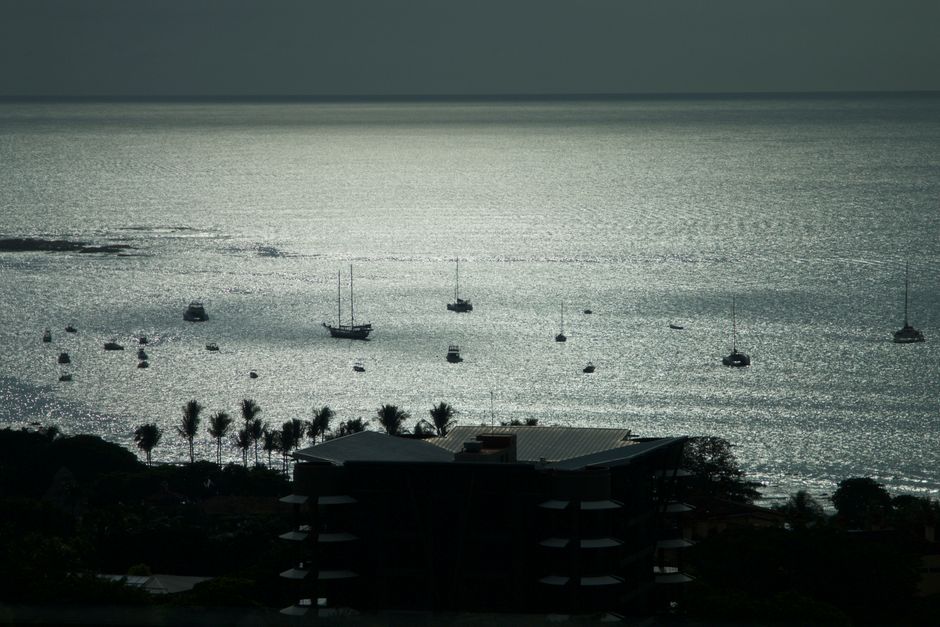
Tamarindo is a beach town on the northwestern Pacific coast of Costa Rica, in the Guanacaste province. It sits at the southern end of a long curve of beach that opens onto the Gulf of Papagayo, with Playa Grande just to the north across an estuary and Playa Langosta immediately to the south. The town developed alongside surfing in the 1970s and 80s and has spent the four decades since growing into one of the most internationally recognized destinations in the country.
What Tamarindo is not: undiscovered, sleepy, or off the beaten path. The town is busy, developed, and oriented around tourism. People who arrive expecting a hidden Latin American village leave disappointed.
What Tamarindo is: a working beach town with one of the longest-established expat communities in Costa Rica, a real surf culture that goes back generations, an active Costa Rican community that predates the tourism boom, and a service economy built around hospitality and real estate. The town has more restaurants per square block than most places its size, a walkable center, and a steady international population that makes English nearly as common as Spanish in commercial zones.
Tamarindo is sometimes confused with the broader Gold Coast — the chain of beach towns and developments from Playa Hermosa down through Playa Avellanas. Tamarindo proper is a specific town, but most residents move freely between Tamarindo, Playa Grande, Langosta, and Avellanas as a regional life. Choosing Tamarindo means choosing the whole northern Guanacaste coastal lifestyle.
- Located in Santa Cruz canton, Guanacaste province, on the northwestern Pacific coast
- Roughly one hour from Liberia International Airport (LIR), four hours from San José
- Mixed Costa Rican and international population, with one of the largest expat communities outside the Central Valley
- English is widely spoken; Spanish is the primary working language outside tourism
- Walkable town center with surrounding residential and beach communities
What Daily Life Looks Like
Daily life in Tamarindo follows the seasons more than most other Costa Rican towns. High season runs from December through April, when the town fills with visitors and the pace doubles. Green season runs from May through November, when many tourists leave and the town reverts to a quieter, more residential rhythm. Long-term residents often prefer green season for exactly this reason.
Grocery shopping is straightforward. There is an Auto Mercado for full-service shopping, a Maxi Pali for budget basics, and several smaller supermarkets and pulperías throughout town. The weekly farmers market draws produce, fresh fish, and prepared foods. Many residents drive 20 minutes to Santa Cruz, the inland canton seat, for hardware, larger purchases, or government offices.
Banking, pharmacies, and routine services are all in town. Multiple banks have branches with bilingual staff. ATMs are widely available. The post office and government services are functional but operate on Costa Rican government time, which means lines and patience. Internet through the major fiber providers is reliable.
Mornings start early. Surfers are in the water by sunrise. Local workers begin shifts at sunrise too. Cafes fill from 7 AM. By midday the heat is intense and many activities pause until late afternoon, when the town comes back to life. Sunsets are a daily social event — the beach fills with residents, tourists, vendors, and dogs from about 4:30 PM until dark.
Sundays are different. Many businesses close or reduce hours. The beach fills with Costa Rican families coming for the day. The town feels more local and less commercial.
- Distinct high season (Dec–Apr) and green season (May–Nov) rhythms
- Auto Mercado, Maxi Pali, and smaller markets cover daily grocery needs
- Santa Cruz (20 minutes inland) handles larger errands and government offices
- Banking, pharmacies, and routine services available locally with bilingual support common
- Sunsets at the beach are a daily social ritual for residents and visitors alike
Climate and Environment
Tamarindo has a distinct dry tropical climate that sets it apart from much of Costa Rica. Guanacaste is the driest region in the country, and Tamarindo sits in the heart of it. The dry season is genuinely dry — months can pass without significant rain, the landscape turns brown and gold, and water conservation becomes a real concern. The green season brings rain, sometimes intense, but rarely the all-day downpours common on the southern Pacific or Caribbean coasts.
Heat is constant. Temperatures during the day commonly reach the low to mid 90s Fahrenheit, and the dry-season sun is unrelenting. Evenings cool slightly but rarely drop below the mid-70s. Air conditioning is universal in housing for anyone who wants to function indoors during the hottest months. Electricity bills reflect this.
The natural environment is more subtle than the rainforests of the south but no less alive. Howler monkeys live in the dry forest behind town and announce themselves at dawn. Iguanas are everywhere. White-faced capuchin monkeys are common. The estuary at Playa Grande is a major nesting ground for leatherback turtles, and the surrounding national park protects critical habitat. Crocodiles live in the rivers and estuaries — visible, real, and a reason to take seriously the warning signs at river mouths.
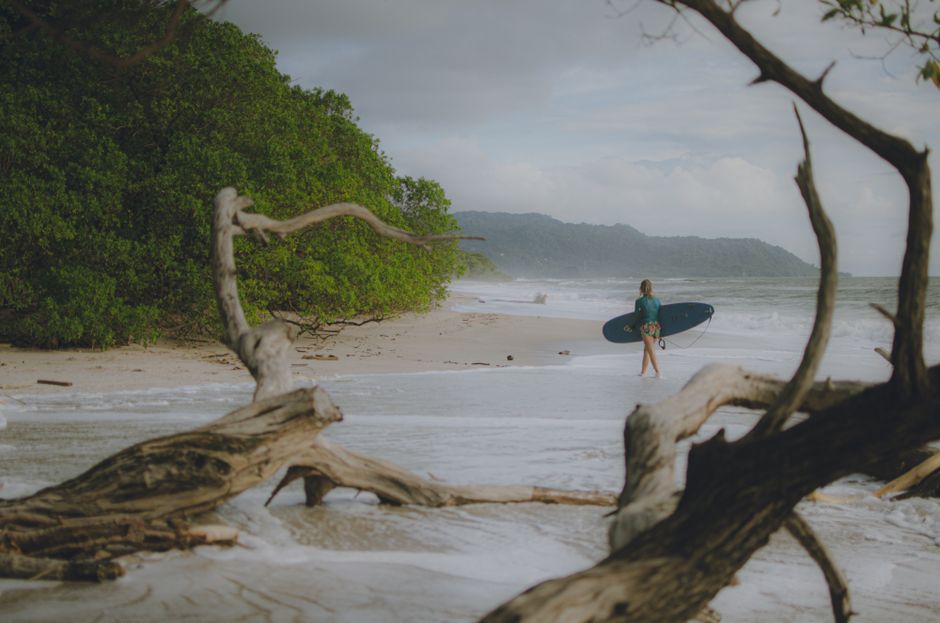
The Pacific is warm year-round. Surf is a defining feature of Tamarindo — the wave at the river mouth produces consistent, accessible waves that have made the town a global surf destination. The same surf produces real currents. People drown in this region, sometimes including experienced swimmers. Ocean conditions deserve respect.
Wind matters here. The dry season brings sustained northerly winds, sometimes strong enough to affect daily activities, beach conditions, and even sleep for residents in exposed homes. The wind also keeps mosquitoes down, which residents notice when it stops.
- Dry tropical climate — driest region in Costa Rica
- Two seasons: very dry (Dec–Apr) and green (May–Nov), with less rain than the southern Pacific
- Sustained northerly winds during dry season affect beach conditions and daily life
- Dry forest wildlife is abundant — monkeys, iguanas, leatherback turtle nesting nearby
- Pacific surf produces real currents — drownings happen, ocean conditions deserve respect

Cost of Living Reality
Tamarindo is among the more expensive places to live in Costa Rica, and that surprises people who arrive expecting Central American prices. It is also less expensive than coastal towns of comparable infrastructure in California, Florida, or southern Europe. The honest comparison depends on what you bring to it.
Imported goods carry meaningful import duties. Electronics, vehicles, certain foods, and anything requiring international shipping cost more than they would in their country of origin. Local produce, fish, basic services, and labor are generally affordable. Restaurants range from inexpensive sodas serving casado lunches to oceanfront spots priced for international tourists, and both exist within blocks of each other.
Housing varies dramatically. A modest residential rental several blocks from the beach costs significantly less than an oceanfront condo with a view. Long-term rentals are more affordable per month than short-term tourist rates, but availability tightens during high season. Owning a property means paying property taxes, HOA fees in most condo developments, and constant maintenance against a coastal climate that is hard on construction. Salt air and humidity find their way into everything.
Utilities matter here. Electricity is among the most expensive in Latin America, and air conditioning runs constantly through the hot months. Water is generally affordable, but during the driest months, water conservation is part of daily life — some properties draw from wells that get stressed during long dry seasons. Internet through fiber providers is reliable and reasonably priced. Mobile phone service is competitive.
Vehicle ownership is more expensive than most newcomers expect. Annual marchamo fees scale with vehicle value, fuel is taxed heavily, and the road conditions in surrounding rural areas accelerate wear.
The honest answer: living modestly in Tamarindo is affordable. Maintaining a North American or European lifestyle in a beach-adjacent tourist town is not a budget exercise.
- Among the more expensive Costa Rican towns; tourist economy drives main-strip prices
- Imported goods and electronics carry significant import duties
- Electricity expensive; AC runs constantly in this climate
- Water conservation real during driest months; some properties use stressed wells
- Internet and mobile reasonably priced
- Vehicle ownership costs more than newcomers anticipate
Healthcare Access
Costa Rica's two-track healthcare system — public CAJA and private hospitals/clinics — operates in and around Tamarindo, and most residents end up using both at different points.
For routine care, several private clinics serve Tamarindo, with general practitioners and specialists who visit on rotating schedules. Pharmacies in town fill many medications without prescriptions that would require one elsewhere. For more comprehensive private care, residents drive to Liberia (about an hour) where there are larger private hospitals with broader specialty coverage. Hospital CIMA in San José and Hospital Clínica Bíblica are also widely used by residents who travel to the Central Valley for serious procedures.
The public CAJA system requires registration and monthly contributions but provides full coverage including hospitalization at no point-of-service cost. Wait times for non-urgent specialist care can be long, which is why many residents who can afford it use private care for routine needs and reserve CAJA for catastrophic coverage.
For genuine emergencies, the nearest hospital is in Liberia. Air ambulance services exist for very serious cases. Residents accept that geography matters — some medical situations require travel.
Dental care is affordable and accessible, with options in Tamarindo and more in Liberia.
- Two-track system: public CAJA and private hospitals/clinics
- Routine private care available locally; serious cases drive to Liberia or San José
- Larger private hospitals in Liberia (~1 hour) and San José metro (~4 hours)
- CAJA provides full coverage with monthly contributions; long waits for non-urgent specialists
- Pharmacies fill many medications without prescriptions
- Geography matters — some medical situations require travel
Getting Around and Getting Out
Inside Tamarindo, the town center is walkable. Restaurants, shops, and the beach are within blocks of each other, and many residents use bicycles, golf carts, or short drives for daily movement. Outlying neighborhoods — hillside homes above town, gated developments, and properties further down the coast — generally require a vehicle.
For getting out, the relevant airport is Daniel Oduber International (LIR) in Liberia, roughly an hour by car. LIR has direct flights to multiple US cities, parts of Canada, and seasonal European connections. Juan Santamaría (SJO) in San José is four hours away and matters less for residents of this region.
The road network has improved meaningfully over the past decade. The main highway from Liberia is paved and reliable. Roads within the immediate Tamarindo area are mostly paved but transition to gravel as you move into outlying neighborhoods. During green season, gravel roads turn slick and some require four-wheel drive.
Driving south along the coast reaches Sámara, Nosara, and the Nicoya peninsula in two to three hours. Driving north reaches Playas del Coco, Liberia, and the Nicaragua border in under an hour. The ferry to Puntarenas operates from Paquera, about two hours south.
Public bus service connects Tamarindo to Santa Cruz, Liberia, San José, and other towns at affordable rates. The buses are reliable and used by a mix of locals and travelers. Schedules are posted but worth confirming locally.
Uber operates in Tamarindo with limited driver availability. Local taxis are widely available, and many residents end up with a few drivers they call directly. A car is genuinely useful here, more than in Jacó or Manuel Antonio, because of the regional spread of beach communities most residents move between.
- Town center is walkable; outlying areas need vehicles
- Liberia airport (LIR) is roughly one hour with direct flights to US, Canada, seasonal Europe
- San José airport is four hours and less relevant for this region
- Roads improved meaningfully over the past decade; gravel roads still require 4WD in green season
- Public buses reliable; Uber present but limited; local taxis fill the gap
- A car is more useful here than in towns where everything is concentrated

Community and Social Life
Tamarindo's social fabric is layered. The Costa Rican community predates the surf and tourism boom and remains the foundation of the town. Many local families have lived in this area for generations, with social life anchored by family, soccer, the Catholic church, and seasonal celebrations. Quinceañeras, school events, and town festivals shape the calendar in ways visitors rarely see.
The expat community is one of the most established outside the Central Valley. Long-term residents, some of whom have been here twenty or thirty years, are deeply integrated and often fluent in Spanish. More recent arrivals are still finding their footing. Digital nomads turn over rapidly. Seasonal residents — people who spend part of the year in Tamarindo and part elsewhere — are a major presence, especially during high season.
Common gathering points include surf breaks, certain cafes and restaurants that have become unofficial meeting spots, the gym, yoga studios, and the beach at sunset. The Saturday farmers market is a weekly social event where locals and expats overlap. Fitness, yoga, and wellness culture are stronger here than in most Costa Rican towns — a function of the long-established expat community and the active surf population.
Religious community is mostly Catholic with a smaller but visible evangelical presence. Yoga and wellness communities function as social communities for some residents. Volunteer and conservation work — particularly around turtle nesting at Playa Grande — gives newcomers a built-in way to meet people who care about the place.
Making friends here as an adult is generally easier than in many North American or European cities. The town is small enough that you see the same people repeatedly. The lifestyle creates more low-stakes social encounters than office-and-commute culture allows. The friendships that form are real, but the transient population means even close friends sometimes leave within a few years.
- Multiple overlapping communities: long-standing Costa Rican families, established expats, recent arrivals, digital nomads, seasonal residents
- Surf community, yoga and wellness culture stronger than in most Costa Rican towns
- Saturday farmers market is a weekly social event for locals and expats
- Conservation and volunteer work (turtle nesting, etc.) offers built-in community entry
- Spanish proficiency expands social access; English-only limits it
- Transience is real — close friends sometimes leave within a few years

Schools and Family Life
Families do raise children in Tamarindo, and they have for generations. Whether it works for your family depends on what you want childhood and education to look like.
For Costa Rican families, the public school system serves Tamarindo and surrounding communities with primary and secondary schools. Quality varies. Many Costa Rican parents who can afford private education send their children to private schools in Tamarindo, Santa Cruz, or Liberia.
For expat families, private and bilingual schools are usually the path. Several private schools operate in the Tamarindo area, including bilingual options that have served the expat community for years. International schools in Liberia and the Central Valley offer additional options for families willing to commit to the drive or relocate within Costa Rica.
Costa Rica is generally safe and welcoming for children. Kids walk and bike more freely than they would in most North American cities. Birthday parties on the beach, sunset gatherings, and after-school surf or sports form a recognizable rhythm. Pediatric healthcare is available locally for routine matters and in Liberia or San José for specialists.
Activities for children are abundant: surf lessons (Tamarindo is one of the best places in the world to learn), soccer, gymnastics, dance, music, swim teams, and structured after-school programs. The natural environment is part of childhood here in a way it usually is not elsewhere — kids learn to read ocean conditions, recognize wildlife, and navigate outdoor settings as a normal part of growing up.
The honest considerations: bilingual or full-immersion Spanish education is the practical default, and parents who want to maintain their children's first-language fluency in something other than Spanish need to plan for that actively. Specialized educational support may require travel to Liberia or San José. Healthcare for serious pediatric issues will likely involve trips to one of those cities.
- Public schools available; private and bilingual options serve the expat community
- International schools in Liberia and Central Valley for families willing to commit
- Tamarindo is one of the best places in the world for kids to learn surf
- Children have more outdoor freedom and natural-world exposure than typical North American childhoods
- Specialized educational or healthcare support may require travel to Liberia or San José
- Touring schools in person before committing is strongly recommended
Working and Income
How you earn a living determines whether Tamarindo works. Not all income strategies are realistic here.
For people working remotely for foreign employers or running location-independent businesses, Tamarindo is genuinely viable. Internet through major fiber providers is reliable enough for video calls, large file transfers, and the standard tools of remote knowledge work. Coworking spaces have opened over the past several years and provide reliable work environments. The time zone aligns with Central US time, which matters for remote teams. A meaningful portion of recent expat arrivals fall into this category.
For people seeking employment in the local economy, options are limited and pay is modest by foreign standards. Tourism, hospitality, real estate, and service businesses are where most local jobs exist. Foreigners working these jobs need appropriate residency status and work authorization — informal arrangements are not legal. Pay scales reflect the Costa Rican economy, not the cost of maintaining a foreign lifestyle.
For entrepreneurs starting a business in Tamarindo, opportunities are real but the work is hard. Restaurants, tour operations, accommodations, and service businesses turn over frequently. Local knowledge, Spanish proficiency, and patience with bureaucratic processes are not optional. Several long-running expat-owned businesses have found their niche; the same number have come and gone.
For Costa Ricans, employment in Tamarindo follows tourism cycles. High season brings work; low season tightens it. Wages have improved over time but remain substantially below what foreign visitors assume.
Vacation rental income deserves honest framing. Yes, properties in Tamarindo can generate rental income. No, the math is not as easy as marketing materials suggest. Occupancy fluctuates seasonally. Management costs, taxes, maintenance against a coastal climate, and competition from a saturated short-term rental market all affect actual returns.
- Remote work for foreign employers is the most common viable income path for new expats
- Reliable fiber internet; multiple coworking spaces
- Local employment limited; pay reflects Costa Rican economy
- Entrepreneurship possible but demanding; failure rates real
- Vacation rental income exists but is not as easy as marketing implies
- Time zone aligns with Central US — works for North American remote teams

Safety and Honest Concerns
Tamarindo is generally safe for residents who use ordinary judgment, and Tamarindo has real safety issues that ordinary judgment helps you navigate.
Petty crime is the most common issue. Theft from unlocked vehicles, opportunistic break-ins of unsecured properties, and pickpocketing in busy areas all happen. Locking doors, not leaving valuables visible, and using basic situational awareness reduce these risks substantially.
Violent crime exists but is uncommon for residents and tourists in their daily routines. Most violent crime in the broader region is connected to drug trafficking and the related underground economy, not random street violence. The risk is real enough to take seriously and not so high that it should drive someone away who otherwise wants to live here.
The drug economy is part of the regional reality. Drugs move through this coast. Most residents never encounter it directly. Some venues and zones are closer to it than others; locals know which to avoid.
Beach safety is its own category. Tamarindo's surf produces real currents at the river mouth and along certain stretches of beach. People drown in this region every year, including experienced swimmers. Knowing which beaches are safer at which tides, watching warning flags, and not swimming alone after drinking are all serious local practices.
Earthquakes are part of life in Costa Rica. Most are small. Larger ones happen periodically. Construction standards have improved, but inspecting any property for structural quality matters here.
Weather hazards include flash flooding during heavy green-season rains, occasional landslides on hillside roads, and the rare tropical storm impact. The area is not in the path of major Caribbean hurricanes.
Dry-season fire risk is real. The dry tropical landscape can burn quickly during the driest months, and residents in outlying areas need to be aware of fire safety.
- Petty theft is the most common issue; basic precautions reduce it substantially
- Violent crime exists, mostly within underground economy; uncommon for residents in daily life
- Beach currents at river mouth cause drownings every year — beach safety is a real local practice
- Earthquakes part of life; construction quality on any property worth verifying
- Dry-season fire risk real in outlying areas
- Geographic remoteness means medical emergencies require travel to Liberia or San José
The Hard Truths
This is where the marketing language stops. Skip this section and you will arrive in Tamarindo unprepared.
The heat is constant and intense, especially during dry season. Acclimation takes most people longer than they expect. Some never fully acclimate. If you cannot function in heat, this is not the place for you, and no amount of beach proximity will change that.
Water is a real concern during the driest months. The region is the driest in Costa Rica. Properties on wells get stressed during long dry seasons. Conservation is not optional — it is daily life.
The dry-season wind is sustained and can be intense. It affects beach activities, sleep in exposed homes, and the experience of being outdoors. People who romanticize tropical weather without understanding the wind component are repeatedly surprised.
Tico time applies to everything: government bureaucracy, contractor scheduling, package delivery, internet repair, and most other services you depend on. People who require things to happen on the timeline they were promised will find this constantly frustrating.
Language is real. Expats who do not learn Spanish stay in a smaller version of Tamarindo than the ones who do. They have fewer real friends, miss conversations happening around them, get worse prices, and remain dependent on translators for medical, legal, and bureaucratic matters.
Bureaucracy is its own world. Establishing residency, registering a vehicle, opening a bank account, paying property taxes — all involve processes that feel slow and inconsistent. Lawyers and gestores are part of the cost of being here.
Coastal climate is hard on construction. Salt air, humidity, heat, UV, and insects all degrade buildings continuously. A property that looks beautiful at purchase requires ongoing investment to stay that way. Newcomers consistently underestimate this.
The surf community can feel cliquish to outsiders. The local lineup at the river mouth has hierarchy and etiquette. Respecting it is not optional — it is a matter of safety and social integration.
- Heat and humidity constant; some never fully acclimate
- Water scarcity real during driest months
- Sustained dry-season wind affects daily life more than visitors expect
- Spanish proficiency dramatically affects quality of life
- Bureaucracy slow and complex; gestores and lawyers are part of normal expense
- Coastal climate is hard on construction; ongoing maintenance constant
- Surf hierarchy is real; respecting the local lineup matters
- Loneliness in the first year is common; building community takes effort
Frequently Asked Questions About Living in Tamarindo
Is Tamarindo safe for foreigners to live in?
Tamarindo is generally safe for residents who use ordinary judgment, and Tamarindo has real safety issues that ordinary judgment helps you navigate.
How much does it cost to live in Tamarindo?
Tamarindo is among the more expensive places to live in Costa Rica, and that surprises people who arrive expecting Central American prices.
Do I need to speak Spanish to live in Tamarindo?
Tamarindo's social fabric is layered.
What is the best time of year to visit Tamarindo?
Tamarindo has a distinct dry tropical climate that sets it apart from much of Costa Rica.
Quick Reference: Tamarindo At a Glance
| Overview | Tamarindo sits on the Gold Coast of Guanacaste, one hour from Liberia airport, with a walkable town center, a long curve of beach, and a steady international population. |
| Climate | Tamarindo has a distinct dry tropical climate that sets it apart from much of Costa Rica. |
| Real estate | Tamarindo offers a wide range of property types — beachfront condos, hillside homes with ocean views, gated developments, and inland residential houses — with one of the most mature real estate markets on the Costa Rican Pacific. |
| Time zone | CST (UTC−6) — no daylight saving time |
| Nearest airport | LIR — Liberia International Airport |
| Foreign ownership | Yes — foreigners own fee-simple title with the same rights as Costa Rican nationals |
Pros and Cons
Advantages
- ✓ One hour from Liberia (LIR) international airport
- ✓ Established bilingual expat community
- ✓ Walkable town center with full services
- ✓ Year-round consistent surf culture
Considerations
- ! Driest region in Costa Rica — water conservation is a real concern
- ! High season pricing on accommodation and food
- ! Sustained dry-season winds affect daily life
- ! Tourist-heavy main strip during peak months
Practical Notes
Tamarindo borders Playa Grande to the north (across an estuary) and Playa Langosta to the south. Most residents move freely between these and Avellanas as a regional life — choosing Tamarindo means choosing the broader Gold Coast lifestyle.
Nearby Areas to Compare
Ready to Compare Properties in Tamarindo?
Browse verified broker listings from Tamarindo and the surrounding area.