Gold Coast · Guanacaste · Costa Rica
What Is Life in Playa Avellanas, Costa Rica Like?
Playa Avellanas is a quiet surf-oriented residential community on the Gold Coast — known for consistent waves, the legendary Lola's Beach Bar, and a deliberate absence of the commercial development that defines neighboring Tamarindo to the north.

What Avellanas Actually Is
Playa Avellanas is a beach community on Costa Rica's northwestern Pacific coast, in the Guanacaste province, sitting along a long stretch of beach south of Hacienda Pinilla and Tamarindo. The community is defined first and foremost by its surf — Avellanas has multiple distinct breaks producing waves for varied skill levels, and the surf scene shapes much of what happens here.
What Avellanas is not: a beach town with a commercial strip. There is no central avenue lined with restaurants, no nightlife concentration, no walking-distance grocery store, no developed tourist infrastructure. The community is residential and surf-oriented by deliberate character. People who expect beach-town amenities within walking distance will be quickly disappointed.
What Avellanas is: a well-established residential community that specifically chose not to become the next Tamarindo. The area has resisted the commercial pressure that transformed its neighbors, and long-term residents are protective of that character. Lola's Beach Bar — the legendary establishment on the beach — is the area's most famous institution, but it is a single exceptional place, not a template for broader development.
The multiple surf breaks are genuinely part of the value. Avellanas produces consistent surf at varied break difficulty levels, which matters because it accommodates different skill levels and creates the day-to-day rhythm that attracts a dedicated long-term resident community. The surf culture here is real and self-sustaining — residents surf, talk about surf, and organize their days around surf in ways that shape the community's social identity.
Tamarindo's proximity is both the practical infrastructure and the character contrast that defines Avellanas. Residents are 25-30 minutes from Tamarindo's Auto Mercado, its restaurants, its clinic, its nightlife, and its broader expat ecosystem. That access is why Avellanas works as a place to live. But residents chose Avellanas specifically because they did not want to live in Tamarindo. The relationship is complementary rather than competitive.
The broader surf corridor context matters. Avellanas sits between Hacienda Pinilla to the north and Playa Negra to the south. These three communities form a surf-oriented residential corridor that collectively offers a different character from the busier commercial Gold Coast destinations — quieter, more residential, more oriented toward outdoor life, with Tamarindo accessible as needed.
- Located in Santa Cruz canton, Guanacaste province, on the Pacific Gold Coast
- Sits between Hacienda Pinilla (north) and Playa Negra (south)
- Multiple surf breaks for varied skill levels along the long beach
- Lola's Beach Bar is the area's most famous destination
- Tamarindo (~25–30 minutes north) provides commercial amenities
- Smaller, surf-oriented expat community compared to Tamarindo
What Daily Life Looks Like
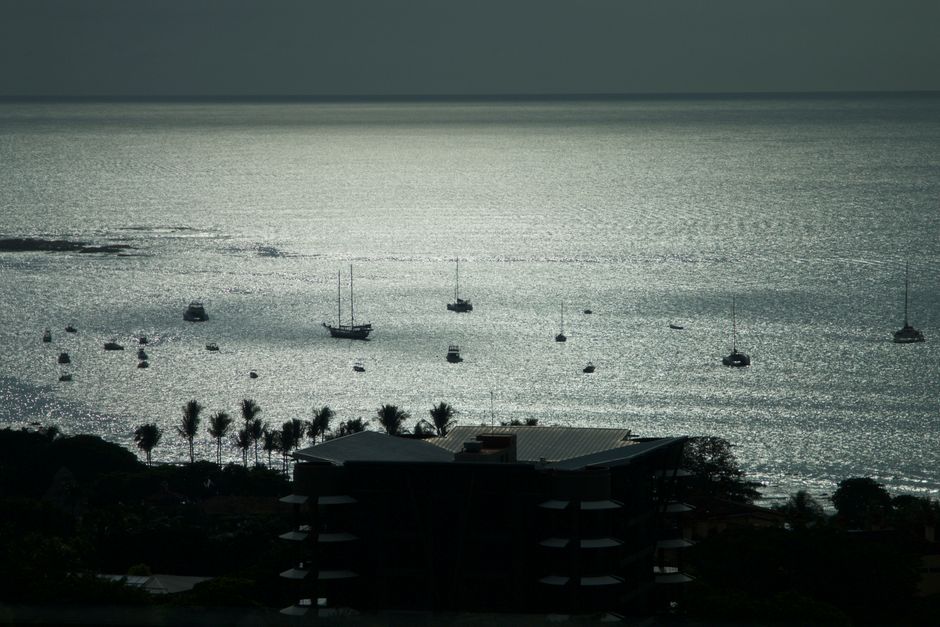
Daily life in Avellanas is genuinely quiet and surf-driven. The community's geography — long beach with low-density residential development behind it, surrounded by scrubland and dry forest — produces a daily rhythm dominated by surf, beach time, and intentionally low-key social life.
For groceries, residents typically go to Tamarindo (about 25-30 minutes north) for the major shopping. Tamarindo has Auto Mercado, Maxi Pali, multiple smaller markets, and the Saturday farmers market. Some residents also use Liberia (about 90 minutes) for larger stores and variety. A small handful of tiendas near Avellanas handle basics and emergency items, but serious grocery runs mean a trip north.
Dining within Avellanas is limited but meaningful. Lola's is genuinely exceptional — widely regarded as one of the best beach bar experiences in Costa Rica, known for its legendary pig named Lola and for consistent food and a social atmosphere that draws visitors from around the Gold Coast. A few other small restaurants and cafes serve the community. For variety — beyond Lola's and the small local spots — residents use Tamarindo regularly.
Mornings in Avellanas are surf mornings. The lineups at various breaks are populated by local residents and a rotating cast of visiting surfers, with a distinctly lower crowd density than Tamarindo's busier breaks. Long-term residents have their patterns, their waves, and their spots. The surf community is the social glue.
The seasonal rhythm is pronounced. Dry season (December through April) brings more people — visiting surfers, seasonal residents returning, tourist volume up. Green season (May through November) is genuinely quiet. Many seasonal residents leave; the community shrinks; Lola's remains open but the broader scene contracts. Year-round residents who thrive in green season often describe it as the best time — fewer people, more consistent surf in some months, and the community settling into its most authentic character.
- Genuinely quiet and surf-driven daily rhythm
- Most groceries and broader services come from Tamarindo (~25–30 minutes)
- Surf-driven mornings — locals catch waves with far fewer crowds than Tamarindo
- Lola's Beach Bar is one of the area's main gathering points
- Sundays bring Costa Rican families to the beach; rhythm shifts more local
- Seasonal rhythm — high season busier, green season genuinely quiet
Climate and Environment
Avellanas shares the dry tropical climate of the broader Gold Coast — distinctly drier than the rest of Costa Rica, with a sharp dry season from December through April and a green season from May through November. Climate patterns match the broader region: heat is constant and intense during dry season, with daytime temperatures regularly reaching the low to mid 90s Fahrenheit, sustained dry-season winds, and meaningful but not overwhelming green-season rain.
Air conditioning is standard in homes built for year-round occupancy. Electricity bills accumulate during the hottest dry-season months. The Papagayo wind system blows consistently from the north during dry season — powerful, cooling, and sometimes disruptive. Open beach exposure at Avellanas means wind impact can be stronger than at more sheltered bay locations. The long beach orientation means there is no significant headland shelter.
Water scarcity during the dry season is a real and growing concern across Guanacaste. Properties on individual wells can face genuine difficulty during long dry seasons. Community water infrastructure varies.
The beach itself is the defining environmental feature. Avellanas's long beach produces multiple surf breaks with different characteristics — point breaks, beach breaks, and the consistent swell exposure that makes this one of the more reliable surf destinations on the Gold Coast. The same swell patterns that produce great waves also create strong currents and riptides along parts of the beach. Drownings happen on this coast every year, and conditions that look manageable from the shore can be more dangerous in the water.
Dry tropical forest character defines the inland environment: howler monkeys audible in the morning, white-faced capuchins in the trees, iguanas on the roads and beaches, coatis crossing property fences, parrots and coastal birds overhead. Sea turtle nesting happens on nearby beaches seasonally. The mangrove areas support crocodiles.
Green season transforms the landscape. The dry scrubland turns green within weeks of the first rains. The heat moderates slightly. The seasonal character shift is one of the more dramatic climate experiences on the Gold Coast.
- Dry tropical climate; same regional pattern as broader Gold Coast
- Multiple surf breaks for varied skill levels along the long beach
- Sustained dry-season winds typical of Guanacaste
- Dry tropical forest wildlife — howlers, iguanas, capuchins
- Strong currents real safety factor — drownings happen on this coast every year
- Water scarcity during driest months a real and growing regional concern

Cost of Living Reality
Avellanas is generally less expensive than Tamarindo for comparable properties, though still reflecting Gold Coast pricing rather than affordability. The combination of quieter character, smaller commercial base, and absence of premium hillside view inventory keeps prices below Tamarindo while the area's sustained surf-destination demand keeps them above some other quieter Gold Coast options.
Imported goods carry standard import duties. Local produce, fish, basic services, and labor are affordable. Eating out happens partly at Lola's and a few other Avellanas spots, partly with trips to Tamarindo's broader dining scene; everyday meals are reasonable while higher-end dining requires the trip north.
Housing varies. Single-family homes in established residential developments range from modest to substantial. Surf-area properties carry premiums for proximity to the breaks. Inland lots vary by location and access. Long-term rentals exist but are less abundant than in Tamarindo; short-term tourist rentals targeted at surfers are present in meaningful numbers.
Utilities are typical for coastal Guanacaste. Electricity is expensive and AC bills accumulate during hot months. Water reliability varies by property type. Internet is competitively priced.
Vehicle ownership is necessary. Most properties require driving for daily life; the trips to Tamarindo for groceries and services apply for almost everyone. Four-wheel drive is helpful for some access roads in green season.
HOA fees apply in some residential developments. These costs vary by community.
The honest answer: Avellanas offers a middle-ground value on the Gold Coast — less expensive than Tamarindo, more expensive than the deepest-rural alternatives, with property prices reflecting the surf-destination demand that has built over decades. Buyers who specifically want the surf-oriented quiet character and accept the Tamarindo dependency for broader services find this works.
- Less expensive than Tamarindo for comparable properties
- Surf-destination demand keeps prices above the deepest-rural alternatives
- Most groceries and broader dining come from Tamarindo
- Surf-oriented short-term rentals are a real market segment
- HOA fees apply in some residential developments
- Vehicle necessary; trips to Tamarindo are routine
Healthcare Access
Healthcare from Avellanas follows the broader Gold Coast pattern, with the practical advantage of Tamarindo's clinics nearby and Liberia as the regional medical hub roughly an hour and a half away.
For routine care, residents typically use private clinics in Tamarindo (about 25-30 minutes by road), which serve general medical needs and have visiting specialists. Pharmacies are accessible in Tamarindo. The CAJA system has presence in the broader area for residents enrolled in the public system.
For specialist care, residents drive to Liberia (~1.5 hours) where the regional public hospital (Hospital Enrique Baltodano Briceño) and multiple private hospitals — Hospital San Rafael Arcángel, CIMA Hospital Liberia — handle general and specialist care.
For advanced specialty care, residents drive to San José metro (about four hours) where Hospital CIMA Escazú and Hospital Clínica Bíblica are widely used by the international expat community.
For emergencies, response time depends on the situation. Tamarindo's clinics handle some urgent matters; Liberia's hospitals are the nearest serious medical facilities. Air ambulance services exist for very serious cases.
Dental care is widely available in Tamarindo and Liberia. Costa Rica's broader medical and dental tourism infrastructure benefits residents.
Avellanas's healthcare access is comparable to the broader Tamarindo area. Better than the South Pacific or Nicoya peninsula, but not at the level of Central Valley access. People with significant medical needs often factor this into the location decision.
- Routine care in Tamarindo (~25–30 minutes by road)
- Liberia (~1.5 hours) for specialist care and major hospitals
- Hospital CIMA Liberia and San Rafael Arcángel widely used
- San José metro hospitals ~4 hours for advanced specialty care
- Healthcare access comparable to broader Tamarindo area
- Air ambulance available for very serious emergencies

Getting Around and Getting Out
Inside Avellanas, daily movement requires a vehicle for almost all residents. The community is residential and dispersed, with low-density development meaning even short trips often involve driving. Some residents living near Lola's or in lower-elevation neighborhoods can manage with bicycles for some daily needs, but the broader geography is car-dependent.
For getting out, the relevant airport is Daniel Oduber International (LIR) in Liberia, roughly an hour and a half by car. Juan Santamaría (SJO) in San José is over four hours away. LIR is the practical airport for most residents.
Tamarindo is 25-30 minutes north — close enough for routine errands, dining variety, and most services. The broader Gold Coast is accessible. Driving north through Tamarindo eventually reaches the Flamingo cluster, then Playas del Coco. Driving south reaches Playa Negra in about 15-20 minutes from Avellanas.
The roads connecting Avellanas to surrounding areas are generally paved and reliable, though some access roads to specific properties become rougher in green season. The road quality has improved meaningfully over the past decade.
Public bus service connects the broader area to Tamarindo, Liberia, and other towns. Buses are available but less frequent than in larger commercial towns.
Uber operates with limited driver availability in Avellanas itself; drivers are more accessible from Tamarindo. Local taxis are available; many residents have a few drivers they call directly.
A vehicle is genuinely necessary for residents in Avellanas. The combination of dispersed residential geography and the regular need for Tamarindo trips makes car-free living impractical.
- A vehicle is genuinely necessary
- LIR airport ~1.5 hours; SJO 4+ hours
- Tamarindo 25–30 minutes north for routine errands and dining
- Playa Negra 15–20 minutes south
- Roads generally paved; some access sections rougher in green season
- Uber limited in Avellanas; more accessible from Tamarindo

Community and Social Life
Avellanas's social life reflects the small surf-oriented residential community character. The pace, the surf-driven daily rhythm, and the limited commercial scene all shape how social connections form.
The Costa Rican community is present but more dispersed than in larger Gold Coast destinations — many local families live in surrounding rural areas (27 de Abril, Hernández, and other inland communities) and work in surf instruction, hospitality, and trades, with some commuting from broader regional communities.
The expat community is meaningfully smaller than at neighboring busier destinations. The people who choose Avellanas typically self-select for the surf-oriented quiet character — serious surfers, families seeking quieter beach environments, retirees prioritizing tranquility, and remote workers who value focused environments. The surf community is a particular social anchor — residents who surf often know each other from the lineup more than from any other gathering point.
Gathering points include Lola's Beach Bar (the area's most famous and longest-running social hub, drawing both residents and visitors), the surf lineup itself, several long-running smaller restaurants and cafes, and the beach at sunset. For broader social variety, residents engage with Tamarindo — restaurants, cafes, social events, fitness facilities, and the larger expat community network. Many Avellanas residents have meaningful social ties in Tamarindo and make regular trips for both dining and friendships.
Making friends in Avellanas as an adult requires more deliberate effort than in larger expat-heavy destinations. Spanish proficiency expands access to the Costa Rican community meaningfully, though English-only daily life is more viable here than in many Costa Rican areas because of the surf community's international character.
- Smaller, self-selected surf-oriented community
- Surf community is a particular social anchor
- Lola's Beach Bar is the area's main social hub
- Most residents combine Avellanas life with social ties in Tamarindo
- English-only daily life more viable than many CR areas due to international surf community
- Active engagement plan needed to avoid isolation in green season

Schools and Family Life
Families do raise children in Avellanas, with the trade-offs that come with the smaller residential community.
For Costa Rican families, public schools serve the surrounding communities. Many Costa Rican parents who can afford private education send their children to private schools in Tamarindo, the broader Santa Cruz canton, or Liberia.
For expat families, the relevant private and bilingual school options are in Tamarindo and the broader Gold Coast. International schools in Liberia provide additional choices for families willing to commit to the longer commute. Touring schools in person before committing remains essential.
Costa Rica is generally safe and welcoming for children. The natural environment of Avellanas — the long beach, dry forest, abundant wildlife — provides outdoor experiences that distinguish childhood here from busier destinations. The surf culture extends to youth — kids learn to surf early in this kind of community. Pediatric healthcare is available in Tamarindo for routine matters and at higher levels in Liberia.
Activities for children include surf lessons (Avellanas is one of the better places in Costa Rica for kids to learn — multiple breaks at varied skill levels), beach time, soccer, music, art, and a range of structured after-school programs accessible in Tamarindo and the broader cluster.
The honest considerations: the social pool of expat children in Avellanas proper is smaller than in Tamarindo. School commutes are real — every school day involves driving to Tamarindo or beyond. Specialized educational support typically requires travel to Liberia.
- Schools are in Tamarindo and broader Gold Coast — daily commute reality
- One of the better places in CR for kids to learn surf — varied break difficulty
- Surf culture extends to youth
- Smaller peer pool of expat children than busier destinations
- Pediatric healthcare in Tamarindo; serious cases involve Liberia or San José
- Specialized educational support typically requires travel to Liberia
Working and Income
Income strategies in Avellanas match other quieter Gold Coast residential areas: remote work for foreign employers is the most common viable path; local employment is limited; entrepreneurship is real but specific.
For remote workers, Avellanas is viable. Internet through fiber providers reaches most populated areas with reliability suitable for focused work. The quiet residential environment is genuinely conducive to productivity — many residents specifically value this over busier destinations. The time zone aligns with North America. Coworking is mostly accessed in Tamarindo for those who want shared work space.
For employment, local options center on hospitality (Lola's, smaller restaurants, accommodations), surf instruction, real estate, and trades. The broader Tamarindo economy is accessible for residents willing to commute. Foreigners need appropriate residency status and work authorization. Pay reflects the Costa Rican economy.
For entrepreneurs, Avellanas's surf-oriented residential character supports specific kinds of small businesses — surf instruction, vacation rental management oriented toward surfing travelers, real estate, certain hospitality-adjacent businesses. The market is smaller and more specialized than at Tamarindo's broader scale.
Vacation rental income is a real and meaningful market here, particularly for properties oriented toward surfing travelers. The combination of consistent surf, proximity to Tamarindo, and quieter character produces specific demand. Owners with well-managed properties in good locations can generate income; the market is competitive enough that mediocre properties underperform.
- Remote work for foreign employers most common viable path
- Quiet environment genuinely conducive to focused productivity
- Coworking accessed in Tamarindo for those who want shared work space
- Local employment limited; small hospitality, surf, trades, real estate market
- Surf-oriented vacation rental market real and meaningful
- Time zone aligns with North American work schedules

Safety and Honest Concerns
Avellanas is generally considered among the safer Gold Coast areas. The residential character, the smaller population, and the absence of a busy commercial nightlife scene all contribute to low crime relative to busier destinations.
Petty crime exists. Theft from unlocked vehicles, opportunistic break-ins of unsecured properties, and theft of items left on the beach all happen, particularly during high season. Surfers' boards and bags are particular targets when left unattended. Basic precautions reduce these risks substantially.
Violent crime is uncommon in Avellanas's daily life. The residential character and the geography keep it largely insulated from the patterns affecting busier coastal areas.
Beach safety is a real concern despite the lower crowd density. Avellanas's surf is consistent and the same conditions that make it a great surf beach create real currents, riptides, and dangerous water along significant stretches. The lack of crowds means swimmers and surfers may be on their own if conditions go wrong. Drownings happen on this coast every year.
Wildlife concerns include venomous snakes (real possibility in the dry forest and scrubland, though encounters in residential areas are uncommon), scorpions occasionally in homes, and the standard tropical insect background. Crocodiles live in nearby rivers and estuaries.
Weather hazards include green-season flooding, occasional damage during heavy storms, sustained dry-season winds, and the rare tropical storm impact. Earthquakes are part of life in Costa Rica.
Water scarcity during the driest months is a real Guanacaste-wide concern.
- Among the safer Gold Coast areas — residential character supports low crime
- Petty theft most common; surfers' gear particular target
- Violent crime uncommon in daily life
- Strong surf currents real — drownings happen on this coast every year
- Venomous snakes real possibility in dry forest and scrubland
- Water scarcity during driest months a real Guanacaste-wide concern
The Hard Truths
Avellanas is genuinely quiet, and people who arrive expecting a beach town with infrastructure leave disappointed quickly. There is no commercial strip, very limited dining options beyond Lola's and a handful of others, no nightlife, and no walkable amenity scene. The community is residential and surf-oriented by nature. Buyers who do not specifically want this character are better served at busier destinations.
The constant Tamarindo dependency is real. Every residential decision — groceries, dining variety, services, social scene — eventually involves the trip north. People who expected to live entirely within Avellanas quickly discover this is impractical for almost anyone.
The expat community is small. People who need an active English-speaking social menu, regular dining variety within walking distance, or robust infrastructure for newcomer integration will find Avellanas limiting. Some residents thrive in the smaller community; others find it isolating, particularly during green season when seasonal residents are gone.
The heat is intense. Dry-season conditions match the broader Gold Coast — sustained temperatures, strong winds, demanding sun exposure. Acclimation takes most newcomers longer than they expect.
Water scarcity during the driest months is real and growing. The broader Guanacaste pressure applies here.
The surf has hierarchy. Local surfers and long-term residents have established patterns at the various breaks. Newcomers who paddle out aggressively without learning the social order get worse waves and sometimes worse welcomes. The community is small enough that surf etiquette matters.
Tico time applies fully. Bureaucracy, contractor scheduling, and most service work move at the pace that frustrates people from efficient cultures.
- Genuinely quiet — no commercial strip, no nightlife, very limited walkable amenities
- Constant Tamarindo dependency for groceries, services, dining variety
- Small expat community — limiting for those who need English-speaking ecosystem
- Intense dry-season heat and sustained winds
- Water scarcity during driest months a real and growing concern
- Surf hierarchy at local breaks; respect the lineup
- Vacation rental market more sophisticated than passive-income expectations suggest
- Loneliness real for residents without engagement plan and Tamarindo ties
Frequently Asked Questions About Living in Playa Avellanas
Is Playa Avellanas safe for foreigners to live in?
Avellanas is generally considered among the safer Gold Coast areas.
How much does it cost to live in Playa Avellanas?
Avellanas is generally less expensive than Tamarindo for comparable properties, though still reflecting Gold Coast pricing rather than affordability.
Do I need to speak Spanish to live in Playa Avellanas?
Avellanas's social life reflects the small surf-oriented residential community character.
What is the best time of year to visit Playa Avellanas?
Avellanas shares the dry tropical climate of the broader Gold Coast — distinctly drier than the rest of Costa Rica, with a sharp dry season from December through April and a green season from May through November.
Quick Reference: Playa Avellanas At a Glance
| Overview | Avellanas sits along a long stretch of beach south of Hacienda Pinilla and Tamarindo, with multiple distinct surf breaks, surrounding residential developments, and a small but dedicated expat community drawn by the quieter character. |
| Climate | Avellanas shares the dry tropical climate of the broader Gold Coast — distinctly drier than the rest of Costa Rica, with a sharp dry season from December through April and a green season from May through November. |
| Real estate | Avellanas offers single-family homes in established residential developments, surf-area properties, and inland lots — at price points generally below Tamarindo for comparable size but reflecting the area's sustained surf-destination demand. |
| Time zone | CST (UTC−6) — no daylight saving time |
| Nearest airport | LIR — Liberia International Airport |
| Foreign ownership | Yes — foreigners own fee-simple title with the same rights as Costa Rican nationals |
Pros and Cons
Advantages
- ✓ Multiple consistent surf breaks for varied skill levels
- ✓ Quieter than Tamarindo while sharing access to its amenities
- ✓ Established surf and residential community character
- ✓ Lower property prices than busier Gold Coast destinations
Considerations
- ! Limited commercial base — most groceries and services from Tamarindo
- ! Strong currents and surf — beach safety is real
- ! Smaller English-speaking expat community than Tamarindo
- ! Dry-season heat and water scarcity typical of Guanacaste
Practical Notes
Avellanas sits between Hacienda Pinilla to the north and Playa Negra to the south, with all three communities forming a corridor of surf-oriented coast. Most residents combine Avellanas life with regular trips to Tamarindo (about 25-30 minutes north) for shopping, dining, and broader services.
Nearby Areas to Compare
Ready to Compare Properties in Playa Avellanas?
Browse verified broker listings from Playa Avellanas and the surrounding area.