Gold Coast · Guanacaste · Costa Rica
What Is Life in Hacienda Pinilla, Costa Rica Like?
Hacienda Pinilla is a private master-planned beach community on the northwestern Pacific coast — 4,500 acres of beachfront, residential neighborhoods, golf, and amenities behind a single gated entrance, marketed primarily to international second-home and resort buyers.

What Hacienda Pinilla Actually Is
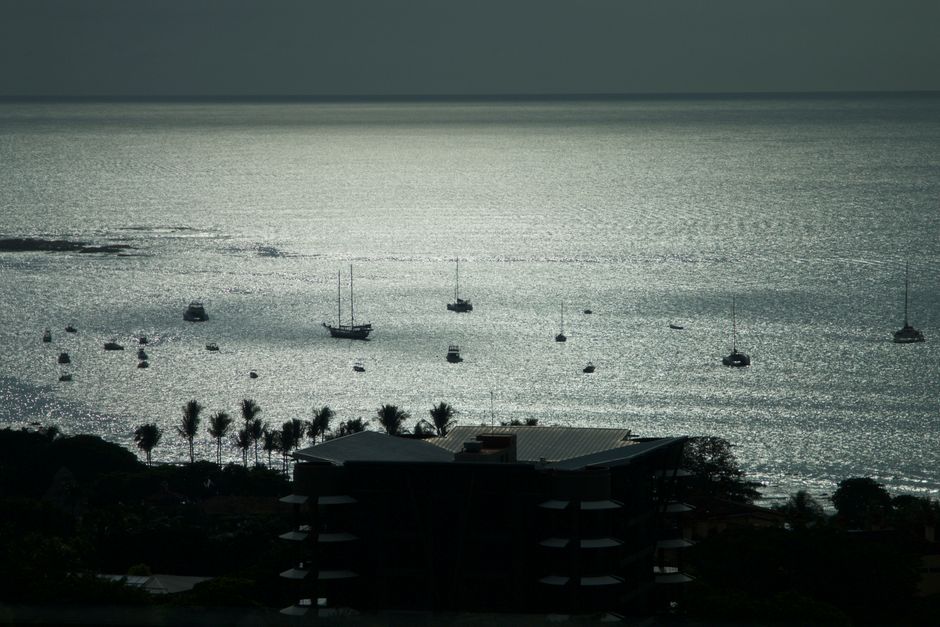
Hacienda Pinilla is a private master-planned beach community in Costa Rica's Guanacaste province, sitting along three miles of Pacific coastline between Tamarindo to the north and Playa Avellanas to the south. The development covers roughly 4,500 acres — large enough to feel like its own world rather than a neighborhood within another town. Behind the gated entrance are several distinct residential neighborhoods, an 18-hole golf course, the JW Marriott Guanacaste resort, a beach club, an equestrian center, and substantial preserved dry forest.
What Pinilla is not: a public Costa Rican town, an authentic local community, or a place where daily life involves integration with Tico neighbors and culture. There is no commercial strip, no central park, no public school or church. The Costa Rican community works inside Pinilla — resort staff, maintenance, security, landscaping — but lives in surrounding towns.
What Pinilla is: one of Costa Rica's best-executed private resort communities, with infrastructure and amenities comparable to North American or European gated communities, in a Guanacaste beachfront setting. The development has been built and operated for decades, which shows in the maturity of the landscaping, the quality of the roads, and the stability of the residential community. The JW Marriott's presence provides hotel-quality services and social infrastructure that many gated communities lack.
For buyers specifically seeking this kind of community — planned, secure, amenity-rich, with high-quality infrastructure and a stable international resident base — Pinilla is among the best options in Costa Rica. For buyers seeking authentic Costa Rican life or communities where Tico and expat culture intersect, Pinilla is the wrong choice regardless of the amenities.
- Located in Santa Cruz canton, Guanacaste province, between Tamarindo and Avellanas
- 4,500-acre private master-planned community with three miles of beach
- Anchored by JW Marriott resort, 18-hole golf course, beach club, equestrian center
- Multiple distinct residential neighborhoods inside the gates
- Roughly one hour from Liberia (LIR) international airport
- Most residents combine Pinilla life with trips to nearby Tamarindo and Avellanas
What Daily Life Looks Like
Daily life inside Pinilla is structured by the development's amenities and the rhythms of a managed community. Mornings often start at the beach club, on the golf course, or at the fitness facilities. The development's roads and trails connect homes to amenities and the beach, with most movement inside the property handled by personal vehicles, golf carts, or walking depending on neighborhood and destination.
For groceries and broader services, residents leave the development. Tamarindo is fifteen to twenty minutes north — close enough for routine errands and dining variety without feeling burdensome. Auto Mercado and other supermarkets in Tamarindo handle most grocery needs. Liberia is roughly an hour inland for larger retail, government services, and hospital-level medical care.
Inside Pinilla, the JW Marriott resort restaurants and the beach club are the primary dining and social infrastructure. These are priced for resort and second-home clientele rather than for daily economy living. Residents who eat out frequently inside Pinilla spend accordingly. Most residents mix resort dining with trips to Tamarindo and Avellanas for variety and value.
The pace inside Pinilla is relaxed and residential. High season (December through April) brings more activity as second-home owners arrive and the resort fills. Green season is genuinely quieter — the development operates normally but feels different, with more homes empty and a smaller resident core present. Buyers who only experience Pinilla in high season and purchase expecting that energy throughout the year are frequently surprised by the green-season character.
There is no commercial strip, no central park, and no spontaneous encounters with neighbors the way a public town produces. Social life requires initiative — the amenities provide infrastructure for it, but passive participation in community life is limited compared to living in a genuine town.
- JW Marriott resort and beach club function as primary social hubs
- Three miles of private beach mean rarely-crowded mornings and sunsets
- Groceries and broader services come from Tamarindo (~15–20 minutes north)
- High season busy with second-home arrivals; green season genuinely quiet
- No commercial strip or town center inside the gates
- Daily life requires either amenity engagement or trips outside for variety
Climate and Environment
Hacienda Pinilla shares the dry tropical climate of the surrounding Gold Coast — distinctly drier than the rest of Costa Rica, with a sharp dry season and a meaningful but rarely overwhelming green season. The dry season runs December through April, when months can pass without significant rain and the surrounding landscape turns brown and gold. The green season runs May through November, with afternoon storms common but not the all-day downpours typical of the South Pacific.
Heat is constant and intense during dry season, with temperatures regularly reaching 35°C (95°F) and above. The Papagayo wind blows consistently and strongly from the north during dry season — providing some cooling but also affecting sleep in exposed homes, beach activities, and outdoor comfort for extended periods. Air conditioning runs heavily; electricity bills reflect it.
The three miles of Pinilla coastline face the open Pacific, with surf and currents that produce genuine hazards. This is not sheltered bay swimming. The beaches inside Pinilla are beautiful and private, but they are surf beaches with real ocean conditions. Lifeguards may be present at specific beach club locations during posted hours, but the full three miles of coastline is not uniformly supervised.
Despite the developed character, Hacienda Pinilla contains substantial preserved dry tropical forest. Wildlife is present and noticeable — howler monkeys, white-faced capuchins, iguanas, coatis, and abundant shore birds are routine. This is one of the more ecologically interesting aspects of the development for residents who care about natural environment.
Water scarcity during the driest months is a real Guanacaste-wide concern that applies inside Pinilla's managed systems as well as outside.
Coastal climate degrades construction continuously. Salt air, heat, UV, and insects all require ongoing maintenance — the development's managed-community character handles common areas, but individual property maintenance is a real ongoing expense.
- Dry tropical climate; distinctly drier than the rest of Costa Rica
- Three miles of open Pacific coastline — surf and currents real
- Substantial preserved dry forest within the development
- Wildlife present despite developed character — monkeys, iguanas routine
- Sustained dry-season winds typical of Guanacaste
- Water scarcity during driest months a regional concern

Cost of Living Reality
Hacienda Pinilla is among the more expensive places to own property in Costa Rica. Purchase prices reflect the master-planned amenities, the private beach access, and the international demand from second-home and resort buyers. Ongoing HOA fees, amenity dues, and maintenance costs are real and meaningful.
Imported goods carry standard Costa Rican import duties. Restaurants inside the JW Marriott resort and the beach club are priced for resort and second-home clientele rather than local economy. Outside the gates, restaurants in Tamarindo, Avellanas, and surrounding areas range from inexpensive sodas to higher-end places, with day-to-day eating affordable when residents seek it.
Housing varies within Pinilla by neighborhood and property type. Single-family homes range from substantial to luxury-grade. Condos exist at multiple price points but generally above comparable units in public towns. Lots for new construction are part of the inventory.
HOA and amenity fees are a defining cost factor. These pay for the development's roads, security, common-area maintenance, landscaping, and access to amenities. Buyers should budget realistically for these ongoing costs as part of total ownership expense — not as occasional surprises.
Utilities are typical for Costa Rica with one note: AC runs heavily in this climate, and electricity bills accumulate. The development's infrastructure is well-built but does not exempt residents from Costa Rica's high electricity costs. Internet and mobile are competitively priced.
Vehicle ownership is necessary for residents who plan to spend any significant time outside the development. Inside Pinilla, golf carts are common for short distances, but full-sized vehicles are needed for trips to Tamarindo, Liberia, the airport, or anywhere else.
The honest answer: Hacienda Pinilla is more expensive than surrounding public Gold Coast towns, with HOA and amenity costs that compound the property purchase price. Buyers who understand and accept these costs find genuine value in the lifestyle. Buyers who underestimate ongoing costs are frequently surprised.
- Among the more expensive places to own property in Costa Rica
- HOA and amenity fees are real ongoing costs to budget for
- JW Marriott and beach club restaurants priced for resort clientele
- Outside-gate dining options in Tamarindo and Avellanas more affordable
- AC runs heavily; electricity bills accumulate
- Vehicle necessary for any meaningful time spent outside the development
Healthcare Access
Healthcare from Hacienda Pinilla mirrors the broader Gold Coast pattern, with Liberia as the regional medical hub roughly an hour away.
For routine care, residents leave the development. Tamarindo (~15-20 minutes) has private clinics and pharmacies. Liberia (~1 hour) houses the regional public hospital (Hospital Enrique Baltodano Briceño) and multiple private hospitals — Hospital San Rafael Arcángel, CIMA Hospital Liberia, and others — covering general and specialist care.
For advanced specialty care, residents drive to San José metro (about four hours) where Hospital CIMA Escazú and Hospital Clínica Bíblica are widely used by the international expat community.
For emergencies, response time depends on the specific situation. Liberia's hospitals are the nearest serious medical facilities. Air ambulance services exist for very serious cases.
Dental care is widely available in Tamarindo and Liberia for routine and specialty work.
Health insurance options are the same as elsewhere in Costa Rica — international, private Costa Rican plans, or CAJA enrollment. The combination most residents use is CAJA for catastrophic coverage with private out-of-pocket care for routine needs.
The practical advantage: Liberia's medical infrastructure is closer than from many Costa Rican beach destinations, and the Gold Coast as a whole has better healthcare access than the South Pacific or Nicoya peninsula. Pinilla residents benefit from this regional position while paying for the gated-community lifestyle.
For people whose medical needs require frequent specialist visits or who anticipate health complexity, the Gold Coast generally and Pinilla specifically work better than more remote Costa Rican destinations.
- Routine care in Tamarindo (~15–20 minutes) and Liberia (~1 hour)
- Liberia houses regional public hospital and multiple private hospitals
- San José metro hospitals ~4 hours for advanced specialty care
- Better healthcare access than South Pacific or Nicoya peninsula destinations
- Air ambulance available for very serious emergencies
- Dental care widely available in Tamarindo and Liberia

Getting Around and Getting Out
Getting around Pinilla and getting out is straightforward, with the development's location providing reasonable access in multiple directions.
Inside Pinilla, residents use personal vehicles, golf carts, and walking depending on neighborhood and destination. The development's roads and trails are well-maintained. Some neighborhoods are walking-distance from amenities; others require driving even within the gates. Bicycles and golf carts are common for short trips.
For getting out, the relevant airport is Daniel Oduber International (LIR) in Liberia, roughly an hour by car. Juan Santamaría (SJO) in San José is over four hours away. LIR is the practical airport for most international travel from Pinilla.
Tamarindo is fifteen to twenty minutes north — close enough for routine errands and dining variety. Avellanas is a similar distance south. The 27 de Abril area inland has additional grocery and service options. Santa Cruz, the canton seat, is about thirty minutes inland for government services and broader retail.
Driving north along the coast eventually reaches Liberia, Playas del Coco, and the Papagayo peninsula. Driving inland through Santa Cruz reaches the Pan-American Highway, then onward to San José or to Nicoya.
The roads connecting Pinilla to surrounding areas are paved and reliable, though some access roads have rougher sections in green season. Four-wheel drive is helpful in some conditions but not strictly required for most routine driving.
Public bus service is not really part of Pinilla life. The gated community character and the residential geography mean residents rely on private vehicles or, occasionally, taxis and Uber for trips outside.
Uber operates in the broader Gold Coast with reasonable driver availability. Local taxis are available; many residents have a few drivers they call directly.
A vehicle is genuinely necessary for residents in Pinilla unless you intend to stay almost entirely within the development.
- Personal vehicles, golf carts, walking inside the development
- LIR airport ~1 hour; SJO airport 4+ hours
- Tamarindo and Avellanas 15–20 minutes; Santa Cruz 30 minutes inland
- Roads paved and reliable; some access sections rougher in green season
- Public buses not really part of Pinilla life
- Vehicle necessary unless staying almost entirely within the gates

Community and Social Life
Pinilla's community is meaningfully different from typical Costa Rican town life. The residents are predominantly international second-home owners, full-time expat residents, retirees, and families specifically choosing the gated-community lifestyle. There is no integrated Costa Rican local community living within the gates — the Tico community is in surrounding towns and at the businesses serving Pinilla, not within it.
The expat community inside Pinilla is established but seasonal in significant proportions. High season (December through April) brings substantial activity as second-home owners arrive; green season is genuinely quieter as many homes sit empty. Year-round residents form the consistent social core, with seasonal residents adding flow during high season.
Gathering points are amenity-driven. The JW Marriott resort restaurants and beach club function as primary social hubs. Golf course, pro shop, and the equestrian center anchor specific interest communities. Several neighborhoods have their own pools and shared spaces. The fitness facilities and yoga and wellness offerings draw regular crowds.
For broader social connection, residents engage with the surrounding Gold Coast: Tamarindo's restaurants and cafes, Avellanas's surf and dining scene, and the broader expat networks throughout the region. Many Pinilla residents also have meaningful social ties to Tamarindo specifically — meeting friends there, attending events, and crossing the boundary between gated-community and public-town life.
Religious community is not a meaningful feature inside Pinilla itself. Residents who want religious community engage with the broader Gold Coast or Liberia.
For families with children, Pinilla offers a controlled environment with planned amenities, but the social pool of similar-age children is smaller and more seasonal than at established public destinations like Tamarindo. Many families combine Pinilla life with school commutes and after-school activities outside the gates.
- International, predominantly expat resident community — no integrated Tico local community within gates
- Significant seasonal proportion — high season busy, green season quieter
- JW Marriott resort and beach club are primary social hubs
- Golf and equestrian communities anchor specific interest groups
- Many residents combine Pinilla life with social ties in Tamarindo and Avellanas
- Active engagement with amenities and community necessary to avoid isolation

Schools and Family Life
Hacienda Pinilla works for families who specifically want a controlled, amenity-rich environment for raising children, with the trade-offs that come with gated-community life.
There are no schools inside Pinilla itself. Families with school-age children rely on private and bilingual schools in Tamarindo and the broader Santa Cruz area. International schools in Liberia are accessible for families willing to commit to the longer commute. Touring schools in person before committing remains essential.
Costa Rica is generally safe and welcoming for children. Inside Pinilla, the controlled environment provides a level of security and predictability that some parents specifically seek. The private beach, the trail networks, the fitness facilities, and the various pools give children outdoor environments without the usual concerns of public-town life. Pediatric healthcare is available locally for routine matters in Tamarindo and at higher levels in Liberia.
Activities for children include surfing (gentler conditions at certain Pinilla and Avellanas beaches), golf instruction, equestrian programs, fitness, swimming, and the kinds of structured activities the resort offers. The natural environment of the dry forest and beach is part of childhood here.
The honest considerations: the social pool of children inside Pinilla is smaller and more seasonal than at public Gold Coast destinations like Tamarindo. Some families find this makes for closer, more stable friendships among the children who are present year-round; others find it limiting. The school commute is real — every school day involves leaving the gates. Specialized educational support typically requires travel to Liberia or further.
For families with young children specifically, Pinilla can work well if parents are committed to the lifestyle and willing to engage actively with the community. For families with teens, the smaller peer pool and the need to leave the development for most peer activity is worth thinking through carefully before committing.
- No schools inside Pinilla — private/bilingual schools in Tamarindo and Santa Cruz area
- Controlled environment offers security and predictability some parents seek
- Private beach, trails, pools, fitness give children outdoor access inside the gates
- Smaller peer pool than public Gold Coast destinations
- School commute is daily reality — every school day means leaving the gates
- Specialized educational support typically requires travel to Liberia
Working and Income
Income strategies in Hacienda Pinilla differ from typical Costa Rican beach towns because of the development's resort and second-home character.
For remote workers, Pinilla is viable. Internet inside the development is generally reliable, with some variation by neighborhood. The time zone aligns with North America. The quiet residential environment can be conducive to focused work. There is no coworking infrastructure inside Pinilla itself; residents who want shared work space go to Tamarindo.
For employment in Costa Rica, Pinilla itself offers limited direct opportunities — the resort and amenities employ a Costa Rican workforce, but expat employment within the development is uncommon outside of resort management roles. Most expat residents who work do so remotely for foreign employers or have retirement income.
For entrepreneurs, Pinilla's resident base supports services oriented toward second-home owners and high-end residents — concierge services, vacation rental management, real estate, and certain hospitality-adjacent businesses. The market is real but specific. Local knowledge of the Pinilla community matters meaningfully.
For Costa Ricans, Pinilla is a major employer in the area. Resort staff, maintenance, security, landscaping, equestrian, golf, and various trades all support significant local employment. The development's economic impact on surrounding communities (27 de Abril, Santa Cruz, Tamarindo) is substantial.
Vacation rental income is a meaningful market for Pinilla owners. The development's amenities, security, and beach access support short-term rental demand from both individual travelers and resort-clientele bookings. Owners who manage well or use professional management can generate income; the market is also competitive enough that mediocre properties underperform. HOA and amenity fees apply whether the property is rented or empty, which affects net returns.
The combination of the resort, golf, and amenity-rich environment supports a specific kind of vacation rental demand that public-town properties can't fully match — for buyers whose investment thesis includes vacation rental income, Pinilla's managed environment is a genuine differentiator.
- Remote work for foreign employers most common path
- No coworking inside Pinilla; Tamarindo for shared work space
- Limited expat employment within development outside resort management
- Pinilla is a major Costa Rican employer in the surrounding area
- Vacation rental market real; HOA fees apply rented or empty
- Resort and amenity-driven economic ecosystem differs from public-town economies

Safety and Honest Concerns
Hacienda Pinilla offers a stronger security profile than most Costa Rican destinations because of the gated-community structure, professional security staff, and controlled access.
Petty crime inside the gates is uncommon. Theft from unlocked vehicles, opportunistic break-ins, and pickpocketing — common issues in public beach towns — are largely absent from daily Pinilla life. The development's security infrastructure handles the kinds of routine crime risks that affect public-town residents.
Violent crime inside the gates is genuinely rare. The controlled access and security presence keep Pinilla largely insulated from the patterns affecting parts of Costa Rican coastal areas.
The drug economy that affects parts of the Pacific coast is essentially absent from inside Pinilla. The development's character and security keep it removed from those patterns.
Beach safety is a real concern. The three miles of Pinilla coastline are open Pacific, with surf and currents that produce real hazards. Drownings happen on this coast. Lifeguards may be present at specific beach club locations during posted hours, but coverage is not complete along the full coastline. Knowing local conditions and respecting ocean hazards is part of responsible beach use even within a private community.
Wildlife concerns are similar to the surrounding Gold Coast. Venomous snakes exist (uncommon encounters in landscaped residential areas), scorpions occasionally in homes, and the standard tropical insect background. Crocodiles live in nearby rivers and estuaries.
Weather hazards include green-season flooding, wind impacts, and the rare tropical storm. The development's infrastructure handles weather better than many public-town settings, but residents are still subject to regional weather patterns.
Water scarcity during the driest months is a Guanacaste-wide concern that applies even with managed water systems.
Health emergencies require travel to Liberia, the same as for residents anywhere on the Gold Coast.
- Strong security profile from gated structure and professional security
- Petty theft uncommon inside the gates
- Violent crime rare inside Pinilla
- Drug economy essentially absent from within the development
- Three miles of open Pacific coast — surf and currents real safety factor
- Health emergencies still require travel to Liberia
The Hard Truths
Hacienda Pinilla is not authentic Costa Rican daily life, and people who arrive expecting it leave disappointed. The development is a managed, planned, amenity-driven community with international demographics and resort-style infrastructure. People who specifically want this kind of community find it valuable; people seeking authentic Tico town life are better served at public destinations.
The ongoing costs are substantial. HOA fees, amenity dues, and maintenance compound the property purchase price. Buyers should budget realistically for these costs over time — they do not decrease and often increase. The lifestyle that makes Pinilla appealing is also the lifestyle that costs real money to maintain.
The seasonal rhythm is real. Green season is genuinely quieter, with many homes empty, fewer activities running at full capacity, and a different feel than high season. Buyers who visit in high season and don't experience green season can be surprised by how the development actually operates much of the year.
The absence of a public town center inside Pinilla affects daily life. There is no walkable commercial strip, no central park where you encounter neighbors casually, no public school or church anchoring civic life. Residents who don't actively engage with amenities or maintain ties outside the gates can find Pinilla isolating, particularly if they live alone or for couples without strong shared interests in the development's offerings.
The gated-community character keeps you removed from local Costa Rican life. Some buyers value this; others discover after moving that they want more genuine Tico integration than Pinilla makes available without effort to seek it outside the development.
Water scarcity, dry-season heat, sustained wind, and the broader Guanacaste climate factors all apply at Pinilla — the gates do not protect from those.
Real estate is more variable than marketing suggests. Pinilla has appreciated over time but specific properties vary significantly in resale performance. The resale market is less liquid than a public town like Tamarindo. Exit timelines can be longer than expected.
Loneliness is a real risk for solo residents or couples without an active engagement plan. The amenities provide infrastructure for social connection, but they don't create it automatically.
- Not authentic Costa Rican town life — managed amenity-driven community by design
- HOA and amenity fees compound purchase price; budget realistically
- Seasonal rhythm — green season genuinely quieter than high season
- No public town center inside the gates
- Gated character keeps you removed from local Costa Rican life unless actively sought
- Water scarcity, heat, wind apply despite the gates
- Real estate appreciates but specific properties vary; resale dynamics matter
- Loneliness real for solo residents without active engagement plan
Frequently Asked Questions About Living in Hacienda Pinilla
Is Hacienda Pinilla safe for foreigners to live in?
Hacienda Pinilla offers a stronger security profile than most Costa Rican destinations because of the gated-community structure, professional security staff, and controlled access.
How much does it cost to live in Hacienda Pinilla?
Hacienda Pinilla is among the more expensive places to own property in Costa Rica.
Do I need to speak Spanish to live in Hacienda Pinilla?
Pinilla's community is meaningfully different from typical Costa Rican town life.
What is the best time of year to visit Hacienda Pinilla?
Hacienda Pinilla shares the dry tropical climate of the surrounding Gold Coast — distinctly drier than the rest of Costa Rica, with a sharp dry season and a meaningful but rarely overwhelming green season.
Quick Reference: Hacienda Pinilla At a Glance
| Overview | Hacienda Pinilla sits along the coast between Tamarindo and Avellanas, with three miles of private beach, a JW Marriott resort, an 18-hole golf course, and several distinct residential neighborhoods spread across the property. |
| Climate | Hacienda Pinilla shares the dry tropical climate of the surrounding Gold Coast — distinctly drier than the rest of Costa Rica, with a sharp dry season and a meaningful but rarely overwhelming green season. |
| Real estate | Pinilla offers single-family homes in several distinct neighborhoods, condos, and undeveloped lots — at price points generally well above surrounding towns due to the master-planned amenities, golf course access, and managed-community character. |
| Time zone | CST (UTC−6) — no daylight saving time |
| Nearest airport | LIR — Liberia International Airport |
| Foreign ownership | Yes — foreigners own fee-simple title with the same rights as Costa Rican nationals |
Pros and Cons
Advantages
- ✓ Three miles of private, low-traffic beach
- ✓ Full amenities — golf, JW Marriott resort, beach club, fitness
- ✓ Predictable, managed community with strong security
- ✓ Roughly an hour from Liberia (LIR) airport
Considerations
- ! Higher property prices than surrounding Gold Coast towns
- ! HOA and amenity fees are meaningful ongoing costs
- ! Gated community character — less local Costa Rican daily life
- ! All exterior services (groceries, hospitals) require leaving the gates
Practical Notes
Hacienda Pinilla is a single private development rather than a public town. It sits between Tamarindo to the north and Avellanas to the south, on the same coast. Many residents combine life inside Pinilla with regular trips to those towns for shopping, dining variety, and broader services.
Nearby Areas to Compare
Ready to Compare Properties in Hacienda Pinilla?
Browse verified broker listings from Hacienda Pinilla and the surrounding area.