Northern Plains · Alajuela · Costa Rica
What Is Life in La Fortuna, Costa Rica Like?
La Fortuna is the gateway town to Arenal Volcano — a working Costa Rican town in the northern plains with a tourism economy built around the volcano, hot springs, waterfalls, and adventure activities, plus a small but established expat community drawn by the lush environment and lower cost than coastal areas.
What La Fortuna Actually Is
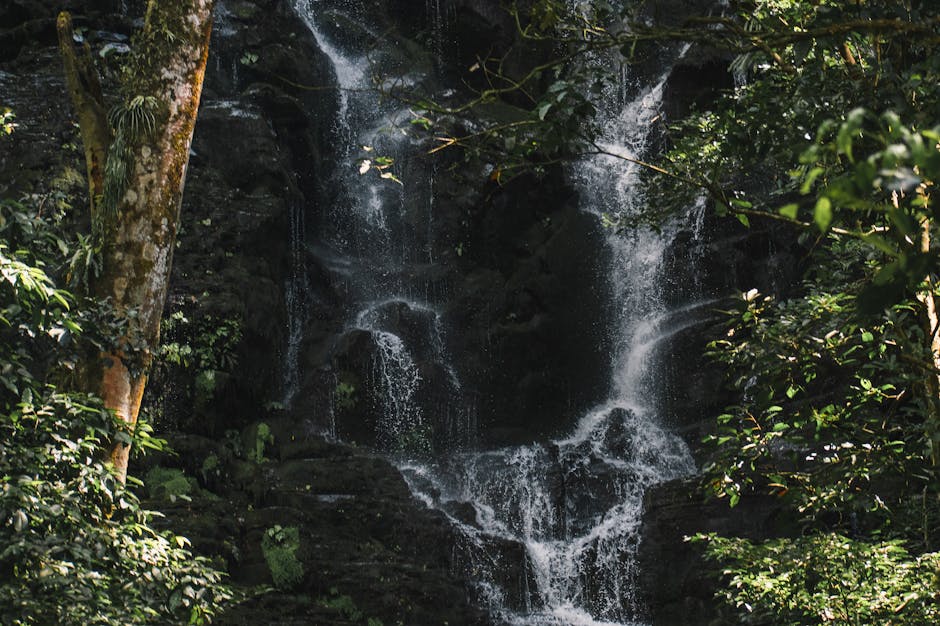
La Fortuna is a town in Costa Rica's northern plains, in the San Carlos canton of Alajuela province, sitting at the eastern base of Arenal Volcano. The town is the canton seat for the broader Arenal area and serves as the gateway for one of Costa Rica's most-visited tourism regions. The volcano dominates the landscape — a near-perfect cone rising directly behind the town, visible from most of La Fortuna's streets and from the surrounding countryside.
What La Fortuna is not: a coastal beach destination. There is no ocean. The Pacific coast is roughly three hours away; the Caribbean coast is closer but not within daily-life range. People who imagine palm trees and ocean breezes as part of daily life will be disappointed. The entire character of the place comes from the volcano, the rainforest, the rivers, the hot springs, and the lush green landscape that the region's extreme rainfall produces.
What La Fortuna is: a real working Costa Rican town with full urban services — banks, supermarkets, hospitals nearby, schools, government offices, restaurants, and a commercial infrastructure that reflects both the local population and a heavy year-round tourism flow. The town is busier and more developed than most inland Costa Rican towns of comparable size because the tourism economy generates more commercial investment. English-speaking infrastructure exists throughout tourism-oriented businesses. Services that would be absent in a similarly-sized purely agricultural town are present here.
The surrounding regional geography matters. Lake Arenal — Costa Rica's largest lake — is 30-40 minutes west. The communities around the lake (Nuevo Arenal particularly) have their own residential character distinct from La Fortuna town. El Castillo, Tabacón, La Tigra, and other surrounding rural communities each have their micro-character. Understanding which part of the Arenal region one is considering is more important than treating the area as a single destination.
The hot springs are not just a tourist feature. The geothermal activity of the volcano produces natural hot springs throughout the area, and residents access these regularly. Some hot springs are heavily commercialized resort operations; others are natural accessible spots. This is a genuine daily-life feature of the region that has no equivalent in most of Costa Rica.
- Located in San Carlos canton, Alajuela province, in the northern plains
- Sits at eastern base of Arenal Volcano — visible from most town streets
- Working Costa Rican town with full urban services and tourism economy
- Heavy rainfall produces lush waterfalls, forest, and green environment year-round
- Cooler climate than coastal Costa Rica — comfortable year-round
- Lake Arenal (Costa Rica's largest) is 30–40 minutes west
What Daily Life Looks Like
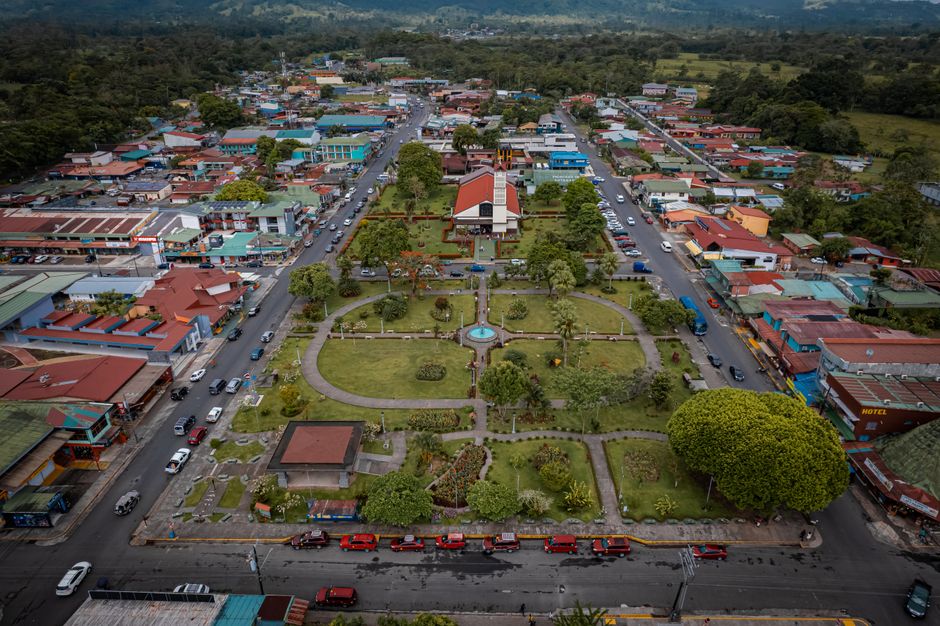
Daily life in La Fortuna is a real Costa Rican town rhythm with constant tourism overlay. The central park anchors the urban core, with the church, banks, supermarkets, and most commercial activity within walking distance. The town has the rhythm of a working population — early mornings, full mid-day commerce, evening family time — combined with steady tourist activity throughout the year.
For groceries, La Fortuna has multiple supermarkets including a Megasuper and smaller local options. The Saturday farmers market brings fresh produce and local goods. The broader regional agricultural economy means quality local produce is genuinely accessible. Food costs reflect both local affordability and tourist-economy pricing at certain establishments — sodas and local restaurants are very affordable; tourist-facing establishments reflect higher margins.
The tourism overlay distinguishes La Fortuna from most inland Costa Rican towns. English is spoken at most tourism-facing businesses. Shuttle services run between La Fortuna and other Costa Rican destinations regularly. The infrastructure of activity operators, resorts, tour companies, and hospitality businesses creates a denser commercial environment than the local population alone would support.
Afternoon rain is routine during much of the year. The pattern matters for daily planning — outdoor activities, errand timing, and property exposure all calibrate around it. The rain is not continuous; mornings are often clear and evenings vary. But expecting several hours of rain most afternoons during much of the year is part of living here.
Hot springs access varies. Some of the best natural hot springs spots are accessible without significant cost; the large resort operations charge tourist rates. Long-term residents develop their own relationship with the regional hot springs — which spots to use regularly, which to visit occasionally, and which to skip entirely.
Weekend regional rhythms shift the character. Costa Rican families from elsewhere in the country visit Arenal in significant numbers on weekends and during school holidays. Tourist numbers in La Fortuna itself are generally consistent year-round, with some seasonal variation.
- Full urban services in town — Megasuper, banks, pharmacies, government offices
- Tourism overlay brings English-speaking infrastructure unusual for inland Costa Rican town
- Reliable fiber internet supports remote work in most populated areas
- Afternoon rain pattern routine during much of the year
- Hot springs and waterfalls part of regional daily life and tourism economy
- Lake Arenal trips routine 30–40 minutes west
Climate and Environment
La Fortuna's climate is meaningfully different from both coastal Costa Rica and the Central Valley. The town sits at roughly 1,100 feet elevation, in a transition zone between the lowland Caribbean watershed and the volcanic highland. The result is a climate that combines tropical warmth with significant rainfall and cooler temperatures than the coast.
Daytime temperatures typically run in the upper 70s to mid 80s Fahrenheit year-round. Nighttime temperatures cool noticeably, dropping to the 60s and low 70s. Air conditioning is rarely needed — most homes in La Fortuna are designed for fans and natural ventilation. This is a significant practical difference from coastal Guanacaste, where AC runs constantly during dry season.
Rainfall is the defining feature. La Fortuna receives among the highest annual rainfall in Costa Rica. The distinction between dry season and green season is less sharp here than on the Pacific coast — rain can come any month, though the period from roughly May through November brings the most consistent afternoon and nighttime rainfall. Some years bring extended weeks of daily rain. The rainforest environment that this precipitation produces is part of why people come here, but it is also one of the most-underestimated features for new residents.
The environmental character is distinctive. Arenal Volcano is currently in a dormant phase but remains a monitored, active geological feature. The OVSICORI observatory tracks activity; the official safety perimeters exist for real reasons. The volcanic and geothermal activity supports an ecosystem of hot springs that residents access as part of daily life.
Wildlife in the Arenal region is exceptional by Costa Rican standards. Howler monkeys in the mornings, sloths visible in the canopy, toucans, Jesus Christ lizards, poison dart frogs, and a vast variety of birds are part of daily life for residents in this environment. The rainforest character produces both the abundance of wildlife and the insect pressure that comes with it.
The practical maintenance implications are real. Mold and humidity affect everything in this climate — clothing, furniture, electronics, construction materials. Homes require active management to prevent moisture damage. This is one of the most consistently underestimated aspects of La Fortuna living for people coming from drier climates.
- Sits at ~1,100 feet elevation — temperate-tropical climate distinct from coast
- Daytime upper 70s–mid 80s F year-round; cool nights into 60s–70s
- AC uncommon — most properties designed for fans and natural ventilation
- Heavy rainfall produces lush waterfalls, rivers, dense forest
- Hot springs from volcano's geothermal activity part of daily life
- Arenal Volcano in dormant phase since 2010; closely monitored
- Rainforest wildlife — howlers, sloths, toucans, frogs routine
- Mold, humidity damage real ongoing maintenance challenges

Cost of Living Reality
La Fortuna is meaningfully less expensive than coastal Costa Rica destinations. The combination of inland location, real local economy beyond tourism, and lower property prices keeps overall living costs below the Gold Coast or popular Pacific destinations.
Imported goods carry standard Costa Rican import duties. Local produce, basic services, and labor are notably affordable — the surrounding agricultural region produces much of what residents eat, and prices reflect that. Restaurants range from inexpensive sodas (very affordable) to higher-end places aimed at tourists with tourist pricing.
Housing varies by location. Properties in La Fortuna town itself range from affordable urban homes to mid-range residences. Properties in surrounding rural communities (El Castillo, Tabacón, La Tigra) range from modest to substantial. Lake Arenal area properties — particularly around Nuevo Arenal — have their own price tier with view premiums. Long-term rentals are widely available at lower rates than coastal areas.
Utilities are typical for Costa Rica. Electricity is among the more expensive in Latin America but bills are lower than coastal towns because most properties don't need air conditioning given the cooler climate — a meaningful financial advantage. Internet is competitively priced. Mobile service is competitive.
Vehicle ownership is necessary for most residents. Mountain and rural roads to outlying communities can accelerate vehicle wear, and four-wheel drive is helpful for some properties in green season. Public buses connect La Fortuna to surrounding areas and to major cities.
The honest answer: La Fortuna offers some of the better cost-of-living value in expat-friendly Costa Rica, particularly for buyers who do not require coastal access and who prefer cooler temperate climate over tropical heat. People shopping by price find more variety here than at most coastal destinations.
- Meaningfully less expensive than coastal Costa Rica destinations
- Local agricultural production keeps produce affordable and excellent quality
- Most properties don't need AC — significant electricity savings vs coast
- Long-term rentals widely available at lower rates than coastal areas
- Lake Arenal properties have own price tier with view premiums
- One of the better cost-of-living values for inland Costa Rican living
Healthcare Access
La Fortuna offers reasonable healthcare access for an inland Costa Rican town. The combination of in-town clinics, the regional hospital network, and access to San José metro for advanced care provides functional infrastructure for most residential needs.
For routine care, La Fortuna has private clinics serving general medical needs. Pharmacies fill many medications without prescriptions. The CAJA system has clinic presence locally for residents enrolled in the public system.
For specialist and hospital care, Ciudad Quesada (about 45 minutes east) is the regional hub with the public hospital (Hospital San Carlos) and multiple private clinics. The drive is reasonable for routine specialist appointments.
For advanced specialty care, residents drive to San José metro (about three hours) where Hospital CIMA Escazú and Hospital Clínica Bíblica are widely used by the international expat community.
For emergencies, response time depends on the situation. Local clinics handle some urgent matters; serious cases involve transport to Ciudad Quesada or San José. Air ambulance services exist for very serious cases.
Dental care is widely available locally for routine work and at higher levels in Ciudad Quesada or San José metro.
Health insurance options are the same as elsewhere in Costa Rica — international, private Costa Rican plans, or CAJA enrollment.
La Fortuna's healthcare access is meaningfully better than many smaller Costa Rican towns and comparable to other regional service hubs. Better than most coastal South Pacific or peninsula destinations because Ciudad Quesada is closer than the hospitals serving those regions, but not at the level of Central Valley or Liberia-area Gold Coast access.
- Private clinics in La Fortuna for routine care; CAJA presence locally
- Ciudad Quesada (~45 minutes east) is regional hospital hub
- Hospital San Carlos and multiple private clinics in Ciudad Quesada
- San José metro hospitals ~3 hours for advanced specialty care
- Better access than South Pacific or Nicoya peninsula destinations
- Air ambulance available for very serious emergencies

Getting Around and Getting Out
La Fortuna has reasonable transportation infrastructure for an inland Costa Rican town, with the tourism economy supporting more transportation options than purely local-economy towns of similar size.
Within La Fortuna town itself, the urban core is walkable for residents living centrally. Surrounding rural communities and the broader Arenal region require vehicles. Mountain and rural roads to outlying properties can be challenging in green season; four-wheel drive is helpful for some properties.
For flights, Juan Santamaría (SJO) in San José metro is about three hours east. Daniel Oduber (LIR) in Liberia is about three to three and a half hours west. SJO is the practical airport for most residents and for most international travel.
The drive to San José is meaningful but reasonable for occasional travel. The route involves crossing the central mountain range, with weather and road conditions affecting travel time. The drive to Liberia involves crossing different terrain through the northern plains, with similar weather considerations.
For regional access, Ciudad Quesada is about 45 minutes east — the regional commercial and medical hub. Lake Arenal communities (Nuevo Arenal especially) are 30-40 minutes west. The Caribbean coast is accessible from this area but not within day-trip range. The Pacific coast is meaningfully further than the Caribbean side from La Fortuna.
Public bus service connects La Fortuna to San José, Ciudad Quesada, Tilarán (around Lake Arenal to the west), and other regional destinations. La Fortuna is a notable bus hub for the northern plains. Bus service is reliable, affordable, and used by a wide cross-section of residents and tourists.
The tourism shuttle infrastructure provides additional transportation options. Many resorts and adventure operators run shuttles between La Fortuna and other Costa Rican destinations (Monteverde, Manuel Antonio, Liberia, San José), which can serve as practical transit options for residents traveling occasionally.
- SJO airport ~3 hours east; LIR ~3–3.5 hours west
- Ciudad Quesada ~45 minutes east — regional commercial and medical hub
- Lake Arenal communities (Nuevo Arenal) 30–40 minutes west
- Notable bus hub for northern plains region
- Tourism shuttle infrastructure provides additional transportation options
- Vehicle useful but not strictly required for central-town residents

Community and Social Life
La Fortuna's social fabric is shaped by the working Costa Rican town character, the tourism economy, and the small but growing residential expat community.
The Costa Rican community is the foundation. Many local families have lived in this region for generations, working in agriculture, tourism, hospitality, trades, and government. The Catholic church, school events, soccer, the central park, and traditional Costa Rican family life anchor local social rhythms. The annual fiestas patronales — celebrating the patron saint — bring the community together each year.
The expat community is meaningfully smaller than at coastal destinations. The people who choose La Fortuna and the surrounding Arenal region typically self-select for specific reasons — preference for cooler climate over tropical coast, lower cost of living, families seeking authentic Costa Rican town life with full services, retirees prioritizing nature and lush environment, and remote workers and adventure-oriented residents. The community is dispersed across La Fortuna town and surrounding rural communities (El Castillo, Tabacón, La Tigra, Nuevo Arenal area).
Gathering points include the central park (a real social hub for Costa Ricans across generations), local cafes and restaurants, the Saturday farmers market, hot springs venues that some residents use regularly, hiking and adventure communities organized around the surrounding natural features, and lake-oriented social life around Lake Arenal for residents in those communities.
The tourism economy creates a particular international layer in daily life. English-speaking infrastructure exists at tourism-oriented businesses and many local workers speak functional English from years of tourism work. This makes La Fortuna more accessible to English-only residents than many inland Costa Rican towns, though Spanish proficiency remains valuable for genuine community integration.
Religious community is mostly Catholic among Costa Ricans. Among expats, religious community engagement happens in La Fortuna or more typically in other Costa Rican towns with established international communities.
- Working Costa Rican town character is the social foundation
- Tourism economy creates English-speaking infrastructure unusual for inland CR town
- Expat community small and dispersed across Arenal regional communities
- Adventure and outdoor communities form around volcanic and lake environments
- Annual fiestas patronales bring community together
- Spanish proficiency valuable but English-only daily life more viable than many inland towns

Schools and Family Life
Families do raise children in La Fortuna, with the trade-offs that come with the regional gateway character and the smaller expat community.
For Costa Rican families, the public school system serves La Fortuna and surrounding communities with primary and secondary schools. Many Costa Rican parents who can afford private education send their children to private schools in La Fortuna, Ciudad Quesada, or beyond.
For expat families, several private and bilingual school options serve La Fortuna and the broader Arenal region. School options here are reasonable but more limited than in major Central Valley cities. International schools in San José metro provide additional choices for families willing to commit to the long commute or boarding situations.
Costa Rica is generally safe and welcoming for children. The natural environment of the Arenal region — rainforest, hot springs, lake, waterfalls, abundant wildlife — provides outdoor experiences that distinguish childhood here from urban or coastal alternatives. Pediatric healthcare is available locally for routine matters and at higher levels in Ciudad Quesada or San José.
Activities for children include hiking, swimming in rivers and waterfalls (with appropriate supervision), soccer (very strongly), other sports, music, art, and the outdoor activities that make Arenal a tourism destination. The cooler climate means outdoor activities are pleasant year-round without the heat extremes of the coast.
The honest considerations: bilingual or full-immersion Spanish education is the practical default. The smaller English-language ecosystem means parents wanting to maintain first-language fluency in something other than Spanish need active planning. The peer community of expat children is smaller than in larger destinations. Specialized educational support is more accessible than in remote coastal towns but more limited than San José metro.
- Private and bilingual school options serve La Fortuna and broader Arenal region
- International schools in San José metro for committed families
- Lush natural environment provides distinctive childhood experiences
- Cooler climate means outdoor activities pleasant year-round
- Smaller peer community of expat children than coastal destinations
- Specialized educational support more accessible than remote coastal towns
Working and Income
Income strategies in La Fortuna combine remote work potential with the local tourism and service economy in ways that distinguish it from purely tourist destinations or remote rural areas.
For remote workers, La Fortuna is viable. Internet through fiber providers reaches most populated areas with reliability suitable for focused work; verifying connection at specific properties matters in rural surrounding communities. The cooler climate means home offices are pleasant year-round without AC. Time zone aligns with North America. Coworking spaces are smaller and fewer than in larger cities but exist and the tourism economy supports cafes and other workspaces.
For employment, La Fortuna's tourism economy creates real opportunities in hospitality, hot springs resorts, adventure-tourism operators, restaurants, and trades. The local agricultural economy adds employment options in farming and food processing. The town's regional service hub role creates employment in healthcare, education, government, and trades. Foreigners need appropriate residency status and work authorization. Pay reflects the Costa Rican economy.
For entrepreneurs, La Fortuna's combination of tourism economy and residential expat community supports particular kinds of businesses. Tourism-adjacent services (tour operations, accommodations, restaurants), services for the residential expat community (real estate, vacation rental management, contracting), and services for the broader regional Costa Rican market all have working models. Competition in tourism services is real.
Vacation rental income exists in La Fortuna and the broader Arenal region, particularly for properties with volcano views, lake access, or proximity to specific tourism attractions. The market rewards well-positioned and well-managed properties.
- Remote work viable; cooler climate means home offices pleasant year-round
- Tourism economy creates real local employment in hospitality, resorts, adventure operators
- Local agricultural and regional service economy adds employment diversity
- Tourism-adjacent entrepreneurship supported but competitive
- Vacation rental market real for volcano-view and lake-access properties
- One of the more practical inland bases for location-independent foreign income
Safety and Honest Concerns
La Fortuna is generally considered safe by Costa Rican standards. The combination of tourism economy, real local civic life, and the absence of the patterns that drive crime in some larger cities or coastal nightlife-driven towns produces a daily life with low crime relative to busier destinations.
Petty crime exists, particularly in busier areas of the urban core and at popular tourist sites. Theft from unlocked vehicles, opportunistic break-ins of unsecured properties, and pickpocketing in markets all happen. Tourist-targeted petty crime is the most common form. Basic precautions reduce these risks substantially.
Violent crime in La Fortuna daily life is uncommon for residents using ordinary judgment. The town does not have the drug-trafficking patterns affecting parts of the Pacific coast or the urban concentration of San José metro.
Natural hazards are real and worth understanding. Heavy green-season rains cause road flooding, occasional landslides on rural mountain roads, and damage to bridges and infrastructure. Some access roads to outlying properties become difficult during the wettest months. Rivers can rise quickly during heavy rains.
The volcano is currently dormant but is a real geological feature with monitored activity. The OVSICORI volcanological observatory tracks Arenal and other Costa Rican volcanoes. Residents and visitors should respect the official safety perimeters and monitoring guidance.
Earthquakes are part of life in Costa Rica. The northern plains region is geologically active.
Wildlife concerns include venomous snakes (real possibility in the rainforest environment, with encounters in residential areas uncommon but possible), insect pressure during green season, and crocodiles in some local rivers and water systems.
- Generally considered safe by Costa Rican standards
- Tourist-targeted petty theft most common; basic precautions reduce risk
- Violent crime uncommon in daily life
- Heavy green-season rains cause road flooding and landslides on rural roads
- Volcano in dormant phase but monitored — respect official safety perimeters
- Rainforest climate creates real ongoing infrastructure maintenance challenges
The Hard Truths
La Fortuna is not a beach. People who imagine ocean views or daily beach life should choose elsewhere. The Pacific coast is meaningfully far away — three hours plus to Liberia or further to Pacific destinations. The Caribbean is closer but the practical day-trip access is limited. People who specifically need beach proximity will be frustrated.
The rain is real and substantial. La Fortuna and the broader Arenal region receive significantly more rain than any coastal Costa Rican destination. Months can pass with daily rain. People who romanticize tropical Costa Rica without understanding rainforest climate are surprised by the reality. Some homes have ongoing mold and humidity issues that affect quality of life and require active management.
The expat community is small. People who need an active English-speaking social scene, regular dining variety, or robust infrastructure for newcomer integration will find La Fortuna limiting compared to Tamarindo or established Central Valley towns. The smaller scale comes with the lower prices.
The tourism overlay is real. Some buyers find the constant tourist flow part of the area's character; others find it intrusive. The hot springs resorts, the adventure tourism operators, and the constant stream of tourist shuttles produce a particular daily atmosphere. Some neighborhoods are more affected than others.
The drive to San José for advanced services is meaningful. The three-hour mountain drive matters when residents face medical needs, government bureaucracy in the capital, or international travel. Weather affects this drive significantly during green season.
Tico time applies fully. Bureaucracy, contractor scheduling, package delivery, and most service work move at the pace that frustrates people from efficient cultures. La Fortuna's tourism economy does not exempt residents from these realities.
The rainforest climate is hard on construction and possessions. Mold, humidity, rust, and UV damage are ongoing realities. Maintenance demands in this climate are consistently underestimated by newcomers. Budgeting for ongoing property maintenance at rates higher than expected is part of the reality of living here.
- Not a beach — Pacific coast 3+ hours away
- Heavy rain throughout much of year — months can pass with daily rain
- Mold and humidity damage real ongoing concerns for many properties
- Smaller expat community than coastal destinations
- Tourism overlay produces constant tourist flow that affects daily atmosphere
- Three-hour mountain drive to San José for advanced services and SJO airport
- Rainforest climate hard on construction — maintenance demands underestimated
- Insect pressure and wildlife encounters real parts of life here
Frequently Asked Questions About Living in La Fortuna
Is La Fortuna safe for foreigners to live in?
La Fortuna is generally considered safe by Costa Rican standards.
How much does it cost to live in La Fortuna?
La Fortuna is meaningfully less expensive than coastal Costa Rica destinations.
Do I need to speak Spanish to live in La Fortuna?
La Fortuna's social fabric is shaped by the working Costa Rican town character, the tourism economy, and the small but growing residential expat community.
What is the best time of year to visit La Fortuna?
La Fortuna's climate is meaningfully different from both coastal Costa Rica and the Central Valley.
Quick Reference: La Fortuna At a Glance
| Overview | La Fortuna sits at the base of Arenal Volcano in Costa Rica's northern plains, with full town services, a temperate-tropical climate, dramatic natural surroundings, and an economy that combines tourism, agriculture, and increasingly residential expat community. |
| Climate | La Fortuna's climate is meaningfully different from both coastal Costa Rica and the Central Valley. |
| Real estate | La Fortuna offers urban properties in town, residential homes in surrounding communities (El Castillo, Nuevo Arenal, Tabacón), agricultural land in the broader Arenal area, and lake-view properties around Lake Arenal — at price points generally below coastal Costa Rica destinations. |
| Time zone | CST (UTC−6) — no daylight saving time |
| Nearest airport | SJO — Juan Santamaría International Airport |
| Foreign ownership | Yes — foreigners own fee-simple title with the same rights as Costa Rican nationals |
Pros and Cons
Advantages
- ✓ Lush volcanic environment with abundant water and greenery
- ✓ Lower cost of living than coastal expat destinations
- ✓ Full urban services in town — banking, healthcare, retail, schools
- ✓ Cooler climate than the coast — comfortable year-round
Considerations
- ! No beach access — coast requires significant drive
- ! Heavy rainfall in green season — wettest part of the country
- ! Tourist-economy pricing on prime restaurants and amenities
- ! Smaller English-speaking expat community than coastal destinations
Practical Notes
La Fortuna is the canton seat for the broader Arenal area, with surrounding communities (El Castillo, Nuevo Arenal, Tabacón, La Tigra) functioning as a regional life. Lake Arenal — Costa Rica's largest lake — is part of this regional geography, with lakefront communities offering different character from La Fortuna town itself.
Nearby Areas to Compare
Ready to Compare Properties in La Fortuna?
Browse verified broker listings from La Fortuna and the surrounding area.