Central Valley · Heredia · Costa Rica
What Is Life in Heredia, Costa Rica Like?
Heredia is the historic 'City of Flowers' — a Central Valley province and canton north of San José with deep colonial roots, the country's leading public university, established residential communities at varied elevations, and a quieter, more authentically Costa Rican character than its more internationalized western neighbor Escazú.
What Heredia Actually Is
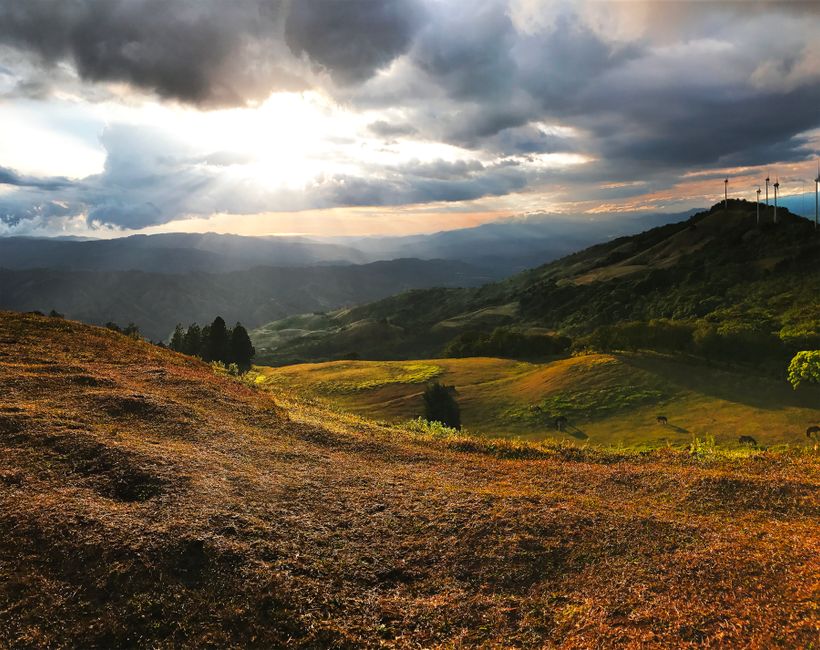
Heredia is both a province and a canton — and in this guide it primarily refers to the broader area surrounding Heredia city (the canton seat) plus the northern mountain districts that have become some of the Central Valley's most desirable residential geography. The province sits north of San José in the Central Valley, with elevations rising from valley floor in the south up the slopes of the Barva volcano to the north.
What Heredia is not: an internationalized expat enclave like Escazú. The English-speaking infrastructure, international restaurant density, and cosmopolitan retail concentration of Escazú do not exist here at the same level. People who arrive expecting Escazú prices and Escazú services at a discount find something meaningfully different.
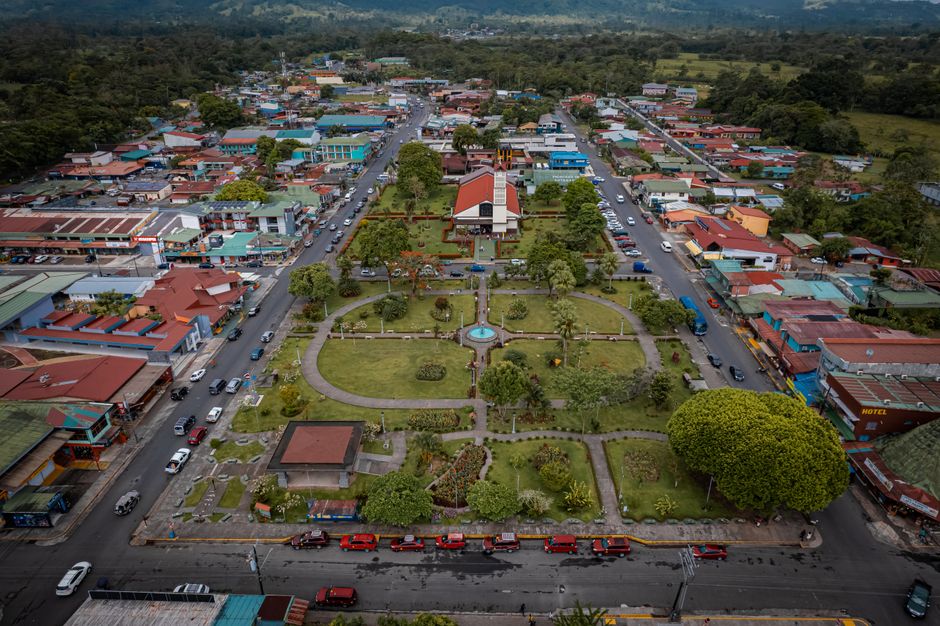
What Heredia is: one of the most authentically Costa Rican accessible places to live in the Central Valley. The canton seat has colonial architecture, the central park with the historic Fortin tower, the Universidad Nacional campus shaping local culture, and the full range of urban services that a provincial capital produces. The northern mountain districts — San Rafael, San Isidro, Barva, Santa Bárbara — are coffee country rising toward Barva volcano, with some of Costa Rica's most sought-after highland residential geography.
The Universidad Nacional is a defining institution. UNA is one of Costa Rica's two major public universities and its presence shapes Heredia's character in ways that make the area meaningfully different from nearby cantons. Academic culture, intellectual community, cultural events, the student population's impact on the city's atmosphere and services — all of this derives from the university's presence.
The mountain districts deserve separate consideration from Heredia city. San Rafael de Heredia, Barva, Santa Bárbara, and San Isidro each have distinct characters. Properties in the coffee-growing highlands — views over the valley, cooler mountain air, proximity to working farms, access to national park territory — are qualitatively different from urban Heredia city living. Buyers should understand which part of the Heredia area they're actually considering.
- Province and canton north of San José in the Central Valley
- Most authentically Costa Rican of expat-accessible Central Valley areas
- Universidad Nacional (UNA) anchors academic and cultural life
- Northern mountain districts (San Rafael, Barva, Santa Bárbara) are coffee country
- Smaller, more locally-integrated expat community than Escazú or Atenas
- Downtown San José 15–20 minutes; SJO airport 20–30 minutes west
What Daily Life Looks Like
Daily life in the Heredia area depends substantially on which district you choose. The urban canton seat and the mountain districts produce meaningfully different daily experiences.
For groceries, residents have multiple options. Heredia city has Walmart, Más X Menos, Pali, and various smaller markets. The northern mountain districts have local supermarkets in San Rafael, Barva, and Santa Bárbara, plus the traditional Mercado Municipal in Heredia city for fresh produce. The Saturday farmers market is a community gathering point.
For daily services, Heredia city concentrates the full range — banks, pharmacies, government offices, mechanics, and professional services. The canton seat functions as a real provincial capital. Mountain district residents make regular trips into Heredia city or toward San José for specific services.
The Universidad Nacional shapes the atmosphere of Heredia city in ways that add cultural and intellectual texture. The student population influences restaurants, cafes, events, and the general energy of the city center. Cultural programming — theater, music, art, lectures — through UNA creates a social calendar that doesn't exist in comparable Costa Rican towns without universities.
Coffee culture is genuinely embedded in daily life, particularly in the mountain districts. The presence of Café Britt and Doka Estate as destination coffee experiences, plus the actual working farms that surround properties in Santa Bárbara, San Isidro, and Barva, means coffee as a product and culture is part of the local experience in ways that are unusual even for Costa Rica.
Traffic to San José is real but generally more manageable than from Escazú during peak hours. The Heredia-to-San José corridor benefits from specific route options. Mountain district commutes are longer and more weather-dependent.
- Daily life varies meaningfully between urban canton seat and mountain districts
- Walmart, Más X Menos, traditional municipal market, Saturday farmers market
- Universidad Nacional (UNA) shapes university-town atmosphere in Heredia city
- Mountain districts in coffee country — Café Britt, Doka Estate, working farms
- Traffic to San José more manageable than from Escazú during peak hours
- Sunday character traditionally Costa Rican — businesses close or reduce hours
Climate and Environment
The Heredia area's climate varies meaningfully with elevation. Heredia city itself sits at about 3,800 feet, with daytime temperatures typically running in the mid 70s Fahrenheit year-round. The northern mountain districts rise to meaningfully higher elevations — Santa Bárbara at about 4,000 feet, San Isidro and upper Barva areas reaching 5,000+ feet on the slopes of the Barva volcano. Each elevation gain produces measurably cooler temperatures.
Nighttime temperatures cool significantly, particularly at higher elevations. Air conditioning is unnecessary essentially anywhere in Heredia. Many higher-elevation properties are cool enough that residents specifically appreciate sweaters in the evenings — a meaningful change from coastal Costa Rica or even lower Central Valley areas.
The Central Valley's two-season pattern applies. Dry season (December through April) produces consistently sunny weather. Green season (May through November) brings afternoon storms typically following a regular pattern — clear mornings, cloud buildup, afternoon storms, often clearing into pleasant evenings. The mountain districts can be wetter than the lower canton seat, producing distinct micro-climates within the broader area.
The natural environment combines urban-suburban character in the canton seat with progressively more rural-mountain character in the higher districts. The northern mountain districts are coffee country with farms, secondary forest, and the rising slopes of the Barva volcano. The Volcán Barva sector of Braulio Carrillo National Park is accessible from the higher districts, providing genuine wilderness experiences within driving range.
Wildlife in residential areas is limited but real. Birds are abundant, particularly in residential gardens with vegetation. Higher mountain districts can have occasional larger wildlife passing through. The combination of Central Valley convenience and accessible national park territory is a real quality-of-life feature.
- Heredia city ~3,800 feet; mountain districts rise to 5,000+ feet
- Daytime mid 70s F at lower elevations; cooler in mountain districts
- AC unnecessary essentially anywhere in Heredia
- Mountain districts produce some of CR's most renowned coffee
- Volcán Barva sector of Braulio Carrillo National Park accessible from higher districts
- Excellent climate for construction; better air quality at higher elevations
Cost of Living Reality
Heredia is meaningfully less expensive than Escazú while offering Central Valley urban infrastructure that few coastal Costa Rican destinations can match. Property prices, dining, professional services, and most daily costs reflect this middle position — affordable Central Valley value rather than international concentration.
Imported goods carry standard import duties. Local produce, dairy from the surrounding agricultural region, and basic services are notably affordable. Restaurants range from inexpensive sodas serving local clientele to mid-range options serving the professional and university communities; higher-end international restaurants typically require trips to Escazú or downtown San José.
Housing varies dramatically by district. Heredia city itself has affordable urban housing in some neighborhoods and mid-range options in others. The northern mountain districts (San Rafael, San Isidro, Barva, Santa Bárbara) have a wide range — from very affordable rural-residential properties to mid-range homes in established gated developments. Coffee-country properties in the higher districts can be particularly attractive as long-term residential value plays. Long-term rentals are widely available at lower rates than Escazú.
Utilities are typical for Costa Rica. Most properties don't need air conditioning given the temperate climate, producing meaningful electricity savings. Internet is competitively priced and reliable. Vehicle ownership is standard; the dispersed geography of the broader Heredia area makes vehicle-based living the norm.
- Meaningfully less expensive than Escazú with comparable Central Valley infrastructure
- Local produce and dairy from surrounding agricultural region notably affordable
- Mountain district coffee-country properties offer particular long-term value
- Most properties don't need AC — meaningful electricity savings
- HOA fees in gated developments generally lower than Escazú equivalents
- Higher-end international dining requires trips to Escazú or downtown San José
Healthcare Access
Healthcare from the Heredia area is excellent. The combination of local infrastructure and quick access to the broader Central Valley medical ecosystem produces healthcare access among the best in Costa Rica.
For routine care, Heredia city has multiple private clinics and specialist offices. Pharmacies are widely available. The CAJA system has strong presence in the broader area for residents enrolled in the public system.
For specialist and hospital care, Hospital San Vicente de Paul is the regional public hospital in Heredia city. Multiple private clinics in Heredia handle additional needs. Hospital CIMA Escazú and Hospital Clínica Bíblica in San José metro are quickly accessible — typically 20-30 minutes from Heredia city depending on traffic, longer from upper mountain districts. The Heredia area benefits from this proximity to Costa Rica's leading private hospitals without paying Escazú property prices.
For advanced specialty care, the major San José metropolitan hospitals are essentially the same access as from Escazú itself — meaning Heredia residents have access to Costa Rica's most comprehensive medical infrastructure.
For emergencies, response time is reasonable for an area connected to the broader San José metropolitan region. Hospital San Vicente de Paul handles initial response; serious cases typically transport to the major metropolitan hospitals.
Dental care is widely available locally for routine work and at international standards in Escazú or other San José metro options.
Mental health services are accessible through the broader Central Valley infrastructure.
- Hospital San Vicente de Paul is regional public hospital in Heredia city
- Hospital CIMA Escazú and Clínica Bíblica accessible 20–30 minutes away
- Same access to leading San José metro hospitals as Escazú itself
- Excellent healthcare access without Escazú cost premium
- Multiple private clinics and specialists in Heredia city
- Mental health services accessible through broader Central Valley infrastructure

Getting Around and Getting Out
The Heredia area has good transportation infrastructure benefiting from its position in the Central Valley.
For flights, Juan Santamaría International Airport (SJO) in Alajuela is about 20-30 minutes west of Heredia city — closer than from Escazú. The proximity to the country's main international airport is a meaningful daily-life advantage for residents who travel frequently.
For regional access, downtown San José is 15-20 minutes south of Heredia city by direct route. Escazú is accessible via highway connections, typically 30-40 minutes depending on traffic. The Pan-American Highway connects to the broader country.
For coastal access, driving to Jacó takes about an hour and a half to two hours; to Manuel Antonio about three hours; to Tamarindo about four to four and a half hours. The Caribbean coast (Puerto Viejo, Cahuita) takes about four to five hours via the Limón highway.
Within the Heredia area, transportation depends on district. Heredia city itself has urban services with public buses, taxis, and walkable central neighborhoods. The northern mountain districts require vehicles for most daily needs. Some access roads in higher mountain areas become more challenging during heavy rains.
Traffic congestion is real but generally less severe than from Escazú during peak hours. Mountain district commutes are longer and more weather-affected.
Public bus service is excellent. Buses connect Heredia to San José, surrounding cantons, and broader regional destinations with frequent service throughout the day. Uber operates extensively in Heredia city and the surrounding area.
- SJO airport 20–30 minutes west — closer than from Escazú
- Downtown San José 15–20 minutes south by direct route
- Pacific coast routes pass through broader San José metro region
- Traffic generally less severe than from Escazú during peak hours
- Excellent public bus service; Uber and taxis widely available
- Mountain district commutes longer and more weather-affected

Community and Social Life
Heredia's social fabric is more authentically Costa Rican than the more internationalized cantons of the Central Valley. The combination of historic colonial heritage, university culture, established middle-class residential life, and a smaller expat community produces a different social character from Escazú or Atenas.
The Costa Rican community is the foundation. Many local families have lived in the broader Heredia area for generations, working in agriculture (especially coffee), university and education, professional services, and trades. The Catholic church, school events, traditional Costa Rican family life, soccer, and the central park all anchor local social rhythms.
The Universidad Nacional shapes much of the cultural and social character. Students, faculty, university events, cultural programming, and the broader academic community produce intellectual and cultural life that doesn't exist at the same density in less academic Costa Rican areas. Theater, music, art, public lectures, and cultural events provide gathering points.
The expat community is meaningfully smaller than in Escazú or Atenas. People who choose Heredia typically self-select for the more local, authentic Costa Rican character. Many integrate into Costa Rican life through Costa Rican spouses, university affiliations, professional work in Costa Rican institutions, or just preference for Costa Rican culture over international expat enclaves.
Spanish proficiency is more practically necessary here than in Escazú. Daily life, services, neighborhood interactions, and social integration all happen primarily in Spanish.
- More authentically Costa Rican than internationalized Central Valley cantons
- Universidad Nacional shapes intellectual and cultural life
- Smaller, more locally-integrated expat community than Escazú or Atenas
- Saturday farmers market and central park anchor traditional social rhythms
- Spanish proficiency more practically necessary than in Escazú
- Daily life operates primarily in Spanish and Costa Rican cultural patterns

Schools and Family Life
The Heredia area has strong educational infrastructure. The combination of established public schools, multiple bilingual schools, several internationally-accredited institutions, and quick access to Escazú's international schools when desired produces educational options that work for a wide range of family situations.
For Costa Rican families, the public school system is well-developed throughout Heredia. The Universidad Nacional provides higher education access for many local families.
For expat families, several private and bilingual school options serve the area. The British School of Costa Rica is in nearby Pavas (between Heredia and Escazú). Other bilingual options exist throughout Heredia at varying tiers and price points. International schools in Escazú are accessible by daily commute for families willing to make the drive.
Pediatric healthcare is accessible at Hospital San Vicente de Paul, multiple specialist offices in Heredia city, and at the leading San José metropolitan hospitals 20-30 minutes away.
Activities for children include traditional Costa Rican youth activities (soccer, music, art), university-affiliated programs and cultural events, organized sports leagues, and outdoor activities in the mountain districts (hiking, exploring coffee country, nature programs through Braulio Carrillo National Park access).
The peer community of expat children in Heredia itself is smaller than in Escazú or Atenas. Children who attend international schools in Escazú by commute will find their peer community in that direction.
- Multiple bilingual school options at varying tiers throughout Heredia
- International schools in Escazú accessible by daily commute
- Universidad Nacional provides higher education access locally
- Pediatric healthcare excellent through local hospital and quick metro access
- Smaller peer community of expat children than Escazú or Atenas
- Top-tier international school choice requires Escazú commute
Working and Income
The Heredia area offers diverse income options through its combination of urban infrastructure, university economy, agricultural sector, and proximity to the broader San José metropolitan economy.
For remote workers, the area is excellent. Internet through fiber providers reaches essentially all populated areas with reliability and speed at international standards. The temperate climate makes home offices comfortable year-round. Time zone aligns with North America. Coworking is available locally and in nearby cantons.
For employment, Heredia is one of Costa Rica's stronger job markets. The Universidad Nacional and surrounding educational institutions employ thousands. Private companies, multinational corporations with operations in the area (including the Intel manufacturing facility nearby), professional services, healthcare, and government all provide stable employment. Foreigners need appropriate residency status and work authorization.
For entrepreneurs, the Heredia area's combination of urban infrastructure, university economy, and authentic Costa Rican character supports many kinds of businesses. Professional services, education-adjacent businesses, hospitality, tourism (especially coffee tourism in the mountain districts), real estate, and services for the residential community all have working models. The market is sophisticated but less saturated than Escazú.
The coffee industry remains a significant economic factor in the mountain districts. Coffee farms, processing facilities, and the broader coffee tourism economy all provide employment and entrepreneurship opportunities.
- Excellent remote work base — international-standard infrastructure
- Universidad Nacional and surrounding institutions employ thousands
- Intel manufacturing facility and other multinational presence nearby
- Coffee industry significant in mountain districts
- Less saturated entrepreneurial market than Escazú
- Vacation rental market more limited; long-term rentals more common

Safety and Honest Concerns
Heredia's safety profile varies meaningfully by district. The combination of urban canton seat character, established residential neighborhoods, and rural mountain districts produces patterns that vary by location and time of day.
Petty crime exists. Theft from unlocked vehicles, opportunistic break-ins of unsecured properties, and pickpocketing in busy commercial areas all happen, particularly in Heredia city's commercial center. Basic precautions reduce these risks substantially.
Violent crime is uncommon in most of the Heredia area. Heredia city has some neighborhoods that carry rougher reputations than others, with patterns more like other working Costa Rican canton seats than like the more uniformly polished Escazú. The broader residential and mountain districts are largely insulated.
The drug economy that affects parts of Costa Rica has presence in the broader San José metropolitan region. Most Heredia residents in the residential and mountain districts rarely encounter it directly, but some Heredia city neighborhoods are more affected than others.
Gated communities and security-focused residential developments are common, more so in some areas than others. The choice of property type and neighborhood significantly affects security infrastructure.
Natural hazards are mostly weather-related. Heavy green-season rains can cause occasional flooding in lower-elevation areas and landslides on hillside or mountain district areas.
- Generally safe by CR standards but requires more neighborhood awareness than Escazú
- Some Heredia city neighborhoods carry rougher reputations than others
- Mountain districts generally safer than the canton seat
- Drug economy from broader San José metro region has some presence
- Air quality varies — higher elevations typically cleaner than canton seat
- Tropical wildlife concerns of coastal CR largely don't apply
The Hard Truths
Heredia is not Escazú with cheaper prices. People who arrive expecting Escazú-level international concentration at lower cost discover the difference is qualitative, not just financial. The international expat infrastructure is meaningfully smaller. The English-only daily life that works in Escazú does not work as smoothly here. The cosmopolitan dining and retail variety is not the same.
The district matters significantly. The differences between Heredia city itself, the transition area of San Rafael, and the higher mountain districts are real. Buyers should investigate carefully and visit multiple districts before committing.
Spanish proficiency is more practically necessary here than in Escazú. The local working community, neighborhood interactions, business dealings, and broader social life all happen primarily in Spanish. Residents who don't learn Spanish stay in a smaller, more transactional version of the area.
Some Heredia city neighborhoods carry rougher reputations than others. The canton seat has the rough edges of any working Costa Rican urban center. Buyers should investigate neighborhoods carefully and not assume that everything within Heredia city is uniformly comfortable.
The traffic to and from San José is real, particularly during peak hours. Mountain district commutes can be longer and weather-affected.
The expat community is small enough that residents who arrive without a clear plan for community engagement and Spanish development can find Heredia isolating. The smaller English-speaking ecosystem means newcomers need more deliberate effort to build community than they would in Escazú or Atenas.
- Not Escazú with cheaper prices — qualitatively different from international concentration
- Spanish proficiency more practically necessary than in Escazú
- District choice within broader Heredia area significantly affects daily life
- Some Heredia city neighborhoods carry rougher reputations than others
- Top-tier international schools and dining require Escazú commute
- Smaller English-speaking ecosystem requires more deliberate community-building
- Real estate appreciates moderately — long-term residential value rather than rapid speculation
- Air quality concerns in lower Heredia city areas — higher elevations cleaner
Frequently Asked Questions About Living in Heredia
Is Heredia safe for foreigners to live in?
Heredia's safety profile varies meaningfully by district.
How much does it cost to live in Heredia?
Heredia is meaningfully less expensive than Escazú while offering Central Valley urban infrastructure that few coastal Costa Rican destinations can match.
Do I need to speak Spanish to live in Heredia?
Heredia's social fabric is more authentically Costa Rican than the more internationalized cantons of the Central Valley.
What is the best time of year to visit Heredia?
The Heredia area's climate varies meaningfully with elevation.
Quick Reference: Heredia At a Glance
| Overview | The Heredia area covers a range of communities from the urban canton seat itself northward into the coffee-growing highland districts (San Rafael, San Isidro, Barva, Santa Bárbara) — with elevations rising from the valley floor into the cool mountain slopes that produce some of Costa Rica's best coffee and most desirable residential geography. |
| Climate | The Heredia area's climate varies meaningfully with elevation. |
| Real estate | The Heredia area offers urban properties in the canton seat, gated and traditional residential homes throughout the broader area, coffee-country properties in the higher mountain districts, and a wide range of housing — at price points generally meaningfully below Escazú while reflecting the Central Valley urban infrastructure. |
| Time zone | CST (UTC−6) — no daylight saving time |
| Nearest airport | SJO — Juan Santamaría International Airport |
| Foreign ownership | Yes — foreigners own fee-simple title with the same rights as Costa Rican nationals |
Pros and Cons
Advantages
- ✓ More affordable than Escazú while sharing Central Valley infrastructure
- ✓ Authentically Costa Rican character with full urban services
- ✓ Cooler temperatures rising with elevation in mountain districts
- ✓ National University anchors academic and cultural life
Considerations
- ! Less concentrated international expat infrastructure than Escazú
- ! Traffic congestion to and from San José is real
- ! Some neighborhoods in canton seat carry mixed reputations
- ! Mountain districts require driving for daily services
Practical Notes
The Heredia 'area' covers significant geographic variation. Heredia city (the canton seat) is urban with full services. The northern mountain districts (San Rafael, San Isidro, Barva, Santa Bárbara) rise into coffee country with cooler temperatures and more residential-rural character. Choosing the right area within Heredia matters significantly for daily life. The drive from Heredia city to downtown San José is about 15-20 minutes; from upper mountain districts can be 30-45 minutes.
Nearby Areas to Compare
Ready to Compare Properties in Heredia?
Browse verified broker listings from Heredia and the surrounding area.