Nicoya Peninsula · Guanacaste · Costa Rica
What Is Life in Nosara, Costa Rica Like?
Nosara is a collection of three distinct communities on the Nicoya Peninsula — a surf town, a quiet fishing village, and an inland Costa Rican village — bound together by a private land association that has protected the jungle corridor between them for decades. It has no main street, no town center, and no large supermarket, by design. What it has is one of the most consistent beach breaks in Central America, a globally recognized wellness culture, and a conservation ethic that shapes daily life.
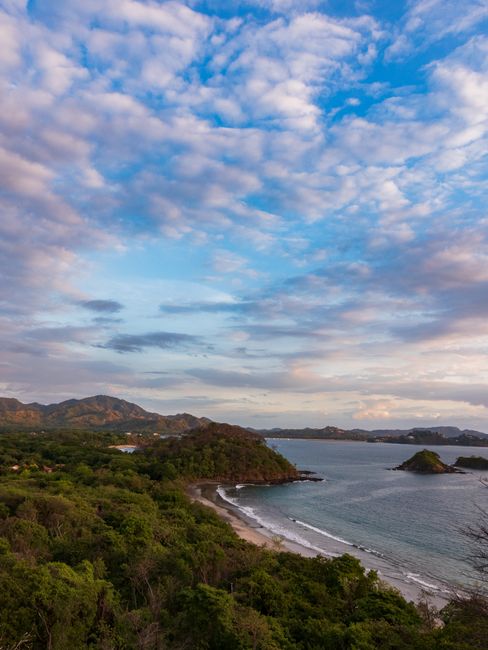
What Nosara Actually Is
Nosara is not a town. It is a loosely connected collection of three distinct communities spread across several kilometers of Nicoya Peninsula coastline, bound together by a private land association, a jungle corridor, and a shared identity that took decades to develop.
Playa Guiones is where most international residents live and where visitors go. It is the surf and wellness hub — home to yoga studios, organic restaurants, surf schools, and boutique accommodations. It has no commercial main street because the land association has worked to prevent one from forming. Playa Pelada, a few kilometers north, is quieter and smaller, with a fishing village feeling that Guiones no longer has. Nosara village, further inland, is where the original Costa Rican community lives — a working town with a church, a school, and daily life that looks nothing like the international wellness community a few kilometers away.
What makes Nosara unusual is the land association — a private governance structure that has controlled development in the Guiones and Pelada areas for decades. It enforces setback rules, road quality standards, and environmental requirements that go beyond government regulation. The result is a community where the jungle between and around the beach areas has been largely preserved. There are no high-rises. The roads are unpaved. The trees are intact. This is not an accident — it is an active, ongoing choice made by a community with the legal structure to enforce it.
What Nosara is not: cheap, convenient, or easy. It is not a place where you can walk to a hardware store, a bank, or a hospital. It is not a place where the internet is always fast or the road is always smooth. People who thrive here have made a deliberate choice that the things Nosara offers — the surf, the jungle, the wellness culture, the quiet intensity — are worth trading for the things it does not have.
Nosara is also part of the Nicoya Peninsula Blue Zone marketing, and that deserves honest framing. The actual Blue Zone communities are inland — Hojancha, Nicoya town, the agricultural villages of the peninsula interior — where traditional Costa Rican rural life and diet have produced documented longevity. Nosara is adjacent to that geography but is culturally something entirely different: an international wellness community built around surf and yoga. The Blue Zone association brings marketing benefits, but buyers expecting a traditional longevity village will find something different.
- Three distinct communities: Playa Guiones (surf/wellness hub), Playa Pelada (quiet fishing village), Nosara village (inland, Costa Rican community)
- Private land association governs development — enforces setbacks, environmental standards beyond government regulation
- Located on the Nicoya Peninsula, roughly 2.5 hours from Liberia airport by road
- Adjacent to but culturally distinct from the inland Nicoya Blue Zone communities
- No town center, no commercial main street — by community design, enforced by the land association
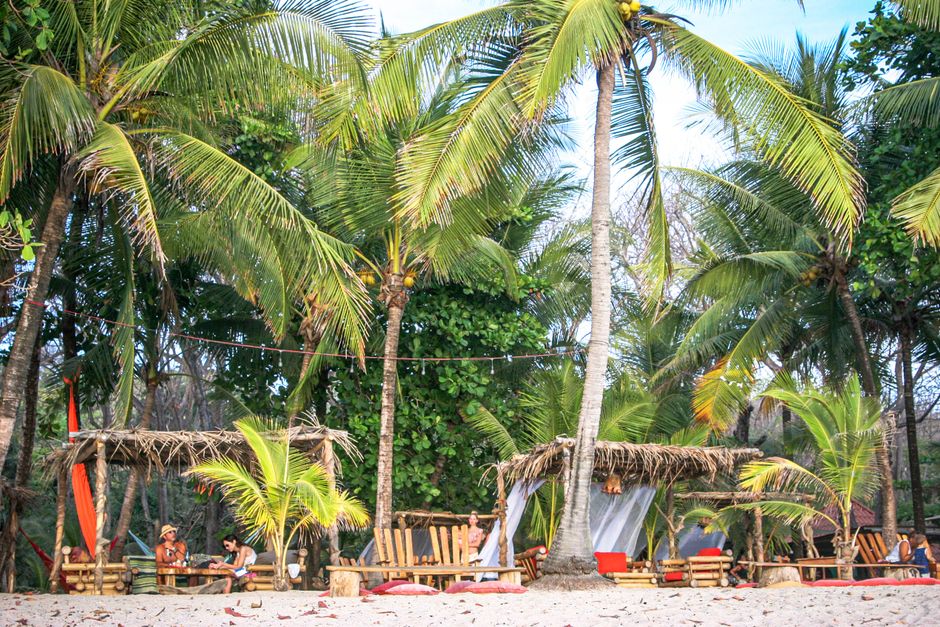
What Daily Life Looks Like
Daily life in Nosara has a particular rhythm that is unlike any other place in Costa Rica. It is defined as much by what is absent as by what is present.
Mornings start on the water or on the mat. The surf at Playa Guiones begins before dawn. Yoga classes fill early — the major studios have schedules starting at 6 or 7 AM, and the serious practitioners are there. By 8 or 9, the cafes near Guiones fill for breakfast. The food is good — genuinely good — but expensive. An açaí bowl or organic smoothie costs as much as a full meal in San José. That reality sets the tone.
Grocery shopping requires strategy. There is no Auto Mercado, no Maxi Pali, no large supermarket in the Nosara area. Several small local markets stock basics — El Bambú Supermercado and similar shops carry staples, produce, and some imported goods at elevated prices. For anything substantial — hardware, electronics, larger grocery runs — residents drive approximately one hour to Nicoya city, the canton seat. This is a weekly or biweekly reality that shapes how residents organize their lives. Many combine the Nicoya trip with banking, government offices, and other errands into one efficient day.
There is no ATM in the Guiones beach area — verify locally, as this has been a persistent gap. Nearest bank branches are in Nicoya. Many residents rely on card payments and forward planning.
Internet has improved considerably with Starlink satellite service. The local wired and mobile infrastructure has historically been unreliable by comparison. Many remote workers now use Starlink as their primary connection and find it adequate for video calls and normal remote work — a meaningful change from a few years ago.
Weekly farmers markets draw organic produce, artisan goods, and prepared foods that serve as social events for the community. Sundays feel different here than in towns with a Catholic town center tradition — more international in rhythm, with activity concentrated around the beach and outdoor spaces.
- No large supermarket in Nosara — weekly grocery run to Nicoya (1 hour) is standard for most residents
- No bank branch or ATM in Guiones beach area — verify locally; residents plan banking around Nicoya trips
- Starlink satellite internet has substantially improved remote work viability
- Restaurant food is genuinely high quality but expensive — organic and plant-forward is the dominant local food culture
- Morning rhythm: early surf and early yoga define the community's daily clock
Climate and Environment
Nosara's climate is distinct from the dry Guanacaste interior that many visitors associate with the region. The Nicoya Peninsula catches more moisture than the inland areas, and the jungle-covered coastline creates a different microclimate from the brown, wind-swept landscape of northern Guanacaste towns like Tamarindo or Liberia.
The dry season (December through April) is warm and mostly sunny, but the landscape retains more green than Guanacaste's interior. Temperatures reach the high 80s to low 90s Fahrenheit regularly — but the absence of the sustained northerly Papagayo winds that define Tamarindo means the heat is often stiller and more humid. The humidity is real; not as brutal as the Caribbean coast or the southern Pacific, but higher than residents from northern Guanacaste often expect.
The green season (May through November) brings significant rain, often in afternoon and evening patterns that leave mornings clear. The landscape transforms dramatically — the dry periods give way to intense tropical green, and the jungle between the communities fills out. The roads, which are rough in dry season, can become genuinely challenging in heavy rain: ruts deepen, some low-lying sections flood, and driving at night on unmarked jungle roads becomes a real hazard. Green season reveals what Nosara actually is: a remote jungle community.
The natural environment is the defining feature of Nosara that everything else is built around. Scarlet macaws nest in the area and are visible flying between the remaining trees — their presence is actively protected and taken seriously by the community. Howler monkeys are a constant auditory presence. The Ostional Wildlife Refuge, a short drive north, hosts the world's most significant olive ridley sea turtle nesting events — massive arrivals called arribadas when thousands of turtles nest simultaneously. Conservation of this ecosystem is not a marketing phrase here; it is a genuine community priority.
The ocean at Playa Guiones is powerful. The beach break is consistent and long, which is why surfers come from around the world. The same consistency means currents and shore break that require respect. Swimming at Guiones for non-surfers during certain tidal conditions can be dangerous. Ocean conditions are taken seriously by the community.
- More humid and greener than northern Guanacaste — distinct Nicoya Peninsula microclimate
- Less wind than Tamarindo — the Papagayo trade winds are less pronounced on the peninsula
- Green season roads can be genuinely challenging — 4WD essential from May through November
- Scarlet macaws, howler monkeys, and olive ridley sea turtle nesting at Ostional Wildlife Refuge nearby
- Ocean at Playa Guiones is powerful — consistent surf also means real currents and shore break hazards

Cost of Living Reality
Nosara is among the most expensive places to live in Costa Rica, and that statement applies at every level — food, housing, services, and the cost of operating daily life with a one-hour service gap in any direction.
Food is the most immediately visible expense. The restaurants in Guiones serve genuinely excellent food — organic, thoughtfully prepared, often sourced carefully. They charge accordingly. A casual dinner for two can easily exceed what a full week of groceries would cost inland. Residents who cook at home face a different challenge: the local small markets carry limited selections at elevated prices, and the alternative is a one-hour drive to Nicoya for a proper grocery run.
Housing is expensive at every level. Long-term rentals in Guiones carry a premium over nearly any other Pacific beach town. A basic casita runs significantly higher per month than comparable arrangements in Jacó or Tamarindo. Luxury villas and ocean-view properties command prices that rival the most expensive in Costa Rica. The land association's supply constraints are the primary driver — there is limited buildable land, and what exists trades at premium.
Utilities have their own character. Air conditioning is less uniformly necessary than in the dry Guanacaste interior — the humidity makes shade and ventilation viable alternatives some of the year. But the hot months still drive AC use and Costa Rican electricity is expensive regardless of region. The bigger utility challenge is water: some properties in the Nosara area depend on wells or community water systems that can be inconsistent in the dry season. Checking the water situation of any property carefully before committing is essential.
Vehicle ownership is not optional. Without a car, daily life is not functional. A quality 4WD vehicle suited to the roads adds to entry costs. Maintenance runs higher than in urban settings because of the road conditions. Fuel is the same price as anywhere in Costa Rica, but the distances involved in running errands add up significantly.
- Most expensive Pacific beach community in Costa Rica — supply constraints and international demand drive pricing above Tamarindo or Jacó levels
- Restaurant and food costs are among the highest in the country — organic premium culture
- Long-term rental costs higher than equivalent properties in Tamarindo, Jacó, or Manuel Antonio
- 4WD vehicle is a genuine necessity, not an optional upgrade — budget for higher maintenance costs
- Water supply can be inconsistent — check individual property systems before committing
- Grocery runs to Nicoya (1 hour each way) are a regular part of resident life
Healthcare Access
Healthcare access in Nosara is genuinely limited, and this is one of the most important practical realities anyone considering living here needs to understand before committing.
Local healthcare options are minimal. There is a pharmacy in the Guiones area that stocks common medications, and some general practitioners offer appointments on limited schedules. For routine care — a minor infection, a prescription refill, a sprained ankle — these local options may suffice. For anything beyond the truly routine, the answer is: drive to Nicoya.
Nicoya city, approximately one hour away, has several private clinics and the Hospital de Nicoya, a public facility that handles a broader range of cases. Private clinics in Nicoya offer GP care, basic diagnostics, and some specialist appointments. The quality is adequate for many needs but limited compared to major urban centers.
For serious healthcare needs — orthopedics, cardiology, major surgery, specialist pediatric care, emergencies requiring imaging or intensive care — the realistic options are either Liberia (approximately 2.5 hours by road, with private hospital options) or San José (4+ hours, with Hospital CIMA and Clínica Bíblica serving the expat community).
The domestic airport at Nosara (NOB) offers daily flights to San José, but these operate on scheduled commercial timetables and are not usable for medical emergencies. Air ambulance services exist and are relevant for critical cases — having air ambulance evacuation insurance is a real consideration for residents with existing health conditions or families with young children.
The CAJA public healthcare system covers residents who are formally registered and contributing, but access to CAJA services locally is limited. Specialist referrals through CAJA from Nicoya involve wait times that make private care the practical choice for time-sensitive issues.
Dental care has a small number of local practitioners. More comprehensive dental care is available in Nicoya, with significantly better options in Liberia or San José.
- Local healthcare is minimal — pharmacy and limited GP access in Guiones area
- Nicoya city (~1 hour) has private clinics and a public hospital for a broader range of needs
- Liberia (~2.5 hours) and San José (4+ hours) for serious specialist care and major procedures
- Air ambulance evacuation insurance is a practical consideration given the distance from trauma centers
- NOB airport domestic flights are scheduled commercial service — not available for medical emergencies
- Families with young children or chronic health conditions need to plan healthcare access carefully before committing
Getting Around and Getting Out
Getting around Nosara requires a vehicle. This is not a conditional statement — it is a practical absolute. There is no ride-share service in the area. Taxis exist but are limited in number, often require advance arrangement, and cannot substitute for the flexibility of having your own car. Many residents find that even a bicycle is inadequate given the distances between communities and the state of the roads.
The roads connecting Guiones, Pelada, and the inland village are unpaved and range from manageable to challenging depending on the season and recent rain. Four-wheel drive and reasonable ground clearance are strongly recommended year-round and genuinely necessary in the green season. The main road into Nosara from the interior of the peninsula — historically the defining access challenge — has received improvements over the years, but sections still require attention and conditions can deteriorate significantly after heavy rain. The community maintains internal roads through the land association, which helps, but the regional road network outside that control remains variable.
For flying in and out, Nosara has its own small airport — NOB — located in the Nosara village area. Costa Rica Green Airways (formerly Sansa) operates scheduled daily service to and from Juan Santamaría International Airport in San José. The flight is approximately 40-50 minutes. The downside: the aircraft are small (typically 12-19 passengers), schedules are not always reliable, and weather cancellations are more common here than at major airports.
Liberia International Airport (LIR), which offers direct flights to the US, Canada, and seasonal European destinations, is approximately 2.5 hours by road. The route from Nosara to LIR involves navigating to the Nicoya Tempisque Bridge or the Paquera ferry connection, with total time depending on traffic and road conditions. Most residents planning a trip to Liberia allow at least 3 hours and plan accordingly.
Public bus service exists between Nosara and Nicoya, but schedules are limited and the journey takes significantly longer than driving. For the majority of international residents without a car, the bus is viable for reaching Nicoya but impractical for routine life. The majority of international residents own a vehicle.
- A 4WD vehicle is an absolute necessity — no ride-share service, limited taxis, significant distances between key points
- NOB domestic airport: daily scheduled flights to San José (~45 min); small aircraft, weather-sensitive schedules
- Liberia International Airport (LIR) is ~2.5 hours by road — allow 3 hours for international connections
- Roads within the land association area maintained; regional roads outside vary significantly by season
- Green season road conditions can be significantly worse — residents plan around seasonal access patterns
- Nicoya (1 hour by car) is the practical service hub for banking, large grocery runs, and government offices

Community and Social Life
Nosara has one of the most internationally diverse but also one of the most specifically filtered communities in Costa Rica. People who come here and stay tend to share a set of values — about the environment, about wellness, about the trade-off between services and natural setting — that creates a certain social cohesion. This filtering also creates a community that is less socially diverse than it may appear.
The wellness community is the social center of gravity in Guiones. Yoga studios — Bodhi Tree Yoga Resort, Blue Spirit Retreat Center, and smaller independent studios — function as community gathering points as much as exercise facilities. Teachers, retreat facilitators, and serious practitioners form an interconnected social world that is global in origin but concentrated in Guiones. People in this world tend to stay longer and integrate more deeply than casual visitors.
The surf community at Playa Guiones is separate but overlapping. Long-time surf instructors, local surfers who grew up here, and international surfers who came for a week and never left form their own social fabric. Surf competitions, early morning lineups, and the shared language of wave reading create connections that cross nationality and lifestyle.
The Costa Rican community in Nosara village is socially distinct. Daily life there — market, school, church, soccer — looks completely different from the international zone a few kilometers away. Residents who invest in learning Spanish and building relationships in the village find a different and more rooted side of Nosara. Most international residents have limited access to this layer because language and cultural distance remain real.
The land association plays a governance role that shapes community dynamics in ways unusual for Costa Rica. Residents can participate in association meetings, which become arenas for real decisions about road maintenance, development disputes, environmental enforcement, and community standards. For people interested in civic participation, this is a genuine outlet. For people uninterested in community governance, the association's power can occasionally feel imposing.
Social life for newcomers typically enters through yoga classes, surf lineups, and the weekly farmers market. The community is small enough that consistent presence matters — the same faces appear at the same places, and integration happens through repeated contact over time.
- Wellness culture is the primary social center — yoga studios and retreat centers function as community hubs
- Surf community at Guiones is distinct but overlapping — shared morning lineups create lasting bonds
- Costa Rican village community is socially separate — Spanish and cultural investment required to access it
- Weekly farmers market and yoga classes are the natural entry points for newcomers building connections
- Land association participation gives residents real civic voice — unusual governance model for Costa Rica
- Community is smaller and more filtered than Tamarindo — less transient overall, but also less diverse

Schools and Family Life
Families do live in Nosara, but the practical realities of raising children here are more demanding than in most other expat destinations in Costa Rica, and the education options are more limited.
For Costa Rican families, the public school in Nosara village serves the community with primary and secondary education. Quality is rural-typical — adequate but limited in resources compared to urban schools.
For expat families, the options are significantly constrained. There is no established international school in the Guiones or Pelada areas. The Nosara Montessori School has operated as a small, private option serving the international community, but it has a limited enrollment and a philosophy that suits some families and not others. Families needing a curriculum that aligns with home-country school systems (IB, US, UK curriculum) typically find they need to either homeschool, enroll in an online program, or make arrangements in Nicoya or further away. Verify the current status of local school options locally before committing — small private schools in this community can change.
Pediatric healthcare presents the same access challenge as adult healthcare. Routine sick visits can be managed with planning, but any pediatric concern beyond minor illness requires driving to Nicoya or Liberia. Families with young children who experience nighttime emergencies face a real logistics challenge.
What Nosara does offer for children is extraordinary in other ways. The natural environment is genuinely immersive — kids grow up surfing, swimming in a powerful ocean, identifying wildlife, and moving through jungle. The community's conservation ethic is modeled visibly: children participate in turtle monitoring, beach clean-ups, and environmental awareness that is unusual in any context. Youth surf programs are well-established and produce skilled young surfers.
The families who make Nosara work long-term for children tend to have embraced non-institutional, nature-immersive childhood models — and found that Nosara delivers on this in ways few places can.
- No established international school in Guiones/Pelada — homeschooling and online programs common for expat families
- Nosara Montessori School operates as a small private option — verify current enrollment and status locally
- Pediatric emergencies require driving to Nicoya (1 hour) or Liberia (2.5 hours) — plan accordingly
- Natural environment provides extraordinary outdoor education — surfing, wildlife, conservation culture
- Youth surf programs are well-established and produce genuinely skilled young surfers
- Families who thrive here have typically embraced nature-immersive, non-institutional childhood models
Working and Income
How you earn a living determines whether Nosara is viable. The economics here are unforgiving of income uncertainty, because the cost floor is high.
Remote work for foreign employers or location-independent businesses is the most common viable income path. With Starlink satellite internet now widely adopted among Nosara residents, the internet reliability barrier that previously made remote work challenging has been substantially lowered. Video calls, large file transfers, and standard remote work tools now function reliably for most residents who have invested in the setup. The cost of Starlink hardware and monthly service is real but quickly rationalized.
The wellness industry employs a significant number of international residents. Yoga teachers, retreat facilitators, surf instructors, massage therapists, nutritionists, and coaches all work in Nosara. The demand is real — the stream of retreat visitors and the established permanent wellness community create ongoing need. But the market is competitive and stratified. High-end retreat teachers at established centers like Blue Spirit or Bodhi Tree can earn well; independent instructors building a local following face a market that is simultaneously niche and crowded.
Real estate is an active local industry. Agents, property managers, and construction professionals find work in a market that regularly turns over high-value properties and generates demand for quality management and renovation services. Knowing the market takes time, but the deals are larger than elsewhere.
Short-term vacation rental income is frequently cited as a financial plan. The underlying demand is genuine — retreat visitors, surf tourists, and wellness travelers generate strong occupancy for well-managed properties during peak seasons. But management from afar is difficult given the location; on-site management is essential; and the costs of maintaining a property in a humid, rough-road environment add up significantly. The math works for some properties and owners, and does not for others.
Local employment in tourism, hospitality, and services follows Costa Rica's economy, not international income expectations. Foreigners working the local economy legally require appropriate residency status.
- Remote work is viable with Starlink satellite internet, now widely used by residents
- Wellness industry employs many residents — but the market is competitive and stratified by reputation
- Vacation rental income exists and can be strong — but requires on-site management and carries real maintenance costs
- Real estate market is active — agents and property managers find consistent demand for high-value properties
- The economic floor here is high — income uncertainty is a larger problem than in less expensive communities
- Local employment reflects Costa Rican wages — legal work authorization required for foreigners working locally
Safety and Honest Concerns
Nosara is generally safe by the standards of international destinations, and it has real safety issues that ordinary judgment helps navigate.
Petty crime is the most common problem. Vehicle break-ins, particularly at beach access points and trailhead parking areas, are regular occurrences. Rental theft is common enough that long-term residents treat locked doors and hidden valuables as baseline habits. The more remote setting of some jungle properties — where a home can sit hundreds of meters from the nearest neighbor — creates vulnerability that urban-minded newcomers sometimes underestimate.
The drug economy is present. Nosara's wellness and surf culture coexist with a real drug scene, more visible in certain venues and less discussed openly than residents might wish. People arriving expecting the wellness marketing to map perfectly onto the community's actual social reality will encounter a more complex picture.
Ocean safety is a serious, specific concern at Playa Guiones. The beach break is powerful. Rip currents form with predictable regularity. Shore break injuries happen. People drown at Guiones — sometimes experienced swimmers who underestimated the conditions. The absence of lifeguards at most sections of the beach means self-education about ocean conditions, tide patterns, and current behavior is not optional.
Wildlife safety matters differently here than in urban settings. The Nicoya Peninsula is fer-de-lance country — the venomous snake that is responsible for most serious snakebites in Costa Rica is present in this region. Wearing footwear after dark, not reaching into dense vegetation, and being aware at night are real practices, not theatrical precautions. Scorpions are present in the region. Jellyfish stings can be severe in certain seasons.
The Nicoya Peninsula sits on a subduction zone and has experienced significant earthquakes, including a 7.6-magnitude event in 2012. Construction quality of properties varies — anyone buying should inspect for structural quality.
Road accidents are a genuine risk. Unpaved roads, limited night lighting, wildlife crossing unexpectedly, and driving speeds inappropriate for conditions produce accidents with some regularity.
- Vehicle break-ins at beach access points are common — treat secured vehicles and hidden valuables as baseline habit
- Playa Guiones ocean conditions are powerful — rip currents and shore break require genuine ocean awareness
- Fer-de-lance snakes and scorpions are present in the region — footwear after dark and vegetation awareness are real practices
- Nicoya Peninsula is seismically active — 7.6 earthquake in 2012; structural quality of properties varies and should be inspected
- Road accidents are a genuine risk — unpaved roads, limited night lighting, and wildlife crossings produce incidents regularly
- Drug culture exists within the wellness community — the marketing image and the social reality are not identical
The Hard Truths
Nosara is one of the places in Costa Rica where the gap between the marketed version and the lived experience is widest. It is worth being direct about this.
The price is genuinely high. Nosara is not a place where you live cheaply in a tropical paradise. It is a premium community with premium prices at every level. People who arrive expecting Central American affordability alongside the wellness marketing are in for an expensive surprise. The math of living here requires either a strong remote income, significant savings, or a genuine ability to earn within the local wellness or real estate economy. The economic floor is higher than in any comparable Pacific coastal community.
The road reality is real and ongoing. Road access has improved, and locals will tell you conditions are better than they used to be — and that is true. But "better than before" and "easy" are not the same thing. In a heavy green season, sections of the access road can become genuinely difficult. Your 4WD vehicle will earn its cost. Some arrivals find this charming; others find it exhausting. Know yourself before you commit.
The service desert is a real lifestyle constraint. One hour to a bank. One hour to a proper grocery store. One hour to a doctor. If you get sick, you drive. If you need cash, you planned ahead. If you ran out of a specific ingredient, you improvise. People who have lived in cities or suburbs where every need is a short drive away find this adjustment harder than they anticipated. It becomes routine, but it never goes away.
The wellness culture is genuine and also partially performative. The serious practitioners and teachers who have built their lives around yoga and surf in Nosara are real. But the Guiones scene also attracts a layer of wellness tourism and lifestyle content that sits uncomfortably alongside actual community life. Newcomers who arrive expecting deep authenticity sometimes find a glossy retreat atmosphere; those who dig past the surface find something more substantial. Both exist.
Healthcare access is a genuine constraint that gets downplayed in promotional writing about Nosara. For healthy, young residents without chronic conditions or children, it is manageable. For residents with ongoing health needs, families with young children, or anyone for whom a two-hour drive to appropriate medical care in an emergency is unacceptable, it is a real problem that needs to be weighed honestly before committing.
Real estate due diligence here is more complex than in most places. The supply constraints support prices — but also mean that properties with hidden problems (road access issues, water supply challenges, structural concerns, land association rule conflicts) are harder to discover without local expertise. Independent legal review and a genuine understanding of what the land association does and does not permit are not optional steps.
- Nosara is among the most expensive communities to live in on the Costa Rican Pacific — the economics require real income
- Road access has improved but remains genuinely challenging in green season — plan and budget accordingly
- The service desert is real and permanent — one hour each way for banking, serious groceries, or medical care
- Healthcare access is a genuine, ongoing constraint — not suitable as a primary residence for anyone with serious medical needs without a clear plan
- The wellness image and social reality have meaningful gaps — serious practitioners coexist with wellness-tourism performativeness
- Real estate due diligence is especially important — land association rules, water supply, and road access to individual properties need independent verification
Frequently Asked Questions About Living in Nosara
Is Nosara safe for foreigners to live in?
Nosara is generally safe by the standards of international destinations, and it has real safety issues that ordinary judgment helps navigate.
How much does it cost to live in Nosara?
Nosara is among the most expensive places to live in Costa Rica, and that statement applies at every level — food, housing, services, and the cost of operating daily life with a one-hour service gap in any direction.
Do I need to speak Spanish to live in Nosara?
Nosara has one of the most internationally diverse but also one of the most specifically filtered communities in Costa Rica.
What is the best time of year to visit Nosara?
Nosara's climate is distinct from the dry Guanacaste interior that many visitors associate with the region.
Quick Reference: Nosara At a Glance
| Overview | Playa Guiones is the surf and wellness hub; Playa Pelada, a few kilometers north, is quieter and more village-like; and the Nosara village sits inland, closer to the town's Costa Rican roots. |
| Climate | Nosara's climate is distinct from the dry Guanacaste interior that many visitors associate with the region. |
| Real estate | Nosara is one of Costa Rica's most expensive real estate markets. |
| Time zone | CST (UTC−6) — no daylight saving time |
| Nearest airport | LIR — Liberia International Airport |
| Foreign ownership | Yes — foreigners own fee-simple title with the same rights as Costa Rican nationals |
Pros and Cons
Advantages
- ✓ World-class surf at Playa Guiones — one of the longest beach breaks in Costa Rica
- ✓ Protected jungle environment and consistent development controls
- ✓ Strong yoga and wellness infrastructure — globally recognized retreat destination
- ✓ Less crowded and more intentional than the Guanacaste tourist circuit
- ✓ Strong short-term vacation rental demand from retreat and wellness tourism
Considerations
- ! Among the most expensive communities in Costa Rica, with prices matching the international demand
- ! Road access to Playa Guiones historically rough and still challenging in green season
- ! No large supermarket, no bank branch — routine errands require a 1-hour drive to Nicoya
- ! Healthcare access very limited locally — serious cases require transport to Nicoya or Liberia
Practical Notes
Nosara has a small domestic airport (NOB) with daily flights to and from San José on Costa Rica Green Airways (formerly Sansa). Liberia International Airport (LIR) is approximately 2.5 hours by road, including rough sections. Road quality from the main Nicoya highway to Playa Guiones has historically been the defining practical challenge — improvements have been made but 4WD remains strongly recommended year-round, essential in green season. Healthcare beyond basic first aid requires driving to Nicoya (1 hour) or Liberia (2.5 hours).
Nearby Areas to Compare
Ready to Compare Properties in Nosara?
Browse verified broker listings from Nosara and the surrounding area.