Southern Zone · San José · Costa Rica
What Is Life in Pérez Zeledón, Costa Rica Like?
Pérez Zeledón — known to most Costa Ricans simply as San Isidro — is the largest inland town in southern Costa Rica, a working agricultural and commercial city in a mountain valley that serves as the gateway between the Central Valley and the South Pacific coast.

What Pérez Zeledón Actually Is
Pérez Zeledón is a canton in southern Costa Rica's San José province, with San Isidro de El General as its canton seat and main population center. Most Costa Ricans refer to the area simply as San Isidro or as Pérez. The valley sits between the Talamanca mountain range to the east and the Costanera mountain range to the west, with a climate and character that come from the elevation rather than from any coast.
What Pérez Zeledón is not: a beach destination, a tourist town, an expat enclave, or a polished international destination. The downtown is commercial and busy in a distinctly Costa Rican way. The services are oriented toward the regional population — farmers, ranchers, students, government workers, traders — rather than toward international visitors.
What Pérez Zeledón is: the largest town in southern Costa Rica, a genuine regional hub with a public hospital, banks, supermarkets including Walmart and PriceSmart in the broader area, multiple private schools, a UCR satellite campus, and full government services. The Pan-American Highway runs through town, connecting it to San José to the north and Panama to the south. It is the most service-complete town in the Southern Zone and serves as the practical center for the entire region.
For buyers and residents, it sits at an unusual intersection: affordable, well-serviced, temperate, with access to both the coast (one hour to Dominical) and the Talamanca highlands (Chirripó, San Gerardo de Rivas). The expat community is small but present — drawn by cost, climate, and the authenticity of life lived on Costa Rican rather than international terms.
- San Isidro de El General is the canton seat — Pérez Zeledón is the canton name
- Largest inland town in southern Costa Rica; regional service hub
- Pan-American Highway runs through town
- Gateway to Chirripó (Costa Rica's highest peak) and the South Pacific coast
- Smaller expat community than coastal or Central Valley destinations
What Daily Life Looks Like
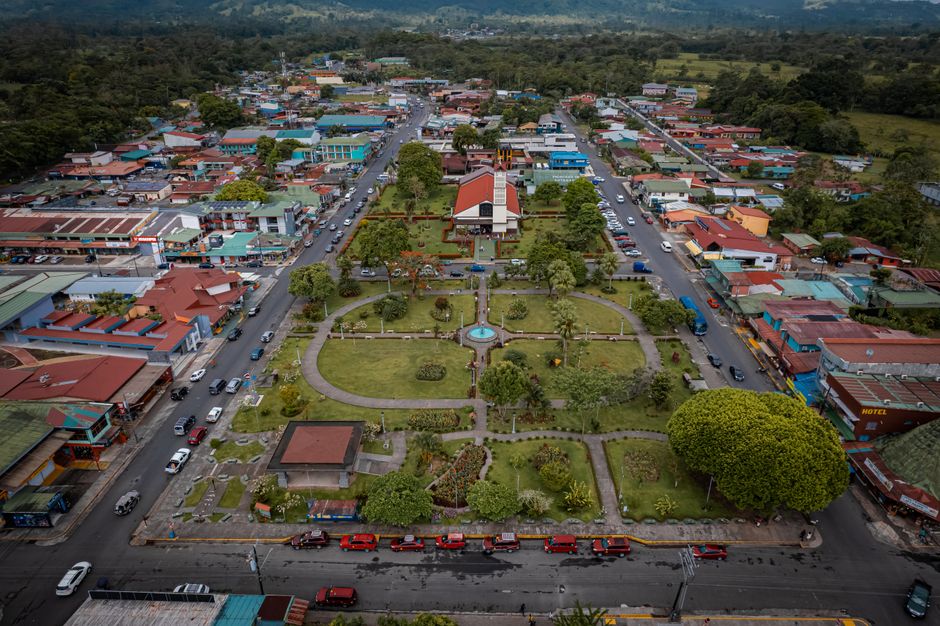
Daily life in Pérez Zeledón looks like genuine Costa Rican town life. The central park and church plaza anchor the urban core, with most banking, government, and commercial activity within walking distance. The town has the rhythm of a working population — early mornings, full mid-day commerce, evening family time.
For groceries, full supermarket options exist — Más X Menos, Walmart, PriceSmart in the broader area, plus traditional Costa Rican supermarkets, the Mercado Municipal, and a strong Saturday farmers market that draws producers from across the General Valley. The market in particular draws produce, dairy, and agricultural goods from surrounding farms at prices lower than in coastal or Central Valley destinations.
Banking is fully available. Government offices — migration, civil registry, tax authority — are present locally, which matters for residents managing residency and bureaucratic processes. Private clinics and specialists operate alongside the public hospital system.
Internet fiber reaches the urban core reliably. Mobile service is competitive. Verifying connection at specific rural mountain properties matters — communities like San Gerardo de Rivas or more remote areas of the canton may have limited connectivity.
The commercial strip along the Pan-American and surrounding streets has the busier, more utilitarian feel of a working Costa Rican town rather than the curated small-town feel of Atenas or the international cafe culture of Tamarindo. Restaurants are mostly modest; traditional Costa Rican food is excellent and affordable. The dining scene is oriented toward locals.
Pace is faster than coastal towns but slower than San José metro. The rhythm is genuinely Costa Rican — school pickups, soccer games on weekends, fiesta days, agricultural cycles in the surrounding countryside.
- Full urban services — supermarkets including Walmart and PriceSmart in broader area
- Mercado Municipal and Saturday farmers market draw from across the valley
- Regional medical hub — public hospital plus multiple private clinics
- Several private and bilingual schools serve families across the canton
- Pace faster than coastal towns, slower than San José metro
- Daily life follows Costa Rican rhythms more than international cycles
Climate and Environment
Pérez Zeledón sits at roughly 700 meters elevation in the General Valley, which produces a temperate climate distinctly different from both coastal Costa Rica and the high mountains. Daytime temperatures generally fall in the 70s and low 80s Fahrenheit year-round, with nighttime temperatures cooling into the 60s. Humidity is meaningful but lower than the coast. People who do not tolerate tropical heat well find Pérez Zeledón much more comfortable than any beach destination.
The climate is spring-like without being cold. Morning is fresh and cool, midday warm, afternoon often cloudy, evening comfortable. Air conditioning is not typically needed. Ceiling fans and natural ventilation handle most situations. This alone creates meaningful financial savings compared to coastal living.
The green season runs May through November with meaningful afternoon rain most days. The rainy season here is heavier than Central Valley locations like Atenas but lighter than the South Pacific coast. Flooding and landslides on mountain roads are real during the worst storms — particularly the Cerro de la Muerte route to San José.
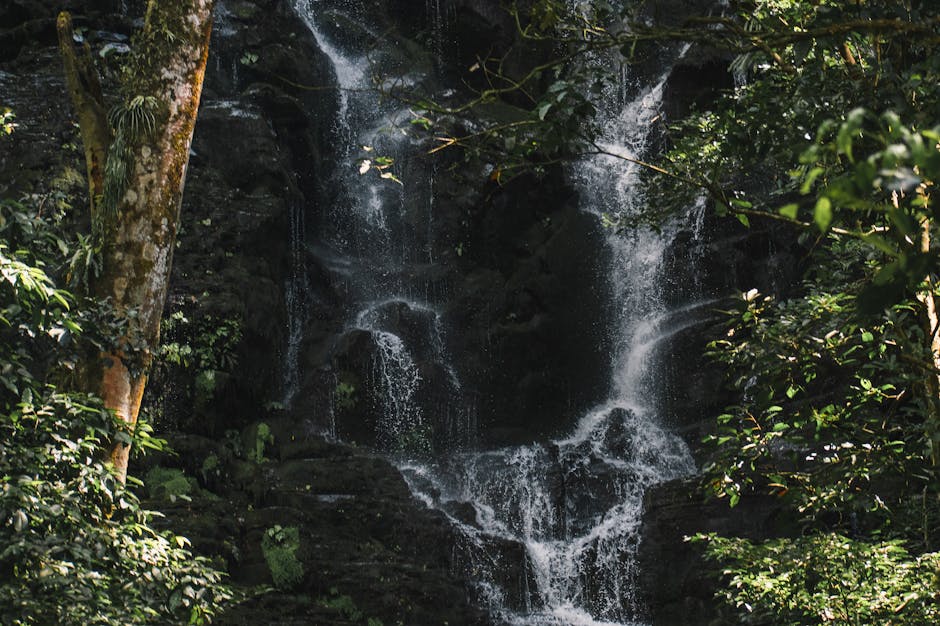
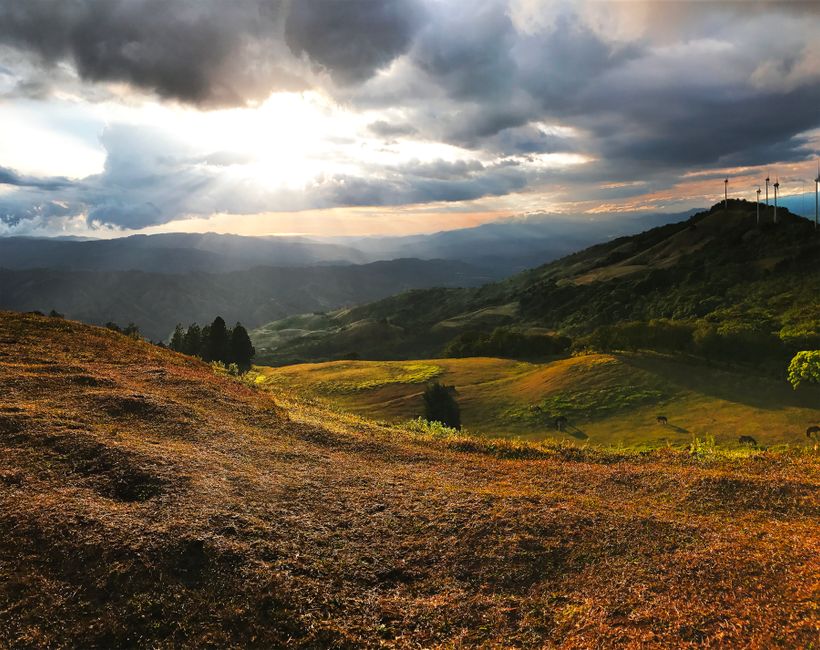
The environment is mountain valley and agricultural. Coffee farms, pasture, sugar cane, pineapple, and citrus surround the urban core. The Talamanca mountains rise to the east, with Chirripó (3,820 meters — Costa Rica's highest peak) within the canton. Rivers running out of the mountains provide swimming, fishing, and scenery. The landscape is green, lush, and productive in ways different from rainforest or dry tropical environments.
Water supply is generally reliable, sourced from mountain watersheds. This is a meaningful advantage over Guanacaste's chronic dry-season scarcity.
- Sits at ~700 meters elevation — temperate climate distinct from coast or high mountains
- Daytime 70s–80s F year-round; cool nights into the 60s
- Mountain valley setting surrounded by agricultural land and forested ranges
- Talamanca mountains and Chirripó (3,820m) within the canton
- Significant green-season rainfall; afternoon storms common May–November
- Water supply generally reliable from mountain watersheds
Cost of Living Reality
Pérez Zeledón is significantly less expensive than the coastal towns or Central Valley destinations like Atenas or Escazú. This is one of the main practical advantages of choosing the area.
Imported goods carry standard import duties. Local produce, basic services, and labor are notably affordable — the General Valley is agricultural, and produce in particular is excellent and inexpensive. Restaurants are mostly modest in price, with a smaller selection of higher-end options than in major destinations.
Housing varies by location. Urban properties in San Isidro itself are affordable. Mountain properties in San Gerardo de Rivas, Rivas, Páramo, and other surrounding communities range from very affordable rural properties to higher-end mountain estates. Coastal-style premiums do not apply here. Long-term rentals are widely available.
Utilities are typical for Costa Rica. Electricity is among the more expensive in Latin America but bills are lower than coastal towns because most properties don't need air conditioning given the temperate climate — a meaningful financial advantage. Internet is competitively priced. Mobile service is competitive.
Vehicle ownership costs apply. Mountain roads to outlying communities can accelerate vehicle wear, and some rural properties benefit from four-wheel drive in green season. The town itself is walkable for residents who live in the urban core.
The honest answer: Pérez Zeledón offers some of the best cost-of-living value in expat-friendly Costa Rica, particularly for buyers who do not require coastal access and who prefer authentic Costa Rican town life over English-speaking enclave living.
- Significantly less expensive than coastal or Central Valley destinations
- Local produce excellent and inexpensive — General Valley is agricultural
- Most properties don't need AC — significant electricity savings
- Long-term rentals widely available at lower rates than other expat areas
- Internet, mobile reasonably priced
- One of the best cost-of-living values in expat-friendly Costa Rica
Healthcare Access
Pérez Zeledón has the best healthcare access of any Costa Rican town outside the Central Valley itself. The town serves as the regional medical hub for southern Costa Rica, which means residents have far better local access than coastal residents to the south or peninsula residents to the west.
The Hospital Escalante Pradilla is the regional public hospital and serves the entire southern zone. It handles emergencies, surgeries, and a wide range of specialist care. Multiple private clinics and specialist offices operate in San Isidro, including imaging, dental, vision, and a broad range of general and specialist services.
For advanced care that requires the highest specialty levels, residents drive to San José metro (about three hours). Hospital CIMA in Escazú and Hospital Clínica Bíblica in San José are widely used for serious procedures. The drive is shorter than from coastal South Pacific towns, which is one of the reasons people from those regions often come to San Isidro for specialist appointments.
The public CAJA system is well-established here. The regional hospital and clinic infrastructure mean CAJA enrollment provides genuine access rather than the limited rural service some smaller towns offer.
Dental care is affordable and widely available, including specialty dentistry not always accessible in smaller towns.
Health insurance options are the same as elsewhere in Costa Rica — international, private Costa Rican plans, or CAJA enrollment. The combination most residents use is CAJA plus private out-of-pocket care for routine matters.
This is one of the meaningful advantages of choosing Pérez Zeledón over coastal South Pacific towns: medical access is genuinely good, and the geographic remoteness of South Pacific living does not apply.
- Hospital Escalante Pradilla is the regional public hospital
- Multiple private clinics and specialists operate in San Isidro
- Best healthcare access outside Central Valley itself
- San José metro hospitals ~3 hours for advanced specialty care
- CAJA infrastructure provides genuine access not limited rural service
- Major advantage over coastal South Pacific living

Getting Around and Getting Out
Pérez Zeledón has good road access in all directions and works well as a regional base.
The Pan-American Highway runs through the town, connecting south toward Panama and north toward San José metro. The drive to San José metro is about three hours over a paved but winding mountain road that climbs significantly through the Cerro de la Muerte. Weather affects travel time — the high mountain section can have fog and reduced visibility, particularly in green season.
For flights, Juan Santamaría (SJO) is about three hours away. There is a small domestic airport in San Isidro itself with limited service. Most residents who travel internationally drive to SJO; the trip is meaningful but reasonable for occasional travel.
The South Pacific coast is accessible. Driving over the mountains to Dominical takes about an hour. The coastal Costanera Sur reaches Uvita, Ojochal, and points south. Many Pérez Zeledón residents make regular weekend trips to the coast.
Driving south on the Pan-American reaches San Vito, Río Claro, and the Panama border in three to four hours. Driving inland to mountain communities like San Gerardo de Rivas, Rivas, or Páramo takes 30-90 minutes depending on destination.
Within San Isidro itself, the urban core is walkable for residents living centrally. Surrounding neighborhoods and the broader canton require vehicles, with mountain communities particularly benefiting from four-wheel drive in green season.
Public bus service is well-developed. San Isidro is a major bus hub with frequent service to San José, Dominical, San Vito, and surrounding rural communities. Buses are reliable, affordable, and used by a wide cross-section of the population.
Uber operates in some parts of southern Costa Rica with limited driver availability in San Isidro itself. Local taxis are widely available.
A vehicle is useful but not strictly required for residents in the urban core who can rely on buses, taxis, and walking.
- Pan-American Highway runs through town — good regional access
- SJO airport ~3 hours over winding mountain road (Cerro de la Muerte)
- Dominical and South Pacific coast ~1 hour over the mountains
- Major regional bus hub with frequent service in all directions
- Mountain communities (San Gerardo, Rivas, Páramo) 30–90 minutes
- Vehicle useful but not strictly required for urban-core residents

Community and Social Life
Pérez Zeledón's social life is distinctly Costa Rican rather than international, and that is part of its character.
The Costa Rican community is the foundation. Many local families have lived in this region for generations, working in agriculture, commerce, education, healthcare, and government. The Catholic church, school events, soccer, and traditional Costa Rican family life anchor the social calendar. The annual San Isidro festival — celebrating the patron saint — is a major regional event.
The expat community is smaller than in coastal towns or major Central Valley destinations. Expats here tend to be people who specifically chose authentic Costa Rican life: long-term residents deeply integrated into local communities, retirees seeking lower cost and authentic culture, families with Costa Rican spouses, and a smaller number of remote workers and professionals. The international mix is more varied than in some destinations — Americans, Canadians, Europeans, and a notable South American presence.
Gathering points include the central park (a real social hub for Costa Ricans across generations), local restaurants and cafes, church communities, soccer fields, and the weekly farmers market. Outdoor and adventure communities form around the Talamanca mountains, Chirripó, river systems, and the cycling culture that has developed around the surrounding mountain roads.
Religious community is heavily Catholic, with smaller evangelical, Mormon, and other religious communities present. For people coming from highly religiously diverse cities, the relative homogeneity may take adjustment.
Making friends in Pérez Zeledón as an adult requires Spanish proficiency more than in coastal expat enclaves. The expat community is small enough that English-only daily life is genuinely limiting. Costa Rican social life is welcoming but operates almost entirely in Spanish. People who plug into church communities, local sports, school communities, or specific interest groups (hiking, cycling, agriculture) integrate most successfully.
- Distinctly Costa Rican social character — small expat community
- Catholic church, soccer, school events anchor local social life
- Annual San Isidro festival is the major regional event
- Outdoor communities around Chirripó, Talamanca, cycling, river systems
- Spanish proficiency essential for genuine social integration
- English-only daily life genuinely limiting here

Schools and Family Life
Pérez Zeledón has more developed family and education infrastructure than most expat-popular destinations because it serves as the regional hub for southern Costa Rica.
For Costa Rican families, the public school system is well-developed with primary, secondary, and post-secondary options. The town has a satellite of the University of Costa Rica (UCR) and other higher education institutions. Many Costa Rican parents who can afford private education send their children to private schools in San Isidro or commute to schools elsewhere in the canton.
For expat families, several private and bilingual school options serve San Isidro and the broader canton. The school options here are more developed than in most coastal towns and many Central Valley smaller towns, partly because the canton's larger population supports a wider range of options.
Costa Rica is generally safe and welcoming for children. The mountain valley setting offers outdoor opportunities — hiking, swimming in rivers, exploring the surrounding agricultural countryside — that differ from beach or rainforest childhoods. Pediatric healthcare is genuinely accessible at the regional hospital and through private specialists locally; serious cases involve travel to San José.
Activities for children include soccer (very strongly), other sports, music, art, dance, hiking, cycling, and a range of school-based and independent programs. The temperate climate means outdoor activities are pleasant year-round without the heat extremes of the coast.
The honest considerations: bilingual or full-immersion Spanish education is the practical default, and the smaller English-language ecosystem means parents wanting to maintain first-language fluency in something other than Spanish need active planning. The peer community of expat children is smaller than in larger destinations. Specialized educational support is more accessible than in coastal towns but more limited than San José metro.
For families willing to integrate into Costa Rican life rather than live in an international enclave, Pérez Zeledón offers a family setting that is lower cost, well-serviced, and authentically Costa Rican.
- Regional education hub with public, private, and bilingual school options
- UCR satellite campus and other higher education institutions
- Pediatric healthcare genuinely accessible at regional hospital
- Temperate climate means outdoor activities pleasant year-round
- Smaller peer community of expat children than coastal destinations
- Touring schools in person before committing remains essential
Working and Income
Pérez Zeledón offers more income options than most Costa Rican expat destinations because the town has a real urban economy beyond tourism.
For remote workers, the area is viable. Internet through fiber providers is reliable in the urban core and most populated areas; verifying connection at specific properties matters in rural mountain communities. The temperate climate means home offices are pleasant year-round. Time zone aligns with North America. Coworking spaces are smaller and fewer than in larger cities but exist.
For people seeking employment in Costa Rica, Pérez Zeledón has a real local labor market in agriculture, commerce, healthcare, education, government, and trades. The town serves as a regional employment hub. Foreigners need appropriate residency status and work authorization. Pay reflects the Costa Rican economy.
For entrepreneurs, the local market is real but oriented toward Costa Rican consumers rather than international tourism. Restaurants, retail, professional services, agriculture-related businesses, and trades are the typical paths. Some long-running expat-owned businesses serve specific niches; the broader market is dominated by Costa Rican-owned commerce.
For Costa Ricans, employment in Pérez Zeledón is more diversified than in tourist-dependent towns. Agriculture, healthcare, education, government, retail, and trades all provide stable employment. Wages reflect the regional economy.
Vacation rental income is limited because Pérez Zeledón is not a tourist destination. Long-term rentals to Costa Rican families and to the smaller expat community are the more common pattern.
The combination of lower cost of living, real urban services, and viable remote work makes Pérez Zeledón one of the more practical bases in Costa Rica for foreigners with location-independent income.
- Real urban economy beyond tourism — agriculture, commerce, healthcare, education
- Reliable fiber internet in urban core; verify at specific rural properties
- Local labor market more diversified than tourist-dependent towns
- Entrepreneurship oriented toward Costa Rican consumers, not tourists
- Long-term rentals more common than vacation rentals
- One of the more practical bases for location-independent foreign income
Safety and Honest Concerns
Pérez Zeledón is generally considered safe by Costa Rican standards. The town has urban-scale activity but lacks many of the patterns that drive crime in larger cities or in tourist-heavy coastal areas.
Petty crime exists, particularly in busier areas of the urban core. Theft from unlocked vehicles, opportunistic break-ins, and pickpocketing in markets all happen. Basic precautions reduce these risks substantially.
Violent crime in Pérez Zeledón daily life is uncommon for residents using ordinary judgment. The town does not have the drug-trafficking patterns affecting parts of the Pacific coast or the urban concentration of San José metro. Most violent crime in Costa Rica is concentrated in specific neighborhoods of larger cities and along specific routes; San Isidro is generally not in those patterns.
The drug economy that affects parts of coastal Costa Rica has less direct presence here. Most residents never encounter it.
Natural hazards are mostly weather-related. Heavy green-season rains cause road flooding, landslides on rural mountain roads, and occasional damage to bridges and infrastructure. The Cerro de la Muerte route to San José is particularly affected by weather — fog, rain, and reduced visibility can make the drive challenging.
Earthquakes are part of life in Costa Rica. The southern zone sits on active fault systems and minor tremors happen periodically.
Wildlife concerns are minimal compared to coastal or rainforest areas. Snakes exist; encounters are rare. Insect pressure is lower than the coast.
The Cerro de la Muerte mountain road is the single biggest practical safety consideration for residents who travel to San José regularly. Traffic accidents on this route are not uncommon; weather increases risk; defensive driving is essential.
The honest takeaway: Pérez Zeledón is among the safer choices in Costa Rica from a crime perspective. The real safety considerations are mountain road driving and weather-related hazards.
- Generally considered safe by Costa Rican standards
- Petty theft most common issue; basic precautions reduce risk
- Violent crime uncommon in daily life
- Drug economy less present than coastal Pacific areas
- Cerro de la Muerte mountain road is the biggest practical safety consideration
- Wildlife and insect pressure lower than coastal or rainforest areas
The Hard Truths
Pérez Zeledón is not a beach. People who imagine waking up to ocean views or walking to surf breaks should choose elsewhere. The coast is an hour over the mountains, close enough for regular trips but far enough that beach life is not daily life.
The expat community is genuinely small. People who need an English-speaking ecosystem, an active expat social scene, or the infrastructure of a destination town will find Pérez Zeledón limiting. The lower cost of living and authentic Costa Rican character come paired with smaller scale.
Spanish proficiency is not optional in the way it can feel optional in Tamarindo or Atenas. The expat community is too small to support an English-only daily life, and integration with the Costa Rican community requires Spanish.
Tico time applies fully. Government bureaucracy, contractor scheduling, package delivery, and most service work move at a pace that frustrates people from efficient cultures. Pérez Zeledón is not exempt from the broader Costa Rican rhythm.
The Cerro de la Muerte drive to San José is real. It takes time, weather conditions affect it meaningfully, and people who travel to the Central Valley regularly will spend a noticeable portion of their lives on that mountain road. SJO airport is genuinely three hours, not three hours in marketing terms.
The town is a working town. It is not curated for visitors or for international aesthetics. The downtown is busy and commercial in ways that some find authentic and others find unappealing. People expecting a polished destination will be surprised.
Mountain weather is real. Heavy green-season rains, occasional landslides, and the cooler nights are all part of life. People who romanticize tropical Costa Rica without understanding mountain elevation will be slightly surprised.
Returns on investment exist but are different from coastal speculation. Real estate appreciates, but Pérez Zeledón is not a flip market or a vacation rental market. Long-term residential value is the realistic frame.
Loneliness is a real risk for expats who arrive without Spanish and without a plan for community. The support infrastructure of larger expat communities is smaller here.
- Not a beach — coast is an hour over the mountains
- Small expat community — limiting for those who need English-speaking ecosystem
- Spanish proficiency essential, not optional
- Cerro de la Muerte mountain road takes real time and weather affects it
- Working town, not a curated destination
- Mountain weather: heavy green-season rain, cooler nights
- Real estate is long-term residential, not vacation rental or speculation
- Loneliness real for expats without Spanish and without community plan
Frequently Asked Questions About Living in Pérez Zeledón
Is Pérez Zeledón safe for foreigners to live in?
Pérez Zeledón is generally considered safe by Costa Rican standards.
How much does it cost to live in Pérez Zeledón?
Pérez Zeledón is significantly less expensive than the coastal towns or Central Valley destinations like Atenas or Escazú.
Do I need to speak Spanish to live in Pérez Zeledón?
Pérez Zeledón's social life is distinctly Costa Rican rather than international, and that is part of its character.
What is the best time of year to visit Pérez Zeledón?
Pérez Zeledón sits at roughly 700 meters elevation in the General Valley, which produces a temperate climate distinctly different from both coastal Costa Rica and the high mountains.
Quick Reference: Pérez Zeledón At a Glance
| Overview | Pérez Zeledón sits in the General Valley between the Talamanca and Pacific mountain ranges, with a temperate mountain climate, full urban services, and a character distinct from any beach or Central Valley destination. |
| Climate | Pérez Zeledón sits at roughly 700 meters elevation in the General Valley, which produces a temperate climate distinctly different from both coastal Costa Rica and the high mountains. |
| Real estate | Pérez Zeledón offers urban homes in San Isidro itself, properties in surrounding mountain communities (San Gerardo de Rivas, Rivas, Páramo), and agricultural land in the General Valley — at significantly lower price points than coastal towns or the Central Valley. |
| Time zone | CST (UTC−6) — no daylight saving time |
| Nearest airport | SJO — Juan Santamaría International Airport |
| Foreign ownership | Yes — foreigners own fee-simple title with the same rights as Costa Rican nationals |
Pros and Cons
Advantages
- ✓ Significantly lower cost of living than coast or Central Valley
- ✓ Temperate mountain climate — cooler than coast, warmer than higher altitudes
- ✓ Full urban services — hospitals, banking, retail, government offices
- ✓ Gateway to South Pacific (1 hour) and Chirripó/Talamanca mountains
Considerations
- ! Inland location — no beach access without driving
- ! Smaller English-speaking expat community than major destinations
- ! Working town — less polished tourist infrastructure
- ! Mountain weather: heavy green-season rain, cooler nights
Practical Notes
Pérez Zeledón is the canton; San Isidro de El General is the canton seat and what most people mean when they say either name. The town is the regional hub for southern Costa Rica, drawing residents from surrounding rural communities for hospitals, schools, government services, and commerce.
Nearby Areas to Compare
Ready to Compare Properties in Pérez Zeledón?
Browse verified broker listings from Pérez Zeledón and the surrounding area.