Central Pacific · Puntarenas · Costa Rica
What Is Life in Playa Hermosa (Jacó), Costa Rica Like?
Playa Hermosa de Jacó is a residential surf-oriented community on the central Pacific coast just south of Jacó — known for consistent powerful surf, the deliberately quieter character compared to neighboring Jacó, and a small but established expat community drawn by the surf and the lower density.

What Playa Hermosa Actually Is
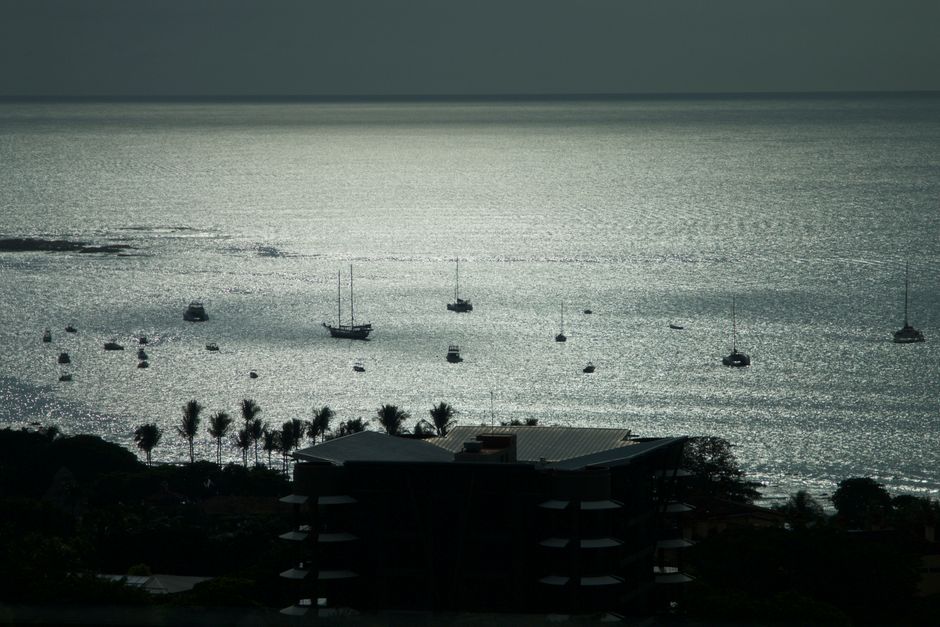
Playa Hermosa de Jacó is a beach community on Costa Rica's central Pacific coast, in the Garabito canton of Puntarenas province. The community sits along a long stretch of dark volcanic-sand beach approximately 5-10 minutes south of Jacó. The area is defined first and foremost by its surf — Playa Hermosa has one of Costa Rica's most consistent and powerful breaks, drawing serious surfers from around the world, and the surf scene shapes much of what happens here.
What Playa Hermosa is not: a commercial beach town, a place with developed tourism infrastructure, or a destination for casual visitors seeking restaurant variety, nightlife, and beach services. There is no commercial strip. The community is residential and surf-oriented by nature.
What Playa Hermosa is: a genuine surf community — one of the few in Costa Rica where the wave quality defines everything else. The annual ISA World Surfing Games and other international surf competitions have been held here, which communicates the quality of the break to anyone in the surf world. Residents who are not serious surfers often find the character compelling precisely because the absence of commercial development means the community retains a character that busier beach towns have lost.
The wildlife refuge designation (Refugio Nacional de Vida Silvestre Playa Hermosa-Punta Mala) is a defining feature. The refuge protects sea turtle nesting populations — olive ridley and Pacific green turtles nest here in meaningful numbers — and this protection produces real consequences: beach lighting restrictions during nesting season, development density limits, building setback requirements. People who live here know the turtle calendar as part of their annual rhythm.
The relationship with Jacó is fundamental. Everything Playa Hermosa lacks commercially — groceries, restaurants, services, social scene breadth — is available 5-10 minutes north. Residents effectively live in Playa Hermosa and use Jacó as their town. The proximity makes this practical; the separation is what makes Playa Hermosa desirable to the people who choose it.
- Located in Garabito canton, Puntarenas province, on the central Pacific coast
- Sits 5–10 minutes south of Jacó along long dark-sand beach
- One of Costa Rica's most consistent and powerful surf breaks
- Designated wildlife refuge protects sea turtle nesting populations
- Beach lighting restrictions apply during turtle nesting seasons
- Smaller, surf-oriented expat community than neighboring Jacó
What Daily Life Looks Like
Daily life in Playa Hermosa is genuinely quiet and surf-driven. The community's geography — long beach with low-density residential development behind it, surrounded by tropical forest and the wildlife refuge — produces a daily rhythm dominated by surf, beach time, sea turtles, and intentionally low-key social life.
For groceries, residents typically go to Jacó (5-10 minutes north) for the major shopping. Jacó has Más X Menos, multiple smaller markets, and the broader commercial infrastructure of a full beach town. Some basic provisions are available locally but serious grocery shopping happens in Jacó. The Saturday farmer's market in Jacó is a community anchor.
For daily services, Playa Hermosa has a limited local commercial base — several restaurants and bars, a handful of surf shops, and basic services. For anything beyond these, Jacó is the destination. Bank, pharmacy, hardware, medical — all require the trip north.
The surf morning is a genuine daily-life rhythm. The lineup at Playa Hermosa has local regulars who know each other from years of shared sessions. Early mornings on the beach — before the sun is high and the wind picks up — define what life here feels like for residents who surf.
The sea turtle nesting rhythm defines parts of the year. Olive ridley turtles nest primarily July through November; Pacific green turtles have their own season. Residents who engage with the refuge programs (nest monitoring, hatchery work, beach patrols) have a particular seasonal engagement that shapes both the calendar and social connections.
The rainy season is genuinely rainy. Green season storms are real and can be sustained. Mold, humidity, and property maintenance are ongoing realities. Residents typically have strong relationships with local tradespeople who handle maintenance needs.
- Genuinely quiet and surf-driven daily rhythm
- Most groceries and broader services come from Jacó (5–10 minutes)
- Surf-driven mornings — locals catch waves with far fewer crowds than Jacó
- Beach lighting restrictions during turtle nesting season
- Several local restaurants and bars; main dining variety in Jacó
- Seasonal rhythm — high season busier, green season genuinely quiet
Climate and Environment
Playa Hermosa shares the central Pacific tropical climate of the broader region — warm and humid year-round, with significant rainfall and a green season that brings substantial daily storms during much of the year. Climate patterns match Jacó: dry season December through April with reduced but still meaningful humidity, green season May through November with afternoon storms common.
Daytime temperatures typically run in the upper 80s to low 90s Fahrenheit year-round. Nighttime temperatures drop somewhat but remain warm. Air conditioning is common in bedrooms and living areas; humidity management is an ongoing practical challenge for residents.
The surf consistency is climate-driven. Pacific swells arrive from southern ocean systems, producing the reliable powerful waves that define the break. The best surf often aligns with green-season swell patterns — many serious surfers specifically value the green season for wave quality despite the rain.
The wildlife refuge environment means the beach and adjacent areas retain more natural character than more developed coastal areas. Sea turtles nest on the beach in meaningful numbers. The surrounding forest and refuge land support diverse wildlife — birds, reptiles, amphibians, mammals. Residents who engage with the natural environment have access to genuinely wild coastal ecology.
Mold, humidity, and property maintenance are real ongoing challenges. The tropical climate is demanding on structures, furnishings, and equipment. Air conditioning use, proper ventilation, and consistent maintenance are necessary. Vehicles and electronics face accelerated aging. Swimming pools require regular chemical treatment. These are known costs of coastal tropical living.
- Central Pacific tropical climate — warm, humid year-round
- Significant rainfall, particularly during green season
- Wildlife refuge protects olive ridley and Pacific green sea turtle nesting
- Dark volcanic sand part of what makes beach ideal nesting habitat
- Powerful surf and strong currents — drownings happen on this coast every year
- Mold and humidity damage real ongoing maintenance challenges

Cost of Living Reality
Playa Hermosa is generally less expensive than Jacó proper for comparable properties, though still reflecting central Pacific coastal pricing rather than affordability. The combination of quieter character, smaller commercial base, wildlife refuge limits on development density, and absence of the Jacó-style commercial premium keeps prices below Jacó while the area's surf-destination demand keeps them above some quieter Pacific destinations.
Imported goods carry standard import duties. Local produce, fish, basic services, and labor are affordable. Eating out happens partly at Playa Hermosa restaurants and bars, partly with trips to Jacó's broader dining scene. Everyday meals are reasonable while higher-end dining usually requires the trip north.
Housing varies. Single-family homes in residential developments range from modest to substantial. Surf-area properties carry premiums for proximity to the break. Condo developments range from mid-range to higher-end. Beach-proximity properties with view and surf access are particularly desired.
Utilities are typical for central Pacific Costa Rica. Electricity is expensive and AC bills accumulate during hot months. Vehicle ownership is necessary.
The wildlife refuge protection has real implications for development and modification of properties near the beach. Beach lighting restrictions, building setback requirements, and density limits all affect what owners can do with properties. Buyers should understand these restrictions before committing — they are part of what makes Playa Hermosa attractive to people who value the preserved character, and a limitation for those who did not anticipate them.
- Less expensive than Jacó for comparable properties
- Wildlife refuge limits on development density preserve character
- Most groceries and broader dining come from Jacó
- Surf-oriented short-term rentals are a real market segment
- Beach setback and lighting restrictions affect properties near beach
- HOA fees apply in many residential developments
Healthcare Access
Healthcare from Playa Hermosa follows the broader Jacó-area pattern, with the practical advantage of Jacó's clinics nearby and the broader San José metropolitan healthcare infrastructure within reasonable driving distance.
For routine care, residents typically use private clinics in Jacó (5-10 minutes north), which serve general medical needs and have visiting specialists. Pharmacies are accessible in Jacó. The CAJA system has presence in the broader area for residents enrolled in the public system.
For specialist and hospital care, residents drive to San José metro (about an hour and a half to two hours, depending on traffic and route). Hospital CIMA Escazú and Hospital Clínica Bíblica are widely used by the international expat community. Hospital Monseñor Sanabria in Puntarenas is the regional public hospital, accessible within an hour or so.
For emergencies, Jacó's clinics handle some urgent matters; serious cases involve transport to San José metro. Air ambulance services exist for very serious cases.
Dental care is widely available in Jacó for routine work and at higher levels in San José metro.
Playa Hermosa's healthcare access is comparable to the broader Jacó area — the slightly longer drive to Jacó's clinics is the main difference. Better than many smaller Pacific destinations because the highway connection to San José metro is reliable and the Jacó clinics cover most routine needs.
- Routine care in Jacó (5–10 minutes north)
- San José metro hospitals 1.5–2 hours by reliable highway
- Hospital CIMA Escazú and Clínica Bíblica accessible for advanced care
- Hospital Monseñor Sanabria in Puntarenas is regional public hospital
- Better access than many smaller Pacific destinations
- Air ambulance available for very serious emergencies

Getting Around and Getting Out
Inside Playa Hermosa, daily movement requires a vehicle for almost all residents. The community is residential and dispersed along the coast, with low-density development meaning even short trips often involve driving.
For getting out, the relevant airport is Juan Santamaría International (SJO) in Alajuela, about an hour and a half to two hours northeast depending on traffic. The highway connection is one of the better routes from Pacific coast Costa Rica to the metropolitan region. Liberia (LIR) is meaningfully further — over four hours.
Jacó is 5-10 minutes north — close enough for routine errands, dining variety, and most services. The broader central Pacific is accessible. Driving south reaches Manuel Antonio in about an hour and a half. The Playa Bejuco-Esterillos area is just south of Playa Hermosa, with similar quieter beach community character.
Public bus service connects the broader area to Jacó, San José, and other destinations. Buses are available but less frequent than in busier commercial towns.
Uber operates with limited driver availability in Playa Hermosa itself; drivers are more accessible from Jacó. Local taxis are widely available.
A vehicle is genuinely necessary for residents in Playa Hermosa.
- A vehicle is genuinely necessary
- SJO airport 1.5–2 hours northeast — among better Pacific coast access
- Jacó 5–10 minutes north for routine errands and dining
- Manuel Antonio ~1.5 hours south
- Roads generally paved and reliable
- Uber limited in Playa Hermosa; more accessible from Jacó

Community and Social Life
Playa Hermosa's social life reflects the small surf-oriented residential community character. The pace, the surf-driven daily rhythm, and the limited commercial scene all shape how social connections form.
The Costa Rican community is present but more dispersed than in busier destinations. Many local families live in surrounding rural areas and inland communities, working in surf instruction, hospitality, trades, and the broader Jacó-area economy.
The expat community is meaningfully smaller than at neighboring Jacó. The people who choose Playa Hermosa typically self-select for the surf-oriented quiet character — serious surfers, families seeking quieter beach environments, residents drawn to wildlife refuge character, retirees prioritizing tranquility, and remote workers who value focused environments. The surf community is a particular social anchor — residents who surf often know each other from the lineup more than from any other gathering point.
Gathering points include several long-running Playa Hermosa restaurants and bars, the surf lineup itself, the wildlife refuge volunteer programs, and the beach during turtle nesting season for residents who participate in turtle protection. For broader social variety, residents engage with Jacó's larger expat community when desired — many Playa Hermosa residents have meaningful social ties in Jacó and make regular trips for both dining and friendships.
The sea turtle nesting and the wildlife refuge produce a distinctive community character. Residents who actively engage with turtle protection develop social bonds around this work that don't exist in most other Costa Rican beach communities.
- Smaller, self-selected surf-oriented community
- Surf community is a particular social anchor
- Wildlife refuge volunteer programs produce distinctive community engagement
- Several long-running local restaurants and bars serve as gathering points
- Most residents combine Playa Hermosa life with social ties in Jacó
- Active engagement plan needed to avoid isolation in green season

Schools and Family Life
Families do raise children in Playa Hermosa, with the trade-offs that come with the smaller residential community.
For Costa Rican families, public schools serve the surrounding communities. Many Costa Rican parents who can afford private education send their children to private schools in Jacó or the broader region.
For expat families, the relevant private and bilingual school options are in Jacó. International schools in San José metro provide additional choices for families willing to commit to the longer commute, though daily commuting from Playa Hermosa to San José metro for school is impractical for most families.
The natural environment of Playa Hermosa — the long beach, the wildlife refuge, the surrounding rainforest, abundant wildlife including the sea turtle nesting — provides outdoor experiences that distinguish childhood here from busier destinations. The wildlife refuge programs include educational opportunities for children. Pediatric healthcare is available in Jacó for routine matters and at higher levels in San José metro.
Activities for children include surf lessons, beach time (with strong supervision given the powerful surf — Playa Hermosa is not a beginner-friendly swimming beach), wildlife refuge volunteer programs and sea turtle education, soccer, music, art, and a range of structured after-school programs accessible in Jacó.
The honest considerations: the social pool of expat children in Playa Hermosa proper is smaller than in Jacó itself. Families with children sometimes feel more isolated here than at busier destinations. School commutes to Jacó are real — every school day involves the drive.
- Schools are in Jacó — daily commute reality for families
- Wildlife refuge programs include educational opportunities for children
- Powerful surf means beach time requires more parental supervision
- Smaller peer pool of expat children than busier destinations
- Pediatric healthcare in Jacó; serious cases involve San José metro
- Specialized educational support typically requires travel to San José
Working and Income
Income strategies in Playa Hermosa match other quieter central Pacific residential areas: remote work for foreign employers is the most common viable path; local employment is limited; entrepreneurship is real but specific.
For remote workers, Playa Hermosa is viable. Internet through fiber providers reaches most populated areas with reliability suitable for focused work. The quiet residential environment is genuinely conducive to productivity — many residents specifically value this over busier destinations. The time zone aligns with North America. Coworking is mostly accessed in Jacó for those who want shared work space.
For employment, local options center on hospitality (Playa Hermosa restaurants and bars, accommodations, vacation rental management), surf instruction, real estate, the wildlife refuge programs, and trades. The broader Jacó economy is accessible for residents willing to commute. Foreigners need appropriate residency status and work authorization.
For entrepreneurs, Playa Hermosa's surf-oriented residential character supports specific kinds of small businesses — surf instruction, vacation rental management oriented toward surfing travelers, real estate, certain hospitality-adjacent businesses, and tourism services oriented to the wildlife refuge and turtle viewing. The market is smaller and more specialized than at Jacó's broader scale.
Vacation rental income is a real and meaningful market here, particularly for properties oriented toward surfing travelers. The combination of consistent surf, wildlife refuge appeal, proximity to Jacó, and quieter character produces specific demand. Owners with well-managed properties in good locations generate meaningful income; passive-income expectations without management infrastructure regularly underperform.
- Remote work for foreign employers most common viable path
- Quiet environment genuinely conducive to focused productivity
- Coworking accessed in Jacó for those who want shared work space
- Local employment limited; surf, hospitality, refuge, trades market
- Surf-oriented vacation rental market real and meaningful
- Time zone aligns with North American work schedules

Safety and Honest Concerns
Playa Hermosa is generally considered safer than Jacó for daily life. The residential character, the smaller population, the wildlife refuge protection, and the absence of Jacó's commercial nightlife scene all contribute to lower crime relative to busier destinations.
Petty crime exists. Theft from unlocked vehicles, opportunistic break-ins of unsecured properties, and theft of items left on the beach all happen, particularly during high season. Surfers' boards and bags are particular targets when left unattended.
Beach safety is the most serious concern. Playa Hermosa's surf is powerful and the same conditions that make it a world-class surf beach create real currents, riptides, and dangerous water along most of the beach. This is not a swimming beach for casual visitors. Drownings happen on this coast every year, including at Playa Hermosa specifically. Strong currents can pull even experienced swimmers into trouble.
The powerful surf is also an active hazard for surfers. Playa Hermosa is not a beginner break — the size and power of waves require real surf experience.
Wildlife concerns include venomous snakes (real possibility in the rainforest environment, with encounters in residential areas uncommon but possible), insect pressure during green season, and crocodiles in nearby rivers and estuaries.
During sea turtle nesting season, beach activity at night is restricted in certain areas. Disturbing nesting turtles is illegal, and residents need to understand and respect nesting-season protocols.
- Generally safer than Jacó for daily life — residential character supports lower crime
- Petty theft most common; surfers' gear particular target
- Violent crime uncommon in daily life
- Powerful surf and strong currents — drownings real and serious here
- Not a beginner surf break — surf experience genuinely required
- Disturbing nesting turtles is illegal and harmful to protected populations
The Hard Truths
Playa Hermosa is genuinely quiet, and people who arrive expecting a beach town with infrastructure leave disappointed quickly. There is no commercial strip, limited dining options compared to Jacó, no significant nightlife, and no walkable amenity scene. The community is residential and surf-oriented by nature. Buyers who do not specifically want this character are better served at busier destinations.
The constant Jacó dependency is real. Every residential decision — groceries, dining variety, services, social scene — eventually involves the trip to Jacó. People who expected to live entirely within Playa Hermosa quickly discover this is impractical for almost anyone.
The ocean is dangerous. The same powerful surf that makes Playa Hermosa a world-class destination creates conditions that kill people every year. This is genuinely not a beach for casual swimmers, families with young children seeking water play, or surfers who haven't developed real ability.
The surf hierarchy is real. Local surfers and long-term residents have established patterns at the break. Newcomers who paddle out aggressively without learning the social order get worse waves and sometimes worse welcomes. The break itself is demanding enough that respect for both surf etiquette and personal limits matters.
The wildlife refuge restrictions are real. Beach lighting limitations during nesting season, building setback requirements, and density limits all affect what owners can do with properties.
Heavy rain produces real ongoing mold and humidity challenges. Property maintenance costs are higher here than at drier destinations. Equipment ages faster. These costs should be included in budget planning.
Vacation rental income is real but requires active management. Passive-income expectations without professional management infrastructure regularly underperform. Seasonality matters significantly.
- Genuinely quiet — no commercial strip, no nightlife, very limited walkable amenities
- Constant Jacó dependency for groceries, services, dining variety
- Ocean is genuinely dangerous — drownings happen here every year
- Surf hierarchy and break difficulty require real surf experience
- Wildlife refuge restrictions on lighting, setbacks, and density real
- Heavy rain produces real ongoing mold and humidity challenges
- Vacation rental market more sophisticated than passive-income expectations suggest
- Loneliness real for residents without engagement plan and Jacó ties
Frequently Asked Questions About Living in Playa Hermosa (Jacó)
Is Playa Hermosa (Jacó) safe for foreigners to live in?
Playa Hermosa is generally considered safer than Jacó for daily life.
How much does it cost to live in Playa Hermosa (Jacó)?
Playa Hermosa is generally less expensive than Jacó proper for comparable properties, though still reflecting central Pacific coastal pricing rather than affordability.
Do I need to speak Spanish to live in Playa Hermosa (Jacó)?
Playa Hermosa's social life reflects the small surf-oriented residential community character.
What is the best time of year to visit Playa Hermosa (Jacó)?
Playa Hermosa shares the central Pacific tropical climate of the broader region — warm and humid year-round, with significant rainfall and a green season that brings substantial daily storms during much of the year.
Quick Reference: Playa Hermosa (Jacó) At a Glance
| Overview | Playa Hermosa sits along a long stretch of dark-sand beach about 5-10 minutes south of Jacó, with surf-area properties, residential developments, and a designated wildlife refuge protecting the beach as an important sea turtle nesting site. |
| Climate | Playa Hermosa shares the central Pacific tropical climate of the broader region — warm and humid year-round, with significant rainfall and a green season that brings substantial daily storms during much of the year. |
| Real estate | Playa Hermosa offers single-family homes in residential developments, surf-area properties, condos, and inland lots — at price points generally below Jacó proper for comparable size while reflecting the area's surf-destination demand and the wildlife refuge protection that limits development density. |
| Time zone | CST (UTC−6) — no daylight saving time |
| Nearest airport | SJO — Juan Santamaría International Airport |
| Foreign ownership | Yes — foreigners own fee-simple title with the same rights as Costa Rican nationals |
Pros and Cons
Advantages
- ✓ World-class surf break consistent year-round
- ✓ Quieter than Jacó while sharing access to its full town infrastructure
- ✓ Wildlife refuge protects sea turtle nesting and limits development density
- ✓ Lower property prices than Jacó proper for comparable size
Considerations
- ! Powerful surf with strong currents — beach safety is real and serious
- ! Limited commercial base — most groceries and services from Jacó
- ! Hot, humid central Pacific climate with green-season rain
- ! Beach lighting restrictions during turtle nesting season affect properties near beach
Practical Notes
Playa Hermosa is a designated wildlife refuge (Refugio Nacional de Vida Silvestre Playa Hermosa-Punta Mala) protecting sea turtle nesting populations including olive ridley and Pacific green turtles. Beach lighting restrictions apply during nesting seasons. The wildlife refuge designation also limits development density compared to other central Pacific destinations.
Nearby Areas to Compare
Ready to Compare Properties in Playa Hermosa (Jacó)?
Browse verified broker listings from Playa Hermosa (Jacó) and the surrounding area.