Northern Plains · Guanacaste · Costa Rica
What Is Life in Arenal, Costa Rica Like?
Arenal — referring primarily to the Lake Arenal area and the communities around it (Nuevo Arenal, Tilarán, Tronadora) — is a different living experience from La Fortuna, with a temperate mountain-lake climate, dramatic volcano-and-lake views, and a small but established expat community drawn by the cooler weather and lower density.
What Arenal Actually Is
The Arenal area in this guide refers to the broader Lake Arenal region — primarily the western and southern shores of the lake, including Nuevo Arenal, Tilarán, Tronadora, and the surrounding rural communities. The area sits in the northern plains of Costa Rica, in the canton of Tilarán in Guanacaste province (geographically distinct from coastal Guanacaste despite the shared province), with Lake Arenal — Costa Rica's largest lake — as the defining geographic feature.
What this area is not: La Fortuna. La Fortuna sits on the eastern side of the lake, a 30-40 minute drive away, and operates as a distinct community with its own character — more tourism-oriented, busier, better-serviced. People who research 'Arenal' online often find La Fortuna content. The lakeside Arenal area (Nuevo Arenal, Tilarán) is meaningfully different.
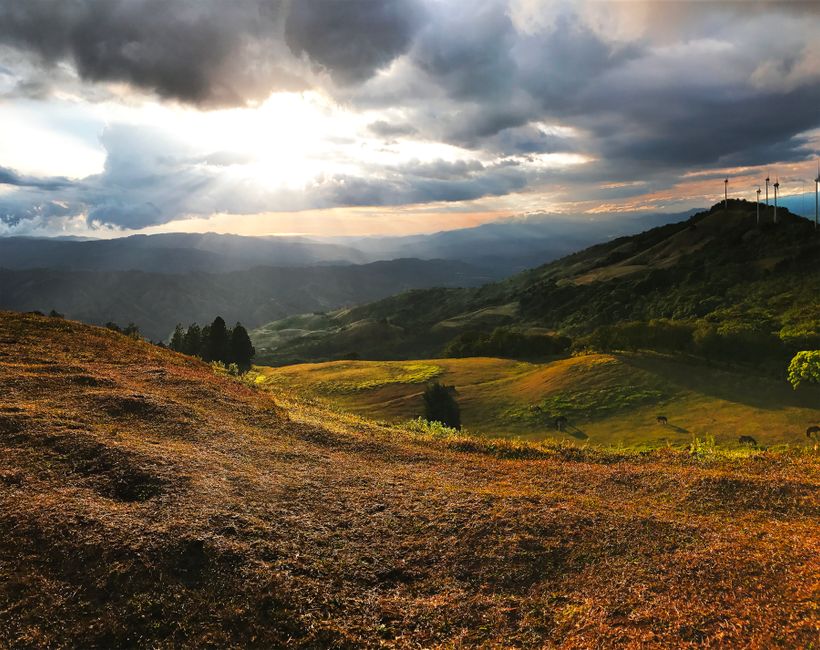
What this area is: a rural-residential mountain-lake environment with cooler temperatures than coastal Costa Rica, lake views, and a small expat community that has deliberately chosen less tourism density and lower cost in exchange for the quiet rural-lake character. The lake itself is an artificial reservoir created by a hydroelectric dam in the 1970s — Lake Arenal is not a natural lake, but the resulting landscape (the volcano visible across the water on clear days, the rolling hills, the wind-turbine ridgelines) is genuinely dramatic.
The lake is also functional infrastructure. Lake Arenal provides roughly 12% of Costa Rica's electricity through the hydroelectric system. Water level fluctuations from dam operations are real and affect lakeside properties. Properties marketed with 'direct lake access' should be evaluated carefully — the fluctuating water level means some access can be seasonal or variable.
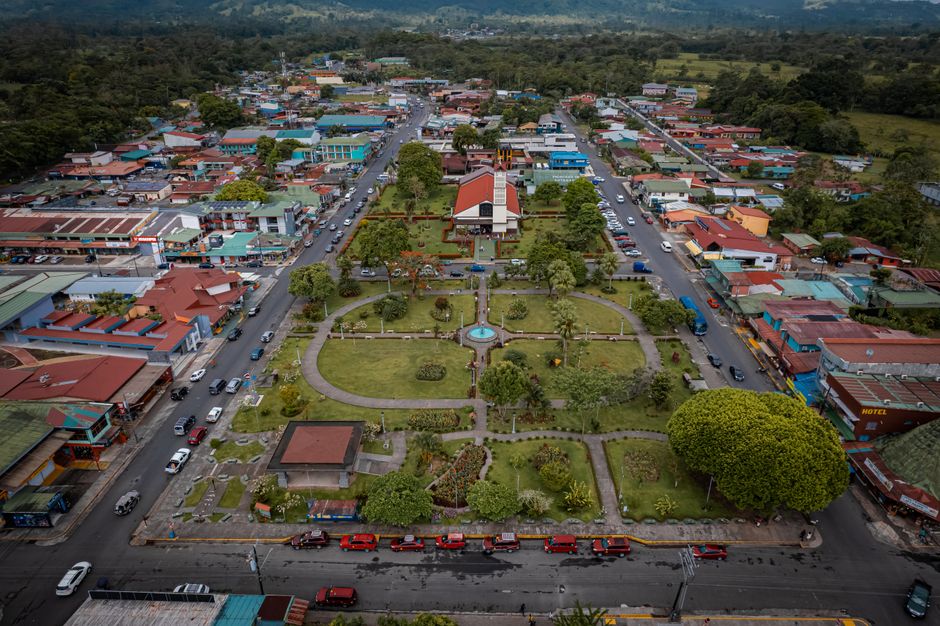
Nuevo Arenal is the main lakeside community. The small town has a commercial center with basic services, a few restaurants, a farmers market, and community gathering points. It's a genuinely small town — residents looking for the commercial infrastructure of Tilarán need to drive.
Tilarán, 30-40 minutes west, is the actual regional commercial hub. It has Maxi Pali, banking, pharmacies, the regional hospital, government offices, schools, and the fuller range of services that support daily life. Many lakeside Arenal area residents make regular trips to Tilarán for shopping and services rather than relying on Nuevo Arenal alone.
- Located in Tilarán canton, Guanacaste province (geographically distinct from coastal Guanacaste)
- Covers lakeside and lake-vicinity communities — Nuevo Arenal, Tilarán, Tronadora
- Lake Arenal is Costa Rica's largest lake, created by hydroelectric dam
- Volcano visible across lake on clear days from many properties
- Wind-turbine ridgelines produce additional electrical power for the country
- 30–40 minute drive to La Fortuna town around the lake
What Daily Life Looks Like
Daily life in the Lake Arenal area is genuinely quiet and rural-residential. The dispersed geography across hills, lakeside, and surrounding agricultural land produces a daily rhythm dominated by lake views, the slower pace of mountain-rural living, and the rhythms of small-town Costa Rica.
For groceries, residents in Nuevo Arenal use the local supermarkets and the small commercial center. Tilarán has more options — a Maxi Pali, larger supermarkets, banking, pharmacies — and most residents make regular trips there for broader shopping needs. The Saturday farmers market in Nuevo Arenal draws residents from across the area for produce and local products.
For daily services, the commercial infrastructure is concentrated in Tilarán rather than Nuevo Arenal. Banking, pharmacies, government offices, mechanics, and the fuller range of everyday services require the drive.
The lake defines daily life visually and recreationally. The water is visible from most properties in the area. Kayaking, fishing, and lake activities are accessible. The wind-sport culture during the dry season (December through April) brings windsurfers and kiteboarders to specific areas of the lake, producing a distinctive seasonal energy.
The cooler climate shapes the daily experience in ways residents consistently cite as their primary quality-of-life advantage. The mid-70s Fahrenheit days, the cooler nights, the absence of the coastal heat-and-humidity cycle — many residents from hot coastal areas specifically value this. Home offices, outdoor living, and sleep are all more comfortable than at coastal destinations.
The wind season is a defining seasonal feature. The dry-season trade winds funnel through the Tilarán mountains and across the lake with sustained power, making this one of the world's best windsurfing and kiteboarding spots. For residents who participate, this is a feature. For residents who don't, it can be a daily reality — strong winds affecting outdoor furniture, plants, and comfort on exposed properties.
- Genuinely quiet rural-residential daily rhythm
- Nuevo Arenal has small commercial center; Tilarán is broader regional hub
- Cooler mountain-lake air at higher elevations
- Strong dry-season winds make area famous for windsurfing and kiteboarding
- Lake provides recreational and visual presence
- Less constant tourism than La Fortuna — more local Costa Rican character
Climate and Environment
The Arenal lakeside climate is meaningfully different from coastal Costa Rica and even from La Fortuna town. Elevation varies across the area from roughly 1,800 feet at lake level to higher in the surrounding hills, producing temperate conditions that distinguish daily life from tropical lowland coast or rainforest.
Daytime temperatures typically run in the mid 70s to low 80s Fahrenheit year-round. Nighttime temperatures cool meaningfully — into the mid 60s and sometimes lower at higher elevations. Air conditioning is unnecessary for most properties; some residents even use light blankets at night during cooler periods. This is a major draw for residents coming from coastal heat.
Rainfall is substantial, particularly during green season (May through November). The lakeside area receives significant rain, and afternoon storms are routine during the wet months. Some days are overcast for extended periods. The combination of cooler temperatures and higher rainfall produces the green rolling landscape that characterizes the area.
The dry season (December through April) brings the trade winds. The sustained winds — sometimes strong enough to make outdoor activities challenging — are the reason this lake is world-famous for windsurfing. Wind season energy is a distinctive feature of the area's annual rhythm.
The lake is the defining environmental feature. Lake Arenal covers roughly 85 square kilometers, visible from thousands of lakeside and hillside properties. The volcano is visible across the water on clear days — Arenal Volcano appears as a near-perfect cone rising on the eastern horizon, often with cloud trailing from the summit. The combination of lake and volcano views is what draws many buyers here.
Wildlife is present and diverse. Bird life is exceptional — the lake and surrounding hills attract a wide range of species, and the area is notable among birdwatchers. Howler monkeys are audible in wooded areas. The cooler mountain climate limits some of the insect and reptile pressure common at coastal destinations. The overall natural environment is distinguished but different from rainforest — more open, rolling, pastoral, with the dramatic lake and volcano backdrop.
- Elevation 1,800 feet at lake level — temperate mountain-lake climate
- Daytime mid 70s–low 80s F year-round; nights into the 60s
- AC unnecessary for most properties — major draw for residents from coastal heat
- Significant rainfall, particularly during green season May–November
- Strong dry-season winds make area world-class windsurfing destination
- Lake artificially created in 1970s by hydroelectric dam
- Mountain climate gentler on construction than coastal — but mold still real in wet areas
Cost of Living Reality
The Arenal lakeside area offers some of the better cost-of-living value in expat-friendly Costa Rica. Property prices, daily expenses, and most service costs are meaningfully below La Fortuna town and well below coastal destinations.
Imported goods carry standard Costa Rican import duties. Local produce, dairy (the area's dairy farms produce excellent cheese and other dairy products), basic services, and labor are notably affordable. Restaurants in Nuevo Arenal range from inexpensive sodas to a few mid-range options; higher-end dining typically requires the trip to La Fortuna or further.
Housing varies dramatically by location and property type. Lakeside homes with views carry premiums but are still typically below comparable coastal view properties. Rural properties in surrounding hills can be very affordable. Long-term rentals are widely available at lower rates than most expat-popular areas.
Utilities are typical for Costa Rica with a major exception: most properties don't need air conditioning. The cooler climate produces meaningful electricity savings compared to coastal or La Fortuna town living.
Vehicle ownership is genuinely necessary. The dispersed geography means walking is impractical for most residents beyond the immediate Nuevo Arenal commercial area. Some properties have access roads that benefit from four-wheel drive in green season.
The honest answer: the Arenal lakeside area offers some of the best cost-of-living value in expat-friendly Costa Rica for buyers who specifically want this lifestyle — cool mountain-lake climate, lake views, quiet rural living. Buyers seeking coastal access, beach lifestyle, or busy commercial amenities are better served elsewhere.
- Some of the best cost-of-living values in expat-friendly Costa Rica
- Local dairy excellent and affordable
- Most properties don't need AC — significant electricity savings
- Long-term rentals widely available at lower rates than most expat areas
- Lakeside view properties carry premiums but below coastal equivalents
- Vehicle necessary; dispersed geography requires driving
Healthcare Access
Healthcare from the Arenal lakeside area is more limited than from La Fortuna town because the regional hospital infrastructure is further away.
For routine care, there are private clinics in Nuevo Arenal serving general medical needs, and pharmacies handle many prescriptions. The CAJA system has clinic presence locally for residents enrolled in the public system.
For specialist and hospital care, the regional public hospital in this area is in Tilarán (about 30-40 minutes from Nuevo Arenal) or in Cañas (further west). The Hospital de Tilarán serves the immediate region; for more advanced care, residents drive to Liberia (about 2 hours west) where Hospital Enrique Baltodano Briceño and multiple private hospitals provide broader specialist care.
For advanced specialty care, residents can drive to Liberia or to San José metro (about 3-4 hours east). La Fortuna also has private clinics that some lakeside residents use for routine specialist appointments — about 30-40 minutes around the lake.
For emergencies, response time depends on the situation. Local clinics handle some urgent matters; serious cases involve transport to Tilarán, Liberia, or San José. Air ambulance services exist for very serious cases.
The Arenal lakeside area's healthcare access is meaningfully more limited than La Fortuna town's. People with significant ongoing medical needs should weigh this carefully before committing to the lakeside area.
- Private clinics in Nuevo Arenal for routine care; CAJA presence locally
- Hospital de Tilarán (~30–40 minutes) is regional public hospital
- Liberia (~2 hours west) for broader specialist care
- La Fortuna clinics ~30–40 minutes around lake also accessible
- San José metro hospitals 3–4 hours east for advanced specialty care
- More limited healthcare access than La Fortuna town

Getting Around and Getting Out
The Arenal lakeside area requires vehicles for almost all residents. The dispersed geography across hills, lakeside, and surrounding rural areas means walking is practical only for residents living centrally in Nuevo Arenal or Tilarán.
For flights, the relevant airports are Juan Santamaría (SJO) in San José metro (about 3-4 hours east, depending on route) and Daniel Oduber (LIR) in Liberia (about 2-2.5 hours west). LIR is often more practical for residents on the western side of the lake; SJO works better for those who travel via the eastern route.
The road around Lake Arenal is paved and reasonably maintained, providing reliable connection between the lakeside communities and La Fortuna town on the eastern side. The drive around the entire lake takes about 1-1.5 hours. Some shortcut routes exist through hills and valleys.
Tilarán is 30-40 minutes west of Nuevo Arenal — the regional commercial and medical hub. La Fortuna is 30-40 minutes around the lake to the east. Cañas is about an hour southwest, providing access to the Pan-American Highway for travel to Liberia, San José, or other destinations.
Public bus service connects Nuevo Arenal, Tilarán, and surrounding towns to San José metro, Liberia, and other regional destinations. Service is reliable but less frequent than at larger commercial towns.
Within Nuevo Arenal town itself, the small commercial center is walkable for residents living centrally. Surrounding rural communities, lakeside developments, and broader area require vehicles. Some access roads to specific properties are challenging in green season; four-wheel drive is helpful.
- A vehicle is genuinely necessary; 4WD helpful for some access roads in green season
- LIR airport ~2–2.5 hours west; SJO airport 3–4 hours east
- Tilarán 30–40 minutes west; La Fortuna 30–40 minutes around the lake
- Pan-American Highway accessible via Cañas (~1 hour southwest)
- Roads around the lake paved and reasonably maintained
- Public buses connect to regional cities; less frequent than larger towns

Community and Social Life
The Arenal lakeside area's social fabric reflects the rural-residential character, the small expat community, and the working Costa Rican farming and small-town communities that surround the lake.
The Costa Rican community is the foundation. Many local families have lived in this region for generations, working in dairy farming, agriculture, fishing, and trades. The Catholic church, school events, soccer, and traditional Costa Rican family life anchor local social rhythms in Nuevo Arenal, Tilarán, and the surrounding rural communities.
The expat community is small and dispersed. People who choose the Lake Arenal area typically self-select for specific reasons: cooler climate preference, lake-view aspirations, lower cost of living, retirees prioritizing quiet rural life, and remote workers and adventure-oriented residents drawn by the area's outdoor opportunities. The community is small enough that long-term expat residents tend to know each other well.
Gathering points include the Saturday farmers market in Nuevo Arenal, several long-running cafes and restaurants that function as community hubs, lakeside venues that draw both locals and visitors, the wind-sport community during the windsurfing and kiteboarding season (December through April), and various small social organizations.
The wind-sport community produces a distinctive seasonal social pattern. International windsurfers and kiteboarders arrive during the wind season, producing an active scene that quiets significantly during the wet season.
For broader social variety, residents engage with La Fortuna's tourism economy and its larger expat community when desired. Many lakeside residents make occasional trips around the lake to La Fortuna for dining options, social events, and the larger community network.
Spanish proficiency matters meaningfully. The small English-speaking infrastructure means daily life involves more interaction with Spanish-speaking Costa Rican commercial and service culture than at more tourism-developed destinations.
- Rural-residential character with small dispersed expat community
- Costa Rican working-rural community is the social foundation
- Wind-sport community produces distinctive seasonal social pattern
- Saturday farmers market in Nuevo Arenal is community gathering point
- Spanish proficiency more practically necessary than in La Fortuna town
- Active engagement plan needed to avoid isolation in wetter months

Schools and Family Life
Families do raise children in the Arenal lakeside area, with the trade-offs that come with the dispersed rural geography and the smaller expat community.
For Costa Rican families, public schools serve Nuevo Arenal, Tilarán, and surrounding communities. Many Costa Rican parents who can afford private education send their children to private schools in Tilarán or beyond.
For expat families, school options are more limited than in La Fortuna or larger Costa Rican destinations. Some private and bilingual school options exist in Tilarán and the broader region. International schools in San José metro provide additional choices for families willing to commit to the long commute or boarding situations. Some families specifically homeschool given the limited options.
The natural environment of the Lake Arenal area — the lake itself, the surrounding hills, dairy farms, abundant bird life, and the cooler climate — provides outdoor experiences that distinguish childhood here from coastal or urban alternatives. Pediatric healthcare is available in Tilarán for routine matters and at higher levels in Liberia or San José.
Activities for children include lake recreation (swimming in designated areas, kayaking, learning to windsurf during appropriate season), hiking in surrounding hills, soccer (very strongly), music, art, and outdoor activities that suit the cooler climate.
The honest considerations: school options are meaningfully more limited than in La Fortuna or larger Costa Rican destinations. The peer community of expat children is smaller and more dispersed. Specialized educational support typically requires travel to Liberia or San José.
- School options more limited than La Fortuna or larger CR destinations
- Some private and bilingual options in Tilarán; homeschooling chosen by some families
- Lake, hills, and farms provide distinctive outdoor childhood experiences
- Pediatric healthcare in Tilarán; serious cases involve Liberia or San José
- Smaller, more dispersed peer community of expat children
- Touring schools in person before committing remains essential
Working and Income
Income strategies in the Arenal lakeside area match other rural-residential Costa Rican destinations: remote work for foreign employers is the most common viable path; local employment is limited; entrepreneurship is real but specific.
For remote workers, the area is viable. Internet through fiber providers reaches most populated areas with reliability suitable for focused work; specific properties — particularly those further from Nuevo Arenal or in remote hills — should be verified before committing. The cooler climate means home offices are pleasant year-round without AC. Time zone aligns with North America. The quiet rural environment is genuinely conducive to focused work.
For employment, local options are limited. The dairy and agricultural economy supports specific local employment in farming, ranching, and trades. Tilarán's larger commercial base offers more options. The wind-sport tourism economy supports seasonal employment during the windsurfing season. Foreigners need appropriate residency status and work authorization.
For entrepreneurs, the lakeside area's residential and tourism characteristics support specific kinds of businesses. Vacation rental management oriented toward wind-sport travelers and lake visitors, real estate, certain tourism-adjacent services, and services for the residential community all have working models.
Vacation rental income exists but is more specialized than at coastal destinations or La Fortuna town. The wind-sport season produces demand for shorter-term accommodations in specific areas. Lake-view properties can produce rental income but the market is smaller and more niche.
- Remote work viable; cooler climate means home offices pleasant year-round
- Verify internet at specific properties; remote hills may have weaker connections
- Local economy centers on dairy, agriculture, trades, wind-sport tourism
- Wind-sport tourism produces seasonal employment opportunities
- Vacation rental market more specialized — wind-sport oriented
- Practical inland base for location-independent foreign income

Safety and Honest Concerns
The Arenal lakeside area is generally considered safe by Costa Rican standards. The rural-residential character, the small population, and the absence of the patterns that drive crime in larger cities or coastal commercial areas produce a daily life with low crime relative to busier destinations.
Petty crime exists, particularly targeting unsecured properties in rural and remote locations. Theft from unlocked vehicles, opportunistic break-ins of unsecured properties, and theft of items left visible in vehicles all happen, particularly during the wind-sport tourism season.
Violent crime is uncommon in lakeside daily life. The area's geography and the rural character keep it largely insulated from the patterns affecting larger cities or busier coastal areas.
Natural hazards are mostly weather-related. Heavy green-season rains cause road flooding, occasional landslides on rural mountain roads, and damage to bridges and infrastructure. Some access roads to outlying properties become difficult during the wettest months.
The wind season can produce intense conditions. Strong sustained winds during dry season can affect outdoor activities, sleep in exposed properties, and produce occasional damage to lighter structures or vegetation.
The lake itself has safety considerations. Sudden weather changes can produce dangerous conditions for boaters and swimmers. Designated swimming areas are safer than random points; the lake has currents and depths that should be respected.
Wildlife concerns are relatively minimal compared to coastal or rainforest areas. Snakes exist (some venomous), with encounters in residential areas uncommon but possible.
- Generally considered safe by Costa Rican standards
- Petty theft most common in remote and unsecured properties
- Violent crime uncommon in daily life
- Strong dry-season winds can affect outdoor life and lighter structures
- Lake water safety — respect designated swimming areas and weather changes
- Crocodiles not in lake itself; exist in some surrounding rivers
- Rural geography means longer emergency response times
The Hard Truths
The Arenal lakeside area is genuinely rural and dispersed. People who arrive expecting concentrated infrastructure or walkable amenities discover the geography requires regular driving to Tilarán, La Fortuna, or further for most needs. The trade-off for the cooler climate, lake views, and lower prices is real distance from concentrated services.
The healthcare access is more limited than at La Fortuna town, coastal expat destinations, or the Central Valley. People with significant medical needs should consider this carefully — the combination of Tilarán's smaller hospital, Liberia's regional infrastructure 2 hours away, and the longer drive to San José metro means complex medical needs add meaningful logistics.
The expat community is small. People who need an active English-speaking social menu, regular dining variety, robust newcomer infrastructure, or concentrated international community will find the lakeside area limiting compared to La Fortuna town, established coastal destinations, or larger Central Valley areas.
The wind season is real and powerful. Sustained dry-season winds make the area famous for windsurfing but also affect daily comfort, outdoor living, and structural considerations for some properties. The same winds that make the area distinctive can be disruptive for residents who didn't fully understand what they meant before committing.
The rain is real. The lakeside area receives substantial rainfall, and green-season storms are routine. Some homes have ongoing mold and humidity issues that affect quality of life and require active management.
Language matters meaningfully. The local community operates almost entirely in Spanish. The limited English-speaking infrastructure means daily life, services, contractor work, bureaucracy, and social integration all require Spanish fluency to a greater degree than at more tourism-developed destinations.
The lake is an artificial reservoir. Water level fluctuations from hydroelectric operations are real. Properties marketed with direct lake access may have seasonal or variable access depending on water levels.
- Genuinely rural and dispersed — driving required for most services
- Healthcare access more limited than La Fortuna town or coastal destinations
- Small expat community — limiting for those needing English-speaking ecosystem
- Strong dry-season winds affect daily comfort and outdoor living
- Heavy rain produces real ongoing mold and humidity challenges
- Spanish proficiency essential — local community operates entirely in Spanish
- Lake is artificial hydroelectric reservoir — water level fluctuations apply
- Lake-life appeal can be more abstract than practical for some buyers
Frequently Asked Questions About Living in Arenal
Is Arenal safe for foreigners to live in?
The Arenal lakeside area is generally considered safe by Costa Rican standards.
How much does it cost to live in Arenal?
The Arenal lakeside area offers some of the better cost-of-living value in expat-friendly Costa Rica.
Do I need to speak Spanish to live in Arenal?
The Arenal lakeside area's social fabric reflects the rural-residential character, the small expat community, and the working Costa Rican farming and small-town communities that surround the lake.
What is the best time of year to visit Arenal?
The Arenal lakeside climate is meaningfully different from coastal Costa Rica and even from La Fortuna town.
Quick Reference: Arenal At a Glance
| Overview | The Arenal area covers the western and southern shores of Lake Arenal — Costa Rica's largest lake — with Nuevo Arenal as the main lakeside community, surrounded by rolling hills, dairy farms, wind-turbine ridgelines, and homes oriented toward lake-and-volcano views. |
| Climate | The Arenal lakeside climate is meaningfully different from coastal Costa Rica and even from La Fortuna town. |
| Real estate | The Arenal area offers lakeside homes (with dramatic views in many cases), rural properties in surrounding hills, agricultural land, and small-town residential in Nuevo Arenal and Tilarán — at price points generally below La Fortuna and well below coastal Costa Rica destinations. |
| Time zone | CST (UTC−6) — no daylight saving time |
| Nearest airport | LIR — Liberia International Airport |
| Foreign ownership | Yes — foreigners own fee-simple title with the same rights as Costa Rican nationals |
Pros and Cons
Advantages
- ✓ Cooler mountain-lake climate — comfortable year-round without AC for many properties
- ✓ Lake views and dramatic volcano sightlines from many properties
- ✓ Significantly lower cost than coastal Costa Rica or La Fortuna town
- ✓ Quiet rural-residential character
Considerations
- ! Dispersed geography — services and shopping require driving
- ! Heavy rainfall and strong wind season affect daily life
- ! Smaller expat community than La Fortuna or coastal destinations
- ! Healthcare requires travel to Tilarán, Cañas, or Liberia
Practical Notes
The Arenal area covers a large geography. Nuevo Arenal is the main lakeside town with most services. Tilarán is the larger commercial town to the west of the lake. Tronadora and other smaller communities dot the area. La Fortuna is on the eastern side of the lake — a 30-40 minute drive from Nuevo Arenal around the lake. The area is sometimes referred to collectively as 'Lake Arenal' or 'around the lake' to distinguish it from La Fortuna town itself.
Nearby Areas to Compare
Ready to Compare Properties in Arenal?
Browse verified broker listings from Arenal and the surrounding area.