Central Valley · San José · Costa Rica
What Is Life in Escazú, Costa Rica Like?
Escazú is the upscale western canton of the San José metropolitan area — Costa Rica's most internationally developed urban suburb, with concentrated infrastructure, the country's leading private hospital, established expat infrastructure, and property prices among the highest in Costa Rica.
What Escazú Actually Is
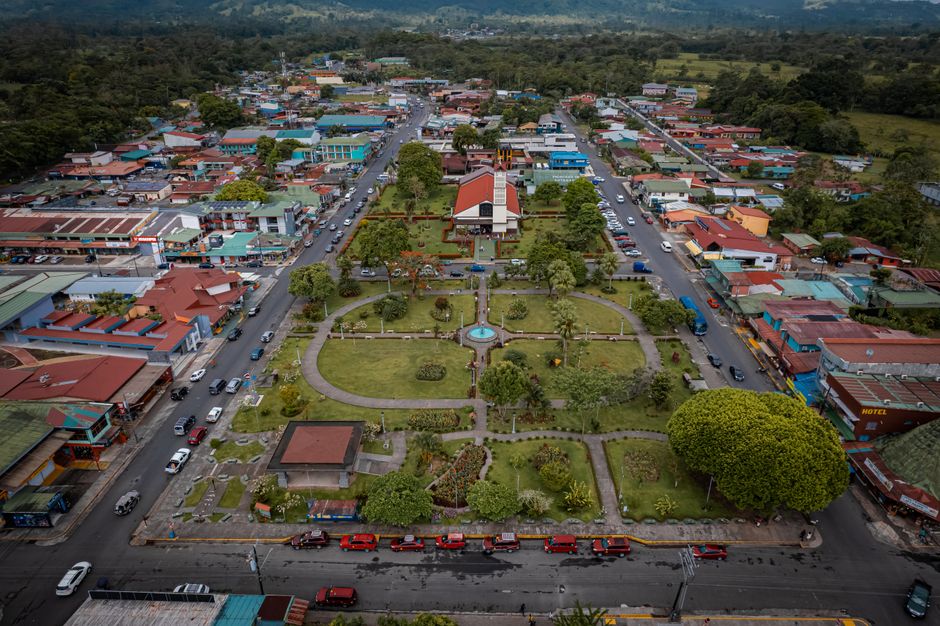
Escazú is a canton of San José province, sitting in the western part of Costa Rica's Central Valley about 10-15 minutes from downtown San José. The canton is one of the most internationally developed parts of Costa Rica — concentrated urban infrastructure, the country's leading private hospital, multiple international schools, established corporate presence, and the highest concentration of international restaurants, retail, and professional services in the country.
What Escazú is not: a quiet nature destination. There are no beaches. The Pacific coast is an hour and a half to three hours away. The jungle is not in Escazú — it is around Escazú, in the hills and reserves accessible by car. People who imagine Costa Rica as beach and rainforest will find Escazú not matching that image. The canton is urban, suburban, and metropolitan.
What Escazú is: the closest thing Costa Rica has to an international urban suburb — with all that implies. The canton hosts Hospital CIMA (widely considered the country's most prestigious private hospital), Country Day School and Lincoln School (the country's leading international schools), Multiplaza (one of the country's largest shopping centers), embassies, multinational corporate offices, and a level of international commercial and professional infrastructure that simply doesn't exist elsewhere in Costa Rica at this concentration.
The three districts matter significantly. San Rafael (the lowest, most commercial) is where Multiplaza sits, where most international restaurants cluster, where the highest-density condo development has occurred. Escazú Centro (the middle district) has the traditional town feel — the central park, the Catholic church, the older residential neighborhoods. San Antonio (the highest district) is more residential and traditional Costa Rican in character, with hillside views over the valley and cooler temperatures than the lower commercial areas.
The expat community is the largest and most established in the country. This is where the longest-running international clubs, professional associations, and social organizations are. The community has depth in ways that newer expat concentrations don't — decades of institutional infrastructure that serves newcomers and long-timers.
- Western Central Valley canton, ~10–15 minutes from downtown San José
- Most internationally developed urban suburb in Costa Rica
- Hospital CIMA Escazú is country's most prestigious private hospital
- Multiple international schools serve diplomatic and corporate communities
- Three districts (San Rafael, Centro, San Antonio) have very different characters
- Largest and most established expat community in the country

What Daily Life Looks Like
Daily life in Escazú is urban-suburban with international concentration. The infrastructure that comes with being the most internationally developed canton in Costa Rica produces a daily experience meaningfully different from any other part of the country.
For groceries, Escazú has the country's most diverse options — Auto Mercado, Walmart, Saretto (gourmet), Más X Menos, and various smaller markets. Specialty international foods are readily available. Multiplaza anchors the commercial corridor with a full range of retail, restaurants, and services. Additional commercial development lines the main corridors with options that would be familiar to residents of major international cities.
For daily services, the concentration is the most comprehensive in Costa Rica. Banks, pharmacies, car dealerships, professional services (legal, accounting, medical, real estate), fitness centers, beauty salons, and every category of daily-life service is accessible within a short drive. The International Women's Club, various professional associations, and numerous social organizations serve the expat community specifically.
Restaurant variety is the best in Costa Rica. The range from inexpensive local sodas to high-end international fine dining reflects the cosmopolitan population. Cuisines from throughout the world are represented. Coffee culture is well-developed, with multiple specialty coffee options serving the work-from-cafe crowd.
Internet and communications infrastructure is excellent. Fiber internet reaches most properties. Coworking spaces serve the remote-work community. Mobile service is strong throughout the canton. For remote workers, Escazú competes with major global remote-work destinations.
Traffic is the primary daily friction. Peak commute hours — particularly the routes to and from downtown San José, the airport, and the commercial corridors — produce congestion that affects daily planning. Most residents learn to time their movements, work from home during peak hours, or accept the commute as a feature of metropolitan life.
- Most diverse grocery and dining options in Costa Rica — international concentration
- Multiplaza is one of the country's largest shopping centers
- Professional services concentrated at international standards
- Excellent internet and mobile infrastructure for remote work
- Traffic to downtown San José and to the airport is real during peak hours
- District choice (San Rafael, Centro, San Antonio) significantly affects daily experience
Climate and Environment
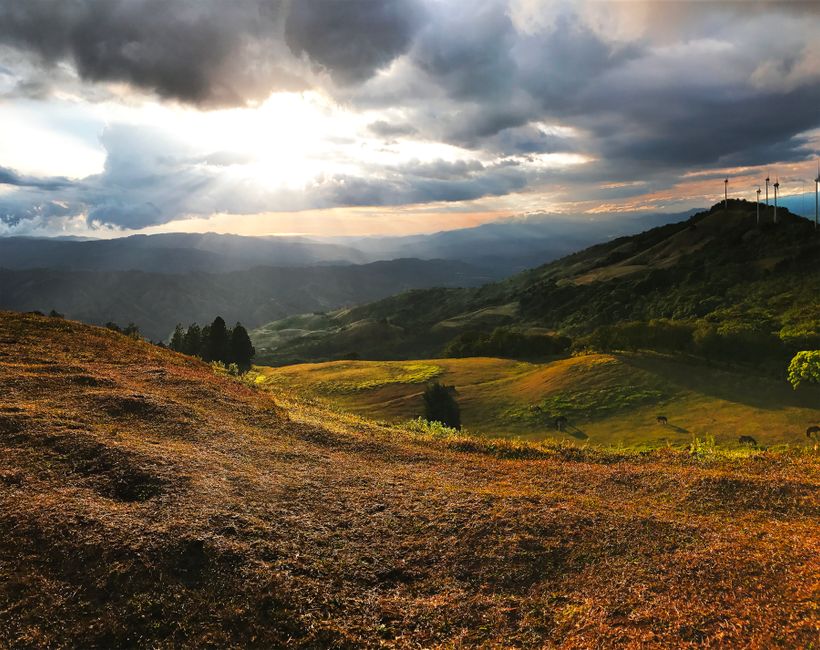
Escazú shares the Central Valley climate that has made this region one of the most attractive places to live in the world. Elevation across the canton ranges from roughly 3,200 feet in the lower San Rafael district to over 4,000 feet in upper San Antonio, producing temperate conditions that distinguish daily life dramatically from coastal Costa Rica.
Daytime temperatures typically run in the mid 70s Fahrenheit year-round. Nighttime temperatures cool into the 60s and sometimes upper 50s at higher elevations. Air conditioning is unnecessary for most properties — a major draw for residents coming from tropical coastal climates.
Two seasons: the dry season (December through April) brings consistently sunny days, lower humidity, and the cool dry-season evenings that residents consistently cite as among the best living conditions anywhere. The green season (May through November) brings afternoon rains — typically several hours of rain in the afternoon or evening, with mornings often clear. The green season lowers dust, keeps temperatures cooler, and produces the deep green landscapes that characterize the Central Valley at its most visually impressive.
Bird life is active, particularly in the higher San Antonio district and surrounding hills. The canton borders green areas and reserves that produce good urban birdwatching. The Pico Blanco summit area above the canton is accessible for hiking and offers views over the metropolitan region.
Air quality is an honest variable. Some lower commercial areas experience vehicle emission concentrations during temperature inversions, particularly during the wet season. Higher-elevation neighborhoods in San Antonio typically have better air quality. People with respiratory conditions should evaluate specific neighborhood air quality rather than assuming the entire canton is equivalent.
- Elevation 3,200–4,000+ feet — temperate Central Valley climate year-round
- Daytime mid 70s F year-round; nights into the 60s
- AC unnecessary for most properties — major draw for residents
- Two seasons: dry December–April, green May–November
- Among the best climates in Costa Rica for building durability
- Air quality varies — higher elevations typically better than commercial corridors
Cost of Living Reality
Escazú is among the most expensive parts of Costa Rica. Property prices, rentals, dining, professional services, and many daily costs reflect the international concentration and the suburb's role as the country's most cosmopolitan urban environment.
Imported goods carry standard import duties. Local produce remains affordable, but international and specialty foods (which Escazú offers in abundance) carry significant premiums. Restaurants range from inexpensive sodas serving local clientele to high-end international restaurants with prices comparable to major international cities.
Housing varies dramatically by district and property type. Higher-end condominiums in San Rafael's commercial corridor and gated single-family homes throughout the canton can carry prices among the highest in Costa Rica. Hillside view properties in San Antonio are particularly premium. Some sections of Escazú Centro and certain neighborhoods offer relative value compared to the canton's high-end areas.
Utilities are typical for Costa Rica. Most properties don't need air conditioning given the temperate climate. Internet is competitively priced. Water service is generally reliable.
Vehicle ownership is normal but not strictly necessary for all residents. Some residents living centrally in walkable neighborhoods or commercial corridors can manage with walking, taxis, Uber, and occasional rentals. Most residents have vehicles. Traffic congestion affects daily life regardless of vehicle choice.
Private school costs are significant. International schools charge premium tuition; bilingual schools at various tiers serve the broader expat and Costa Rican professional communities. For families with multiple children in international schools, tuition can represent a very substantial portion of the total monthly budget.
- Among the most expensive parts of Costa Rica
- International foods and specialty items carry significant premiums
- Higher-end condos and gated homes among the country's priciest
- Most properties don't need AC — meaningful electricity savings
- International school tuition can be a substantial part of total cost of living
- Professional services at international standards carry international pricing
Healthcare Access
Escazú offers the best healthcare access in Costa Rica. The combination of Hospital CIMA, Hospital Clínica Bíblica, and the broader Central Valley medical infrastructure produces an environment that draws not only Escazú residents but also expats from throughout Costa Rica for advanced medical needs.
Hospital CIMA Escazú is widely considered Costa Rica's most prestigious private hospital. The hospital handles the full range of medical specialties at international standards, with many physicians trained internationally and procedures available that simply aren't accessible at smaller Costa Rican hospitals. The hospital is affiliated with Baylor College of Medicine in Houston.
Hospital Clínica Bíblica in nearby San José is another leading private hospital widely used by the international expat community. Together with Hospital CIMA, these two hospitals serve as the primary advanced healthcare destinations for expats throughout Costa Rica.
For routine care, Escazú has dozens of private clinics, specialist offices, and medical practices serving every imaginable medical need. The range of specialists is the most comprehensive in Costa Rica. Pharmacies are concentrated and offer the broadest selection of medications in the country.
For emergencies, Hospital CIMA's emergency department is the most accessible advanced facility for severe cases in the country. Ambulance services are reliable.
Dental care in Escazú is at international standards. Costa Rica's broader medical and dental tourism infrastructure has its center here, with many dental practices serving both residents and tourism patients.
Mental health services are more developed here than elsewhere in Costa Rica. Therapists, psychiatrists, and broader mental health infrastructure serve an international community with diverse needs.
- Hospital CIMA Escazú is Costa Rica's most prestigious private hospital
- Hospital Clínica Bíblica nearby provides additional advanced care
- Most comprehensive specialist availability in the country
- Mental health services more developed than elsewhere in CR
- Among the best healthcare access in Latin America for international community
- Costa Rica's medical and dental tourism infrastructure centered here

Getting Around and Getting Out
Escazú has the best transportation infrastructure in Costa Rica outside of central San José.
Within Escazú, daily movement combines vehicle traffic, walking in pedestrian-friendly areas, public transit, taxis, Uber, and other options. Some residents living in walkable neighborhoods (parts of Escazú Centro, central commercial corridors) can manage substantial daily life without vehicles. Most residents have vehicles given the suburban geography.
For flights, Juan Santamaría International Airport (SJO) in Alajuela is about 30-45 minutes northeast of Escazú depending on traffic. The proximity to the country's main international airport is a meaningful daily-life advantage — international travel becomes convenient in ways that simply don't apply at coastal destinations or rural Costa Rica.
For regional access, Escazú connects to the broader San José metropolitan region via the major highways. Downtown San José is 10-15 minutes east depending on traffic. Heredia is north. Santa Ana is the next canton west. The Pan-American Highway connects to the broader country.
For coastal access, driving to Jacó takes about an hour and a half; to Manuel Antonio about three hours; to Tamarindo about four to four and a half hours. The Caribbean coast (Puerto Viejo, Cahuita) takes about four to five hours via the Limón highway.
Traffic congestion is real and significant. Peak commute hours in and out of San José metro produce serious congestion. Traffic management is a routine part of daily life for Escazú residents.
Public bus service is excellent. Buses connect Escazú to downtown San José, surrounding cantons, and broader regional destinations with frequent service.
- Best transportation infrastructure in CR outside central San José
- SJO airport 30–45 minutes northeast — international travel convenient
- Downtown San José 10–15 minutes east depending on traffic
- Pacific coast routes pass through or near Escazú
- Traffic congestion is real and significant during peak hours
- Excellent public bus service; Uber and taxis widely available

Community and Social Life
Escazú's social fabric is the most internationally integrated in Costa Rica. The combination of established expat community, Costa Rican professional class, diplomatic presence, corporate executives, and the broader cosmopolitan population produces a social environment unlike anywhere else in the country.
The Costa Rican community in Escazú is largely professional and middle-to-upper-class, with many families that have lived in the canton for generations alongside newer arrivals drawn by urban infrastructure and professional opportunities. The Catholic church, school events, traditional Costa Rican family life, and the central park in Escazú Centro anchor more local social rhythms.
The expat community is the largest and most established in Costa Rica. Americans, Canadians, Europeans, increasingly Latin American residents from other countries, diplomatic personnel, corporate executives on assignment, retirees, and families on long-term residence all coexist. The community has the depth of long-established institutions — international clubs, professional associations, social organizations, and cultural groups that produce active social infrastructure.
Gathering points include international restaurants and cafes, Multiplaza and other shopping centers, fitness clubs, country clubs and golf clubs, the various international schools (which serve as social hubs for families), embassies and cultural institutions, and a wide range of organized social activities oriented to the international community.
English-only daily life is more viable here than anywhere else in Costa Rica. Professional services, medical care, retail, and many social interactions are available in English. For residents who prefer or need to operate primarily in English, Escazú is uniquely functional in Costa Rica. That said, Spanish integration produces richer connections with the Costa Rican community and the fuller range of social life.
- Most internationally integrated social fabric in Costa Rica
- Largest and most established expat community in the country
- Diplomatic and corporate communities produce particular social patterns
- Cultural opportunities the broadest in Costa Rica
- International schools serve as social hubs for families
- English-only daily life more viable than anywhere else in CR

Schools and Family Life
Escazú has the best educational infrastructure in Costa Rica. The combination of international schools, established bilingual schools, strong Costa Rican private schools, and the broader Central Valley educational ecosystem produces options that simply don't exist elsewhere in the country.
For international families, the major options include Country Day School, Lincoln School, European School, and several other internationally accredited institutions. These schools serve diplomatic, corporate, and expat families with curricula and credentials that transfer internationally. Tuition is significant but the educational quality and credential value justify it for families with international career trajectories.
For bilingual education at varying tiers, Escazú and the surrounding cantons have the country's broadest selection. Schools at multiple price points serve the professional Costa Rican community and the broader expat community.
For Costa Rican families, the public school system serves Escazú's various districts. Many Costa Rican parents who can afford private education send their children to private schools in Escazú or surrounding cantons.
Pediatric healthcare is the best in Costa Rica through Hospital CIMA, multiple specialist offices, and the broader medical infrastructure.
Activities for children include traditional Costa Rican youth activities (soccer, music, art), international-style activities through schools and clubs, organized sports leagues, the country clubs' youth programs, and a wide range of structured after-school and weekend programs. The variety is the most extensive in Costa Rica.
The peer community of expat children is the largest in Costa Rica. Children from diplomatic, corporate, and long-term expat families form a community with international breadth and depth.
- Best educational infrastructure in Costa Rica
- Country Day School, Lincoln School, European School and other international options
- Country's broadest selection of bilingual schools at varying tiers
- Pediatric healthcare best in Costa Rica through CIMA and specialist concentration
- Largest and most internationally diverse peer community of expat children
- International school tuition can be substantial part of family budget
Working and Income
Escazú has the most diverse income environment in Costa Rica. The combination of corporate presence, professional services concentration, established expat economy, and remote work infrastructure produces options that don't exist elsewhere in the country.
For remote workers, Escazú is the strongest base in Costa Rica. Internet through fiber providers reaches essentially all populated areas with reliability and speed at international standards. Coworking spaces are abundant and serve the international remote-work community. The time zone aligns with North America. The temperate climate makes home offices comfortable year-round.
For employment, Escazú is one of Costa Rica's strongest job markets. Multinational corporations have offices here. Costa Rican companies headquarter here. Professional services (legal, accounting, real estate, consulting) employ thousands. The healthcare sector through Hospital CIMA and surrounding medical infrastructure is a major employer. Foreigners need appropriate residency status and work authorization. Pay reflects the Costa Rican market with international corporate roles often paying meaningfully more than typical Costa Rican wages.
For entrepreneurs, Escazú's combination of urban infrastructure, established expat community, and corporate ecosystem supports many kinds of businesses. Professional services oriented to international clients, real estate, restaurants and hospitality, retail, technology and consulting, and services for the residential expat community all have working models.
Vacation rental income is oriented to business travelers, medical tourism patients, and visiting families rather than beach tourism. The market is specific and specialized but real.
- Strongest remote-work base in Costa Rica — international-standard infrastructure
- Multinational corporate presence and Costa Rican company headquarters
- Healthcare sector major employer through CIMA and surrounding medical infrastructure
- Most sophisticated entrepreneurial market in the country
- Vacation rental market oriented to business, medical tourism, family visitors
- Among the strongest bases in Latin America for international careers
Safety and Honest Concerns
Escazú's safety profile is meaningfully better than San José's central districts but worse than some smaller Costa Rican destinations and rural areas. The combination of urban character, concentrated wealth, and the patterns of larger metropolitan environments produces specific safety considerations.
Petty crime is real and significant. Theft from unlocked vehicles, opportunistic break-ins of unsecured properties, theft of electronics from cars, and pickpocketing in busy commercial areas all happen. The concentrated wealth in some Escazú districts produces more targeting than at less wealthy destinations. Basic precautions reduce these risks substantially. Most residents take security seriously — alarm systems, security guards in many residential developments, and routine vigilance are standard.
Violent crime is uncommon but more present than at smaller Costa Rican destinations. Most violent crime in the broader San José metropolitan region is concentrated in specific neighborhoods of central San José; Escazú itself is largely insulated from those patterns but residents who travel into central San José should be aware.
Gated communities and security-focused residential developments are common in Escazú — more so than at smaller Costa Rican destinations. The choice of property type affects security infrastructure significantly.
Traffic and pedestrian safety are real concerns. The urban character of much of Escazú combined with Costa Rican driving habits means pedestrians need to be careful, particularly in commercial corridors without proper sidewalks or crosswalks.
Air quality varies. Some areas experience meaningful pollution from metropolitan traffic during temperature inversions. Higher-elevation neighborhoods in San Antonio typically have better air quality.
- Meaningfully safer than central San José but requires more awareness than rural CR
- Petty theft real — concentrated wealth produces targeting
- Violent crime uncommon but more present than smaller CR destinations
- Gated communities and security infrastructure standard for many properties
- Air quality varies — higher elevations typically better than commercial corridors
- Tropical wildlife concerns of coastal CR largely don't apply
The Hard Truths
Escazú is genuinely expensive. People who arrive expecting affordable Costa Rica are quickly disabused. Property prices, dining at international restaurants, professional services, and many daily costs reflect the urban-international concentration. The trade-off for the infrastructure is real — and budgets that work elsewhere in Costa Rica often don't work here at the same lifestyle level.
The district matters significantly. Choosing the right area within Escazú affects daily life as much as choosing between different cantons. The differences between San Rafael's commercial-corridor density, Escazú Centro's traditional town character, and San Antonio's higher-elevation residential neighborhoods are real and shape everyday experience. Buyers should investigate carefully and visit at multiple times before committing.
The traffic is real. Peak commute hours into and out of San José metro produce serious congestion. Going to the airport, going to the coast, or moving around the metropolitan region all involve traffic considerations that affect daily planning.
The urban character is real. People who came to Costa Rica seeking quiet rural life, beach lifestyle, or nature immersion will find Escazú insufficient. The canton offers urban-suburban infrastructure with views of surrounding nature, not nature itself.
Air quality varies significantly. Some areas, particularly during temperature inversions in the wetter months, can have meaningful pollution from metropolitan traffic. People with respiratory conditions should consider this carefully and prioritize higher-elevation neighborhoods.
International school tuition is a serious budget item. For families with multiple children in international schools, tuition alone can exceed total living costs in many other Costa Rican destinations. Families should run realistic budget projections before committing.
The Pacific or Caribbean coast is hours away. Residents who anticipated weekend beach trips as a regular feature of life will need to plan them more deliberately than imagined — and accept that spontaneous coastal day trips are impractical.
- Genuinely expensive — budgets that work elsewhere in CR often don't work here
- District choice within Escazú matters significantly for daily life
- Traffic congestion is real and significant during peak hours
- Urban character — not for buyers seeking nature immersion or beach life
- Air quality varies — temperature inversions can trap metropolitan pollution
- International school tuition can be substantial part of family budget
- Pacific or Caribbean coast is hours away — regular beach trips less practical
- Real estate market mature and competitive — no rapid speculation expected
Frequently Asked Questions About Living in Escazú
Is Escazú safe for foreigners to live in?
Escazú's safety profile is meaningfully better than San José's central districts but worse than some smaller Costa Rican destinations and rural areas.
How much does it cost to live in Escazú?
Escazú is among the most expensive parts of Costa Rica.
Do I need to speak Spanish to live in Escazú?
Escazú's social fabric is the most internationally integrated in Costa Rica.
What is the best time of year to visit Escazú?
Escazú shares the Central Valley climate that has made this region one of the most attractive places to live in the world.
Quick Reference: Escazú At a Glance
| Overview | Escazú sits in the western Central Valley about 10-15 minutes from downtown San José, with three distinct districts (San Rafael, Escazú Centro, and San Antonio) ranging from highly urbanized commercial corridors to mountainside residential neighborhoods with views over the valley. |
| Climate | Escazú shares the Central Valley climate that has made this region one of the most attractive places to live in the world. |
| Real estate | Escazú offers high-density condominiums in commercial corridors, gated single-family homes in established neighborhoods, mountainside view properties in the higher districts, and a wide range of housing types — at price points among the highest in Costa Rica reflecting the urban infrastructure, international demand, and concentration of services. |
| Time zone | CST (UTC−6) — no daylight saving time |
| Nearest airport | SJO — Juan Santamaría International Airport |
| Foreign ownership | Yes — foreigners own fee-simple title with the same rights as Costa Rican nationals |
Pros and Cons
Advantages
- ✓ Concentrated international infrastructure — restaurants, retail, professional services
- ✓ Hospital CIMA and Hospital Clínica Bíblica nearby — Costa Rica's leading private medical care
- ✓ Multiple international and bilingual school options
- ✓ Established expat infrastructure makes integration practical
Considerations
- ! Property prices among the highest in Costa Rica
- ! Traffic congestion is real — particularly during commute hours
- ! Urban character — not for buyers seeking nature immersion or beach life
- ! Dramatic differences between districts — choice within Escazú matters
Practical Notes
Escazú has three administrative districts with very different characters: San Rafael (lowest, most urban, Multiplaza shopping center, high-density commercial), Escazú Centro (middle, traditional town center with central park and Catholic church), and San Antonio (highest, more residential and traditional Costa Rican character with views of the valley). Choosing the right district matters significantly for daily life.
Nearby Areas to Compare
Ready to Compare Properties in Escazú?
Browse verified broker listings from Escazú and the surrounding area.